









Building circular load-bearing capacity
Text Tony VosImage Terrastab
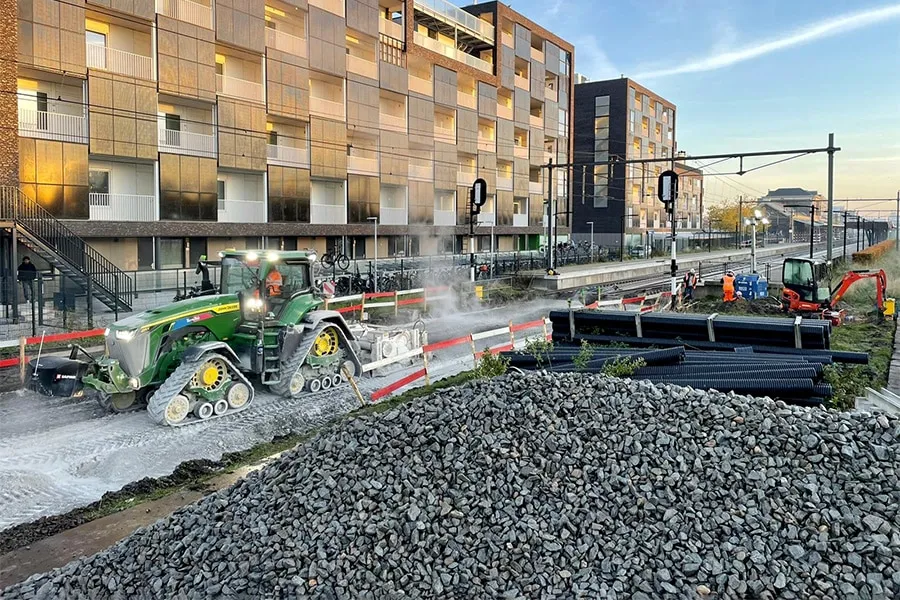
With twenty years’ experience, equipment developed in-house and a wealth of data collected by its own laboratory, circularity and sustainability are in Terrastab’s DNA. Managing director Anton Bunt explains how the company applies these principles to soil improvement and soil stabilisation.
Terrastab works in the infrastructure and rail sectors, creating load-bearing capacity in sub-bases and for natural surfacing, for example in dune areas and forests. Anton says: “By soil improvement, we mean increasing the load-bearing capacity of the ground. This can be done beneath buildings as an alternative to piles, as well as at industrial estates, port areas, terminals and airports.”
Binder
“The goal we set ourselves back in 2010 is entirely in line with current practice,” says Anton. “All available primary raw materials are used as a new foundation in the sub-base. This allows us to work at between 95 and 98% circularity. We hardly move any materials, so our approach has minimal impact on nitrogen and CO2 emissions. That is a major benefit for the Environmental Cost Indicator (MKI). Our way of working also brings significant benefits for the surrounding area: minimal transport movements, low emissions and renovations completed in a short period of time.”
In 2013, Terrastab considered abandoning this approach, as the market was not yet ready for it. But by 2023, the knowledge it had built up gave it a huge head start.
Engineering
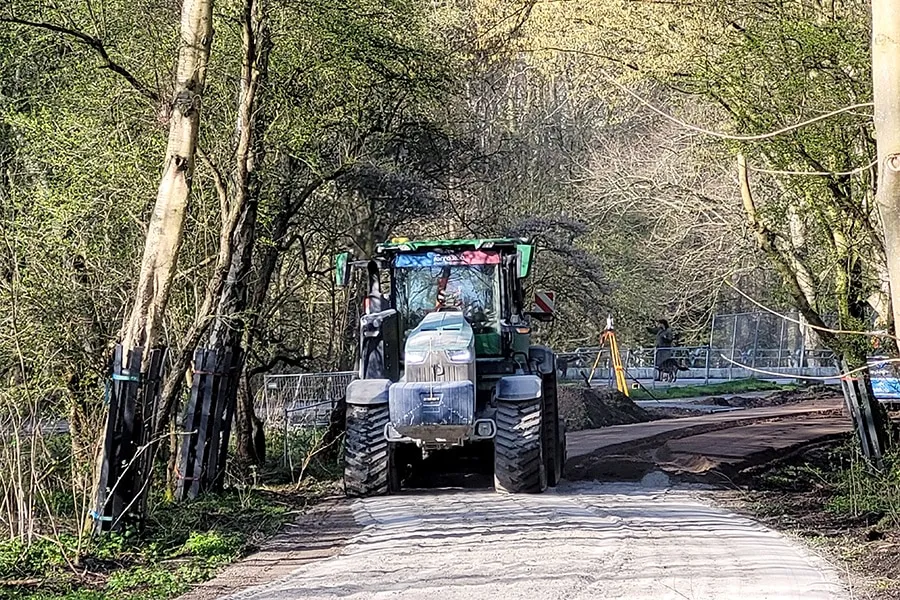
“Our machines are suitable for carrying out soil improvement in deep water,” says Anton. “Rail work always has to be done quickly. Within 24 hours of our intervention, trains are running again.”
“Our own laboratory determines the type of binder and the correct dosage. For soil improvement, we add between 2 and 5% binder; for soil stabilisation, the proportion can be higher. With soil improvement, the ground remains excavatable. Soil stabilisation creates a stiff layer that cannot be excavated. This is used, for example, beneath asphalt. The stiff sub-base means we can reduce the asphalt thickness, thereby lowering the MKI as well.”
Een zakelijke vraag aan Terrastab Nederland B.V.? Get in touch
Companies in this story
Keep following this
Get an email when a new story is published. No account needed.
- ThemeUnderground construction
- SubjectRoad construction
- CompanyTerrastab Nederland B.V.







