









Biobased alternatives to fossil-based bitumen
Text Chris Elbers, Latexfalt Image Latexfalt
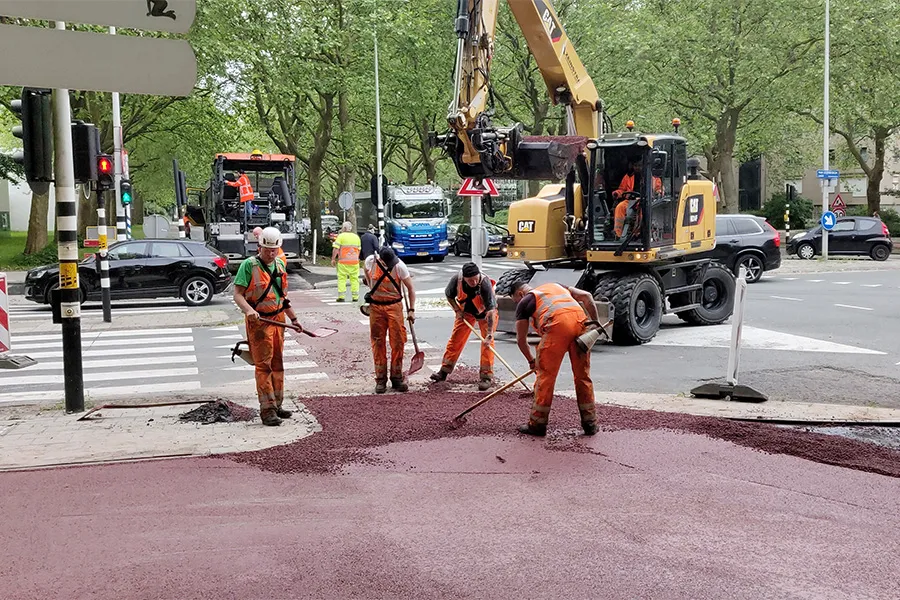
These are challenging times for the Dutch road construction sector, not least because of a number of major, fundamental changes underway in what has traditionally been a conventional industry. For example, it was previously agreed that production temperatures at asphalt plants would be significantly reduced by 2025. In addition, road authorities such as Rijkswaterstaat, provinces and municipalities are working with the road construction industry through Circuroad to develop biobased alternatives to fossil-based bitumen. As a source of expertise in bitumen, Latexfalt has a leading role in these developments.
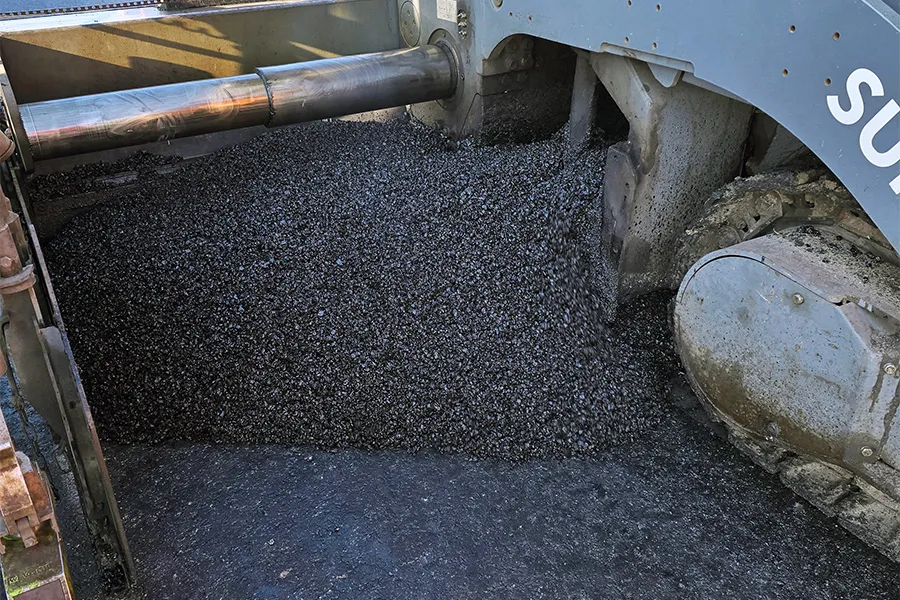
On the road to a greener, fossil-free future, Latexfalt plays a crucial role as a developer of products based on bitumen and polymers, key raw materials in road construction. Last year, the company, based in Koudekerk aan den Rijn, laid a trial section with several partners using a new pigmentable, low-temperature binder. By making smart changes to the binder’s raw materials, Latexfalt succeeded in halving both the environmental cost indicator (MKI) and emissions. “At the same time, this binder can be laid at temperatures below 140 degrees Celsius,” says Hans Hendrikse, Manager Research & Development. “That also makes it suitable for use in Warm Mix Asphalt, helping us meet the target we as an industry aim to achieve in 2025.”
100% biobased
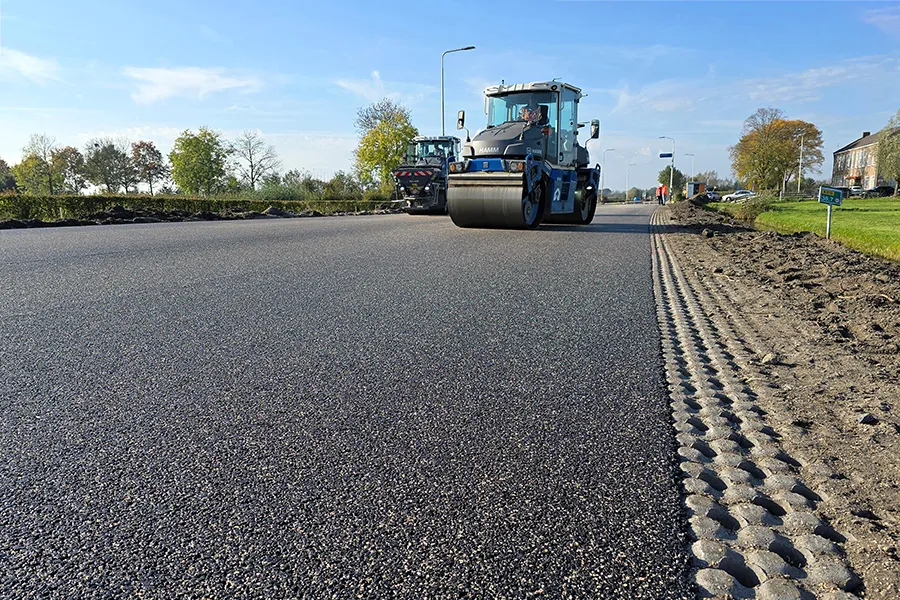
Another success is the construction of a trial section using a 100% biobased binder. This section, laid in October 2024 on a busy N-road in the province of Utrecht, has proved its worth over the past winter. “A biobased binder is made from completely different ingredients than a conventional binder, which is normally burned as a by-product of other industries,” says Hendrikse. “This gives it great potential to support the shift from fossil-based to biological materials and, beyond road construction, help bring about a circular economy. Without any loss of quality. That last point is vital. A road that has to be replaced soon is bad for the environment, the road authority’s mood and the contractor’s reputation.”
Pigmentation
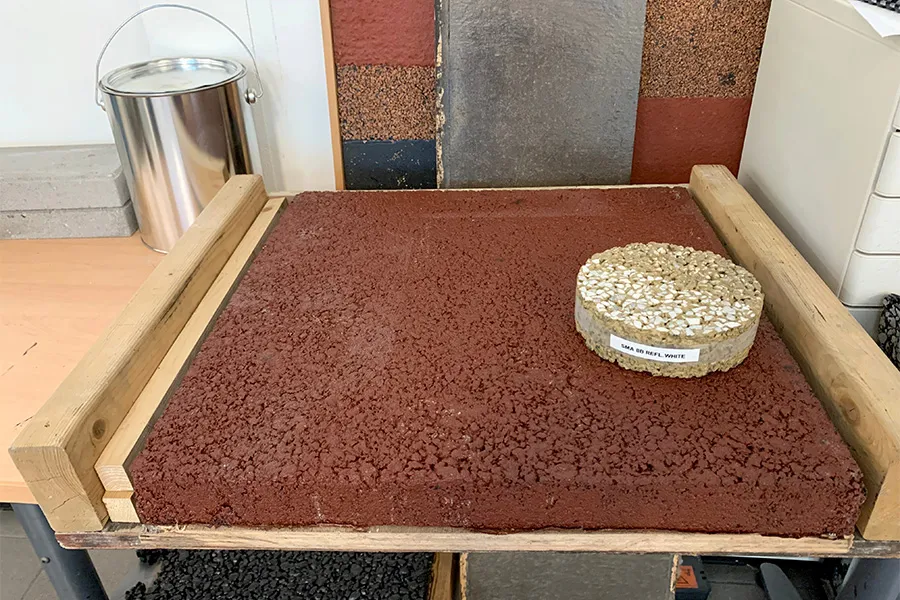
Although Latexfalt originally developed the biobased binder for conventional black roads, its lighter-coloured ingredients also make it suitable for pigmentation, for example when constructing cycle paths. “Last year’s trials show that a great deal is already possible with coloured, biobased asphalt,” says Tom Peppink, Manager Commercie. “That’s why the industry, from clients to binder producers, needs to press ahead and gain experience with these products.” One logical way to scale up further is to build cycle paths with coloured biobased asphalt. This makes full use of the fact that pigmentable biobased binders can be used immediately. Peppink says: “With this initiative, we are drawing on the experience we gained earlier on an A-road to guarantee the quality of the cycle path. And if more people can cycle to work as a result, we will also help create a healthier living environment for everyone. What’s more, the bright colours achievable with these binders make traffic safer. In short, close collaboration and industry-wide use of expertise to further develop products like these will enable us to provide the Netherlands with a sustainable, circular road network, whether its traditional colour is red or another shade.”
Question about this story? Ask your question
Keep following this
Get an email when a new story is published. No account needed.
- ThemeExtending the life of roads and civil engineering structures
- SubjectRoad construction







