









A more efficient alternative to ‘red’ asphalt
Text Roel van Gils Beeld POSSEHL Spezialbau
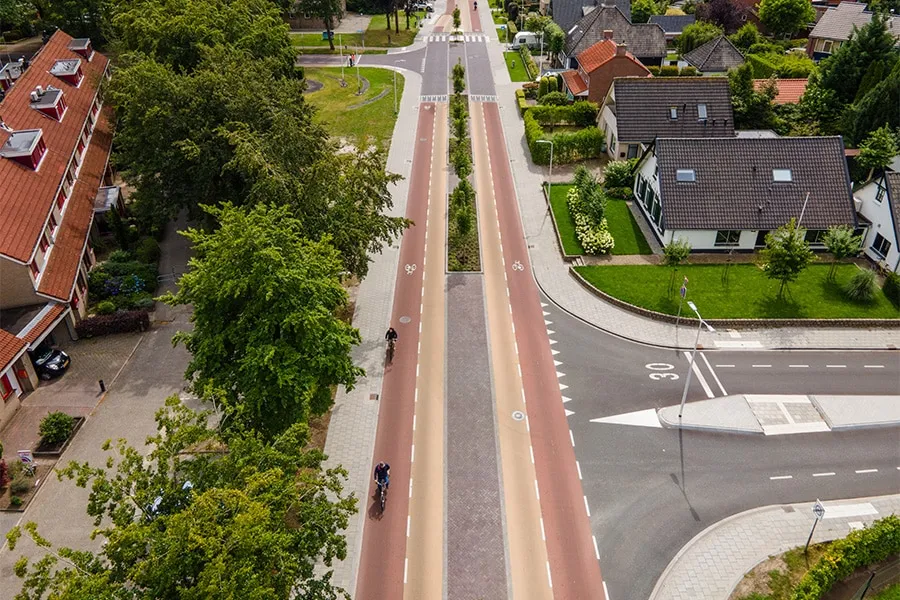
With much greater visibility
A pedestrian crossing, cycle roundabout, cycle lane marking or 30 km/h zone is often surfaced in a different colour of asphalt, usually red. This alerts motorised traffic to the possible presence of vulnerable road users. However, laying two colours of asphalt is a considerable undertaking for the contractor, as the paving machines have to be reset midway through the job to handle the different mix. Moreover, joining two types of asphalt wearing course leads to fretting and cracking. Fortunately, there is a more efficient alternative that also offers much greater visibility and a longer service life. Meet Thermoflex.
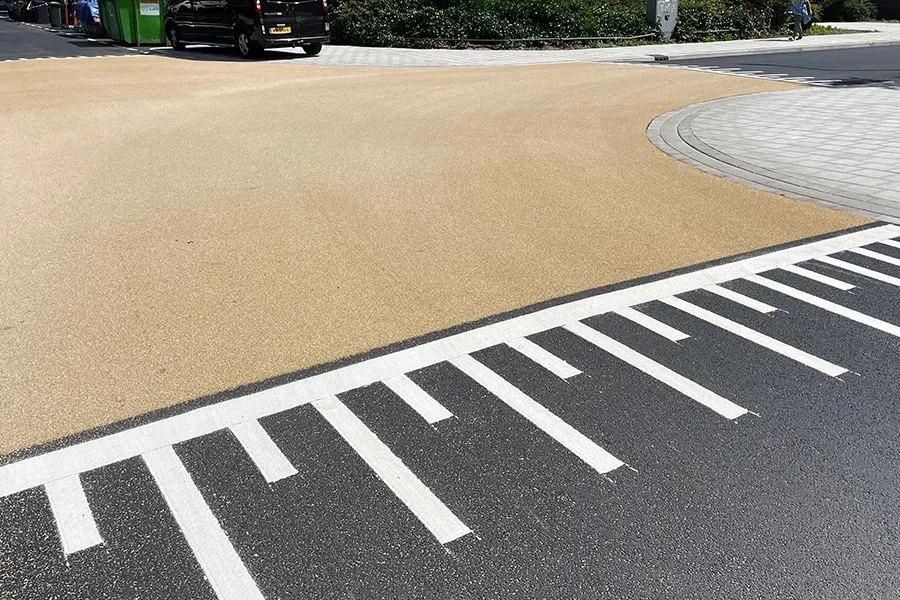
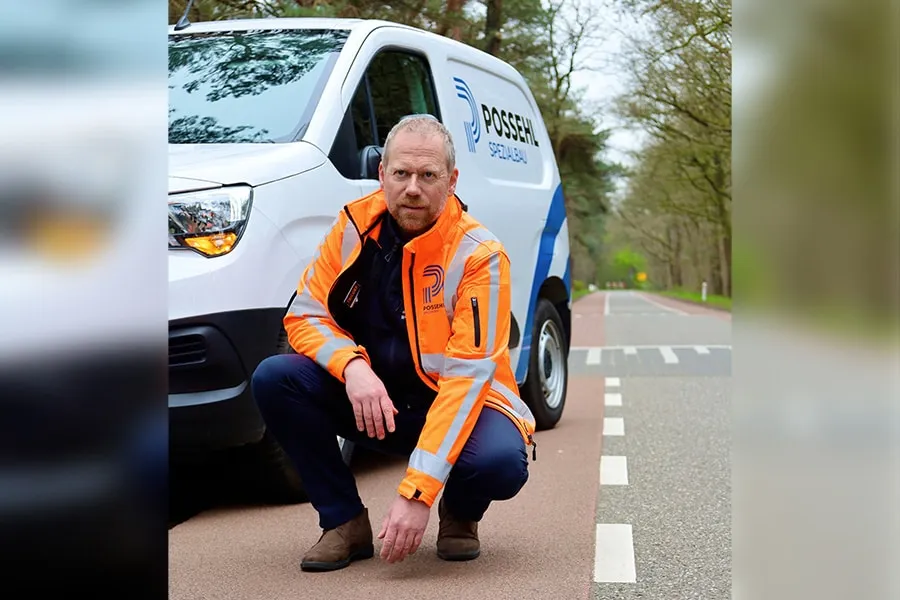
Creating, for example, a cycle crossing or cycle lane marking in a new road surface using the traditional method is rather cumbersome, says Patrick Roijers of POSSEHL Spezialbau. “A contractor first lays the black wearing course, then has to reconfigure all the equipment for red asphalt, and afterwards switch back to black asphalt. To put it mildly, that is hardly efficient. On top of that, in practice cracks develop precisely where the two types of wearing course meet. In terms of quality, it is therefore much better to lay one homogeneous black wearing course and then create the cycle crossing using a Thermoflex coating.”
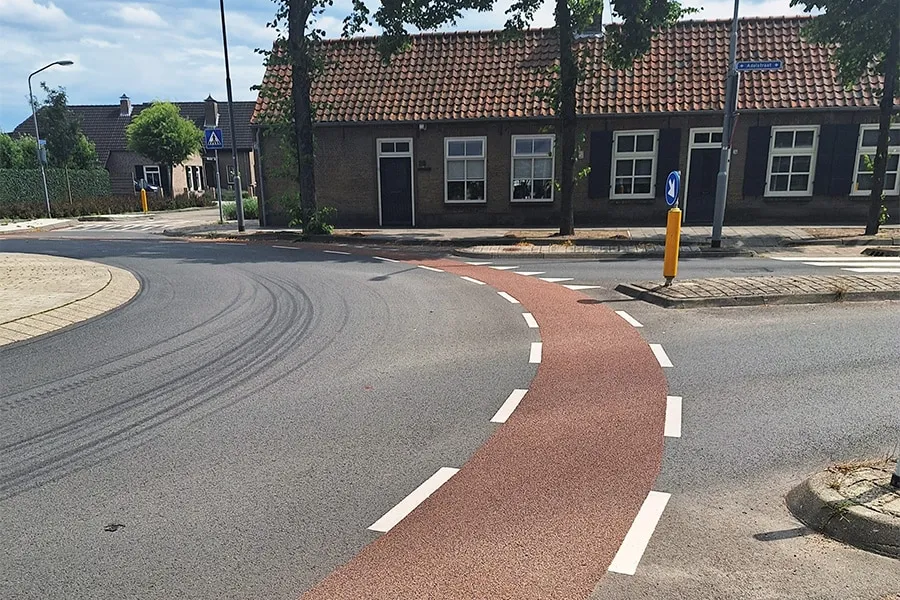
Traffic red
Thermoflex also has the advantage of preserving the wearing course. “It requires no maintenance, does not crack, and the surface layer remains permanently skid-resistant and colourfast,” Patrick stresses. The concept has been around for almost 40 years and has grown in popularity in recent years in particular. Developments in the asphalt industry have worked in Thermoflex’s favour. “Red asphalt used to be made with clear bitumen, but that is bad for the environment and is being phased out. The alternative is to add a filler to black asphalt. This means the wearing course is no longer traffic red, but takes on a more brownish hue. That does little to improve visibility, especially in the dark or in the rain. Thermoflex, by contrast, is traffic red and we finish it with a natural aggregate. For an extra signalling effect, we can even mix in recycled glass aggregate. When vehicle headlights shine on it, it sparkles.”
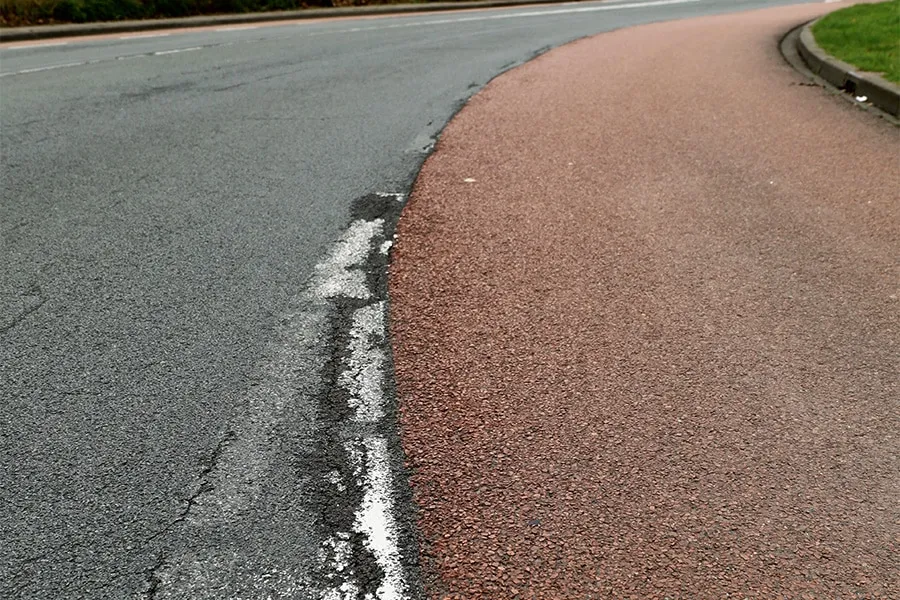
Turning traffic
In 2023, Possehl laid more than 170,000 m2 of cycle lane markings using Thermoflex. “We recently became a ‘Friend of the Fietsersbond’, as they too recognise its consistently high visibility in all weather conditions. In addition to red, we also regularly use Thermoflex in other colours, for example in residential areas, cycle streets or 30 km/h zones, to alert road users that they are entering a designated zone,” says Patrick. “It is also ideal for use on roundabouts. If there is anywhere that traffic is subject to turning forces, it is on a roundabout. In practice, using two colours of asphalt inevitably leads to fretting and cracking. You do not have that problem with Thermoflex. Curves are very easy to create. It is simply a matter of setting out and masking off. The contractor can work much more efficiently, and the client is guaranteed a homogeneous wearing course and a permanently skid-resistant, colourfast surface layer with high visibility that requires no further attention.”
Years of experience
Thermoflex has a proven expected service life of more than 20 years and is applied cold. The coating is extremely thin compared with the wearing course and can simply be milled off at the end of its service life. The reclaimed asphalt can be reused in the binder course or sub-base. “We have almost 40 years’ experience with Thermoflex, so we know from practical experience what can and cannot be done with the product,” Patrick explains. “But our role goes beyond simply applying the coating: we are a knowledge partner for our clients.”
Een zakelijke vraag aan Possehl Aannemingsmaatschappij B.V.? Get in touch
Companies in this story

Keep following this
Get an email when a new story is published. No account needed.
- ThemeExtending the life of roads and civil engineering structures
- SubjectRoad construction
- CompanyPossehl Aannemingsmaatschappij B.V.







