









A Boeing taxiing over your old roof? It’s not so far-fetched!

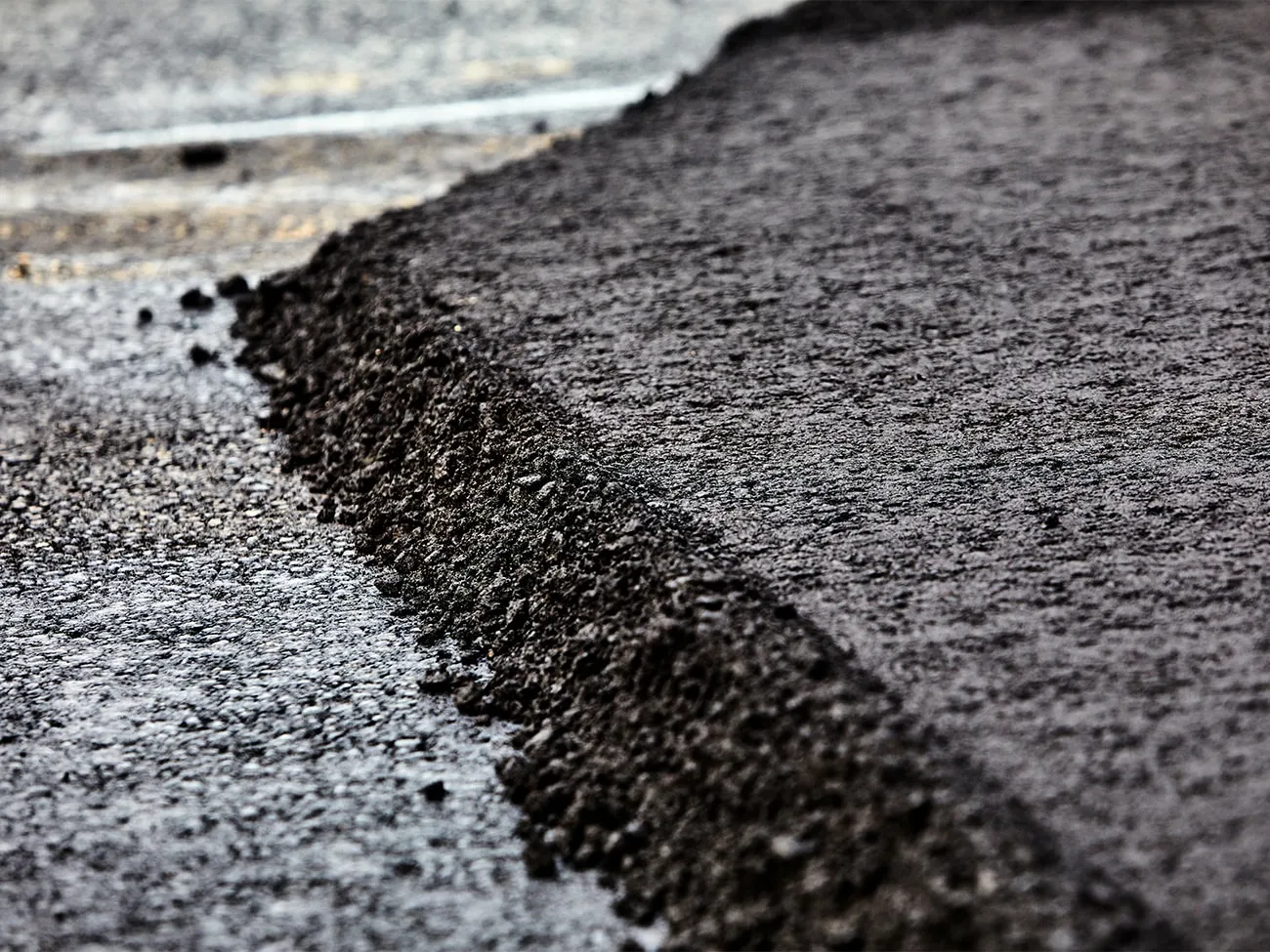
Reducing CO2 emissions is also high on the infrastructure agenda. The road construction sector is constantly innovating to work as circularly as possible. Using circular bitumen in asphalt makes a significant contribution to achieving climate targets. Roof2Road supplies circular bitumen to the infrastructure sector. What makes it special is that this bitumen was first used on roofs… a shining example of circular thinking beyond conventional boundaries. Owner and director Gerben Bijker says: “Circularity knows no boundaries. We’re doing this for the benefit of the Netherlands. The bitumen we recover from roofs is high-quality and can replace ‘virgin’ bitumen from the refinery.”
Pilot project in Friesland
Bijker studied business administration and has been involved in various sustainable projects. “At one point, that led to a pilot project in Friesland, where we used bitumen recovered from roofs in a circular way to make new roofing. It worked so well that my company Roof2Roof became a reality. To be reused circularly, roof bitumen must come from modern roofs, where it has been laid in rolls. Old coal-tar mastic roofs are therefore not eligible. Reusing this material is actually prohibited,” Bijker explains. “The move to Roof2Road was an easy one, because there is also a demand for circular bitumen in the infrastructure sector. So we supply new roofing on the one hand, and circular bitumen as a binder for new asphalt on the other. As a circular supplier, we work across sectors. I think this should happen more often if we are to achieve our climate targets together.”
Processing the material
Roof2Roof and Roof2Road operate side by side, with both companies processing the material. A new factory is currently being built in Amsterdam, and the company is really ‘paving the way’. “Our aim is to close the loop,” says Bijker. “It’s hard to imagine a better demonstration of circularity than the work we do.” Asked how the market is responding to circular bitumen, he replies: “It could be better. It’s understandable that people view circular bitumen with suspicion. In the past, roofing bitumen had a bad reputation, which is still ingrained in many people’s minds. They don’t realise that it can now be produced cleanly, thanks to our new bitumen supply chain. There’s still a lot to be done in that respect, through good information and showcasing impressive reference projects.”
Companies that process bitumen should count themselves lucky to have Roof2Roof and Roof2Road. The circular alternative is cheaper than new bitumen and also much more sustainable. “Using it helps you achieve a better Environmental Cost Indicator (ECI) score without any extra effort. The ECI value for a tonne of new bitumen is € 106, while for Roof2Road bitumen it is just € 3.25. When you consider that bitumen accounts for almost 50% of asphalt’s ECI impact, the environmental benefits of Roof2Road bitumen are enormous. It is also a PAH-free product, completely clean. Looking at these benefits, you might ask whether it is still environmentally responsible not to use it. I can see that the market is ready for it, and that there are companies that genuinely prefer this circular product. A great example of circular working, in my view, is the use of circular bitumen in the new asphalt runway for crash tenders at Rotterdam The Hague Airport. Not only does the asphalt contain circular bitumen, but the source of that bitumen is none other than the roof of a logistics centre… at Schiphol! How circular can you get?”
Question about this story? Ask your question
Keep following this
Get an email when a new story is published. No account needed.
- ThemeExtending the life of roads and civil engineering structures
- SubjectRoad construction







