Reducing CO2 emissions in underground construction
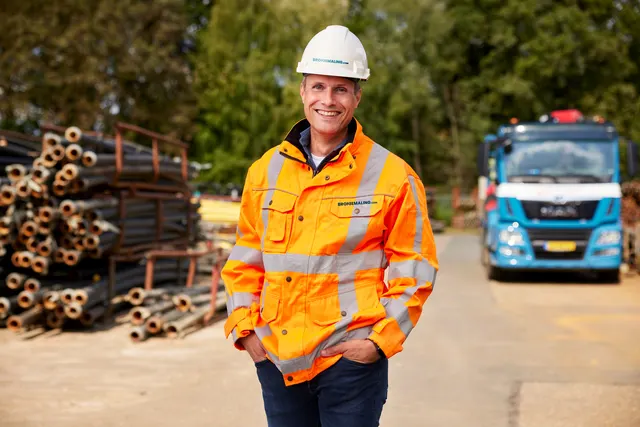
Image COB/Vincent Basler

Reducing CO2 emissions is playing an increasingly important role in work on tunnels, cables and pipelines, and other underground structures. Yet it has still not become second nature. We have been used to thinking in terms of standard processes for many decades. We need to break that habit. Could things be done differently, with lower emissions, or should we even be carrying out a project in this way at all? Reducing CO2 emissions must become an integral part of how we think.
Be aware of your consumption and emissions, not only at home but also at work. Think about it in the simplest terms. The sooner we do, the sooner progress will accelerate. There is still plenty of scope to reduce harmful emissions in underground construction, too. Just look at the raw materials used. Tunnels often involve a lot of concrete. Sustainable concrete is an issue, and fortunately we are making steady progress. The same goes for reusing asphalt, an area in which the Netherlands is a world leader.
At the Centrum Ondergronds Bouwen (COB), our sustainability platform focuses on three work packages: the energy transition, circularity and the tunnel in its surroundings. The installations in a tunnel, for example, make a contribution that should not be underestimated. A great many installations are installed and removed. Traditionally, the ‘service life’ of a tunnel installation is just seven to fifteen years. That approach is no longer sustainable. At the COB, we are focusing on two key research areas: material reuse and reducing the energy consumption of installations. The entire supply chain, from manufacturers and suppliers to clients and contractors, must take significant steps to achieve a circular economy. This will have a considerable impact on how we design, build and manage tunnels in the future. The maintenance of underground structures is also an important consideration. Clients are increasingly setting requirements for ‘clean’ maintenance, in other words, generating as few emissions as possible during maintenance work. This is where the electrification of machinery and vehicles comes into play.
At the COB, we have drawn up a catalogue of measures to reduce energy use in tunnels, with the aim of working together towards low-energy and ultimately energy-neutral tunnels. This living document sets out specific measures covering technical aspects, processes and contracts. It can substantially reduce the energy consumption of an existing or new tunnel, potentially making it energy-neutral. We are seeing new contracts coming onto the market that are based on this approach. That said, it will always be a complex puzzle: what can I specify, what can the market deliver, and how can this be demonstrated? There are plenty of ideas, but practical examples that work really well are still scarce. That, too, is just a matter of time. I expect a sustainability label for underground structures to emerge, just like the energy label for your home or office building. Then reducing CO2 emissions will ‘naturally’ become an integral part of how we think.
Question about this story? Ask your question
Keep following this
Get an email when a new story is published. No account needed.
- ThemeUnderground construction
- SubjectThe pen