The foundation sector: from pile driver to high-tech partner

Take a look at the foundation sector twenty years ago and you would have seen a traditional branch of the industry. A client issued an instruction, and the foundation contractor carried it out, often without asking many questions or offering input. Today, the sector looks very different. The foundation industry has come of age. We join the table earlier, contribute during the preparatory phase and deliver a high-tech product. It is high time this received more recognition.
Just look at where we are now. The foundation industry was once purely focused on execution. You received an instruction and did what the main contractor asked. That was it. Today, we join the drawing board. We contribute during the preparatory phase and deliver complete construction pits, including walls, anchors, excavations and sometimes even underwater concrete. What used to be the main contractor’s domain is now handled by many foundation contractors as a complete package. The main contractor is increasingly becoming the generalist who organises everything, while we, as foundation specialists, are becoming ever more specialised and, at the same time, taking on more coordination.
And let’s be honest: this has not all been plain sailing. Where each component used to be subcontracted separately, we now see one party increasingly taking care of the entire construction pit. That means you have to think about project organisation, managing subcontractors and controlling risks. It brings opportunities, more work and more influence, but also challenges. Organising a complete solution is a specialism in its own right. It takes some hard-won experience, but it does take us to a higher level.
We should be prouder of how far we have come. The outside world still too often sees the foundation sector as a bunch of pile drivers who hammer piles into the ground. The reality is far more advanced. Our operators climb into equipment each morning that costs 40 times as much as the average passenger car, and are responsible for it. We work with advanced systems, carry out monitoring to a high degree of precision and deliver a high-tech product that literally forms the foundation of every building or civil engineering structure. The sector would do well to present itself more often as the expert it is.
And then there is sustainability. Of course, electrification is the construction industry’s magic word. But let’s be honest: sometimes the focus is in the wrong place. Converting piling rigs is incredibly expensive, yet it accounts for only around five per cent of total emissions. The biggest gains lie in concrete and reinforcement. That is where real progress can be made. So yes, electric machinery and batteries are great, but unless we look at the bigger picture, we will be left behind.
One final point of concern is that we as a sector should work together more. Take the new standard for pile class factors. Companies are currently conducting costly tests independently to establish their own installation factors and demonstrate that they outperform the standard. That is a waste, because working together would make us all stronger and save a great deal of money. Ten companies jointly funding one test instead of each reinventing the wheel sounds so logical, but in practice it is difficult.
The message is clear: more pride, more collaboration and a broader view of sustainability. In recent years, the foundation sector has shown that it can innovate and has come of age. Now it is time to take the next step together: not just as specialists working below ground, but as indispensable construction partners whose voices deserve to be heard above ground.
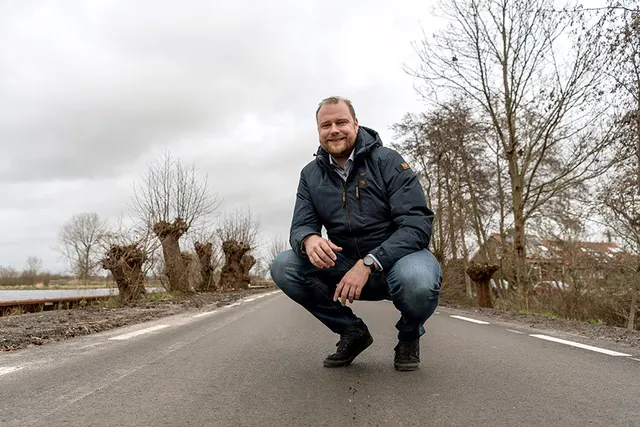
De Pen, Jan-Wim Verhoeff, Director of Franki Grondtechnieken
Question about this story? Ask your question
Keep following this
Get an email when a new story is published. No account needed.
- ThemeUnderground construction
- SubjectThe pen