Making water engineering more sustainable: between ambition and reality
The Dutch water engineering sector is in the midst of one of the biggest transitions in its history. Climate challenges, stricter emissions standards and public expectations are forcing the sector to rethink its approach fundamentally. At the same time, water engineers have been working with robust, costly work vessels for decades, and they cannot all simply be replaced. Sustainability must take shape between these two worlds.
What is striking is that the drive to become more sustainable increasingly comes from within the sector too. You see this particularly among family businesses like ours, where several generations are involved and a long-term perspective is second nature. This creates an intrinsic motivation to invest in cleaner technologies. At the same time, clients are also putting the sector under considerable pressure, with Rijkswaterstaat leading the way. Contracts increasingly ask: what can already be done with zero emissions? That question is driving the market towards practical solutions, from hybrid concepts to fully zero-emission vessels.
Yet major challenges remain. Water engineering projects rarely take place in a single fixed location. Sailing distances can be considerable, and a maintenance area often extends across many tens of kilometres. This means the energy chain, charging, buffering and transport, is at least as important as the vessel’s propulsion system. A fully zero-emission operation can be logistically complex and financially demanding, but clear agreements and cooperation with clients help make it possible. In practice, flexibility is essential: mobile charging solutions, energy containers and systems that can operate independently of fixed grid connections.
A second important qualification: sustainability does not mean ‘radically changing everything all at once’. In water engineering, vessels have a service life of more than thirty years, or longer. That is why we work with clients to develop transition pathways. Stage V engines combined with HVO100, for example, can already reduce a large proportion of emissions. Fully zero-emission operations remain the goal, but the final percentage points of CO2 savings are often the most expensive and complex to achieve. I believe the priority should be to maximise impact per euro, rather than simply setting a distant target as quickly as possible.
Consistent policy, including at European level, is crucial. Investments in sustainability are substantial and must be recouped over many years. Anyone building a vessel with a thirty-year service life must be able to rely on a level playing field and stable, appropriate rules. Otherwise, there is no business case. This applies not only to us, but to the entire market. At the same time, water engineering is an international market. Vessels operating in the Netherlands today may be elsewhere in Europe, or even beyond, tomorrow. Sustainability must be encouraged nationally while remaining viable internationally.
Knowledge-sharing matters, and helps underpin the entire sector. Through the Vereniging van Waterbouwers, its sustainability working group and initiatives such as innovation hubs, companies share what works and what does not, from MKI criteria to energy concepts. We want to ensure that companies do not each have to reinvent the wheel. The greatest impact comes from working together. There is no doubt that the future of water engineering is sustainable. Not because it has to be, but because the sector knows that looking ahead has always been, and will remain, part of the job.
Our advice to the government? Challenge the market, but ensure a realistic pace, an international level playing field and consistent policy. The final percentage points of CO2 savings are the most expensive, but smart interim steps can already deliver enormous gains. Sustainability is not a project with an end date. We will keep going: learning, testing and scaling up. Our new vessel, the Prins ZEs, is a concrete example. It is the first fully zero-emission wire-crane vessel in the Netherlands.
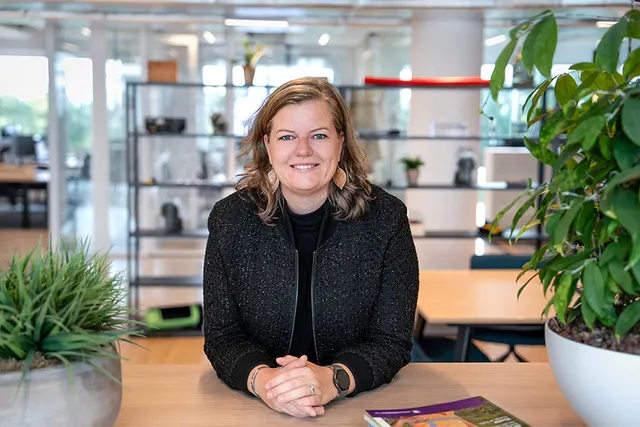
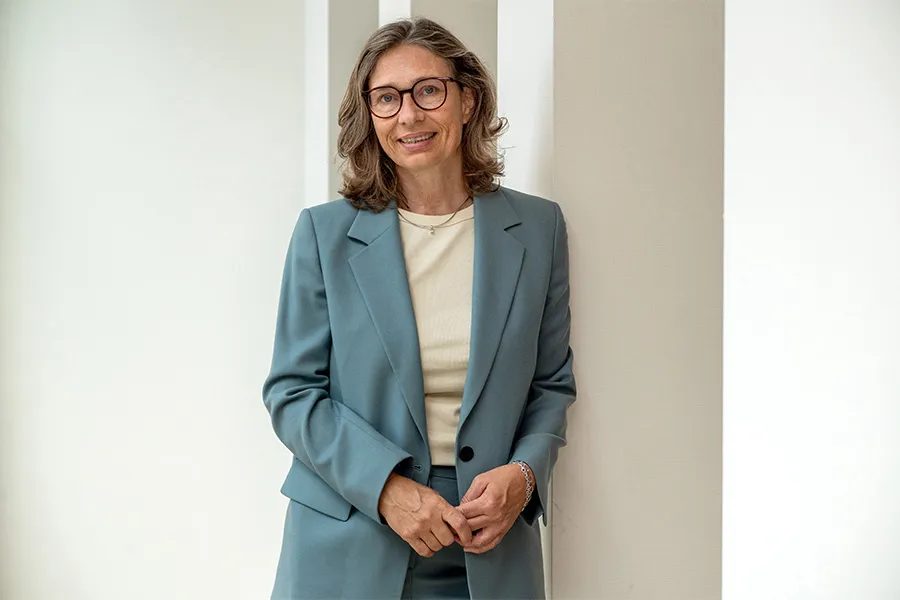
The Pen, Isolde Struijk, Director, Van den Herik
Question about this story? Ask your question
Keep following this
Get an email when a new story is published. No account needed.
- ThemeLower emissions and more reuse
- SubjectThe pen