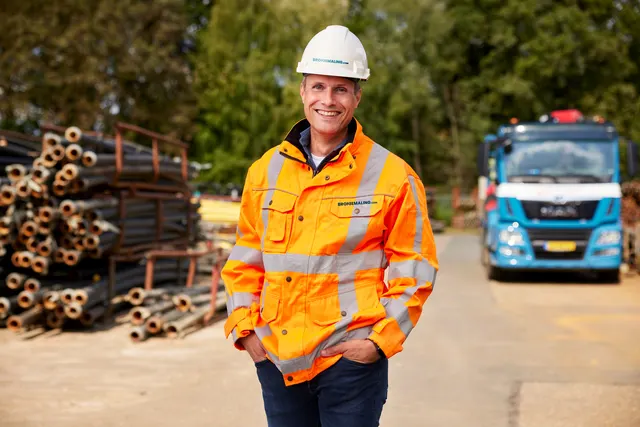
‘Construction is playing a leading role in the transition’
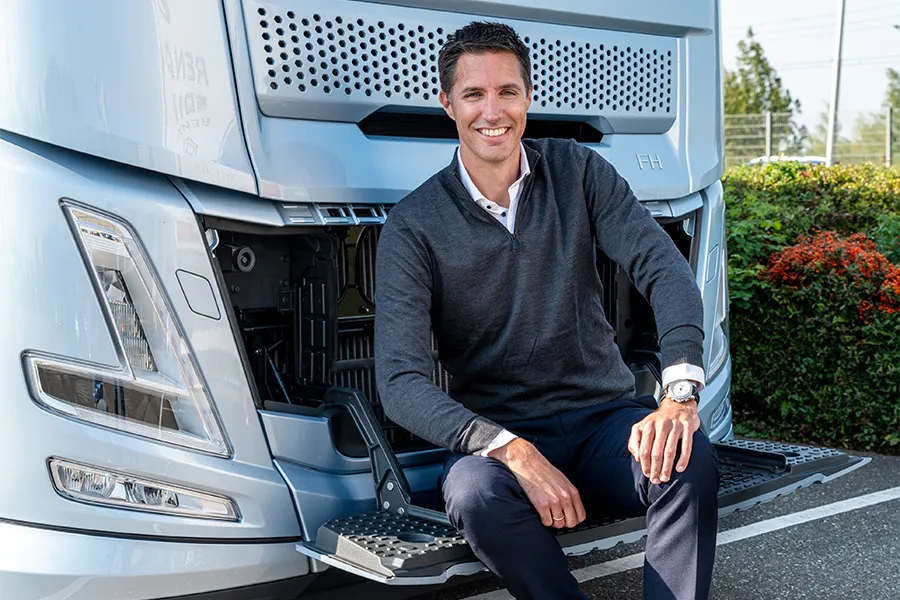
What a fascinating sector construction is. With a father who was a contractor, my keen interest in construction vehicles began at an early age. Over the years, I have seen demand grow for often complex factory-built solutions for a wide range of applications. Since the launch of the FMX 14 years ago, Volvo Trucks has grown in the construction segment, where bespoke solutions are the norm and special vehicles offer flexibility. This has made us a market leader, thanks to the confidence of the Dutch construction industry. When series production of electric trucks began in 2019, we thought we would mainly serve the distribution market and retailers. Surprisingly, the first enquiries came from the construction segment. Once that ball started rolling, orders soon came in thick and fast.
More and more is possible
The ever-dynamic construction industry then proved itself to be a true pioneer, willing to invest and keen to explore what is possible. When no chassis cabs were yet available for use as tipper trucks for soil or asphalt, customers simply ordered an electric tractor unit with a trailer. Other axle configurations followed, and the choice of OEM solutions expanded. Take, for example, the zero-emission 8×4 trucks and bodies with truck-mounted cranes, which are highly suited to construction. The market continues to evolve, and feedback from customers is making more and more possible.
Partly driven by Rijkswaterstaat tenders for zero-emission construction, the construction sector has therefore been playing a leading role in the transition to zero emissions for more than two years. Subsidies and the financial safety net provided by the certainty of a framework agreement with the client have certainly helped. Some business owners have even bought their last diesel truck. Zero-emission transport is becoming increasingly important. Just look at the demand for CO2 reporting and the introduction of environmental and zero-emission zones. That is, unless the government suddenly changes course. The transport sector certainly benefits from a reliable government that does not change the rules along the way, creating an unfair playing field for those investing in electric trucks.
Set to remain dominant
At the same time, electric vehicles are not currently the best option in every case. Take heavy haulage, for example, with combinations weighing far more than the regular maximum of 50 tonnes. In such cases, HVO diesel is an increasingly popular choice. In the longer term, the hydrogen combustion engine may offer a solution, although battery electric is expected to remain dominant. Almost 5,000 electric Volvo trucks are already on the road worldwide, so it can be done. It is important to determine the right battery capacity. A range of hundreds of kilometres is by no means always needed in the construction sector. In that case, it is better to leave out the weight of an additional battery pack and increase payload.
In line with this, we are seeing demand for a higher maximum permitted GCW for electric trucks. We are also seeing surprising and valuable partnerships emerge as part of the energy transition. Contractors and transport companies are joining forces, for example, to find creative ways of setting up charging hubs at project sites or at vacant premises near their businesses. We are not there yet, but good progress is being made. We will have to shape the road to ‘zero emissions’ together. As I said, it is a fascinating sector.
The Column, Roeland Ruygt, new Managing Director, Volvo Trucks Nederland
Question about this story? Ask your question
Keep following this
Get an email when a new story is published. No account needed.
- SubjectThe pen