









Keeping Amsterdam accessible during the closure of the Piet Heintunnel
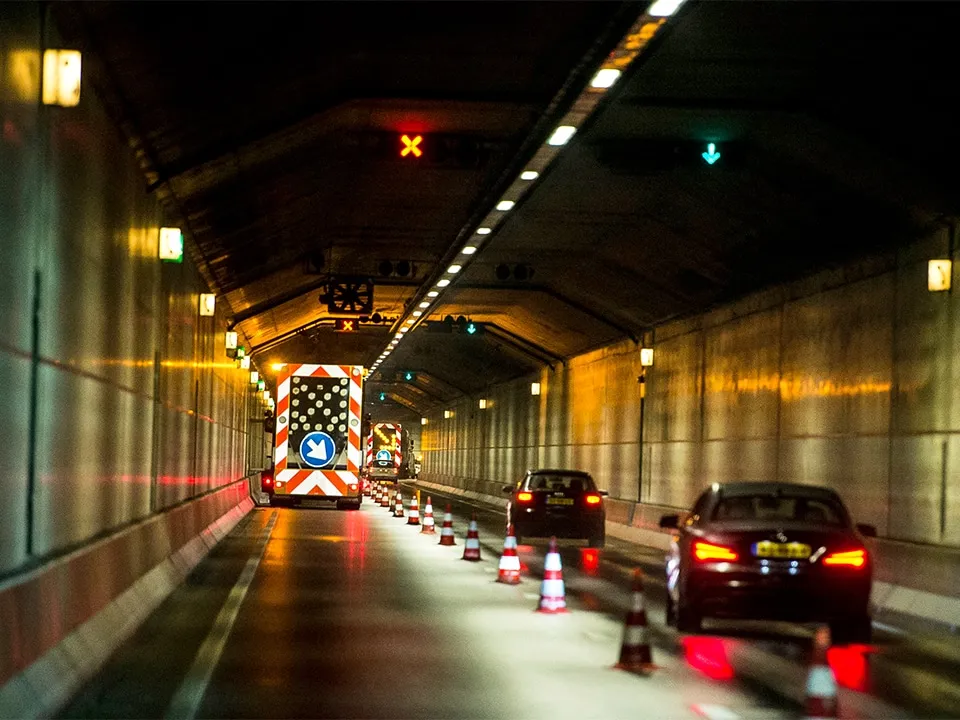
“In a world of increasingly complex mobility, it takes a different way of looking at things to find the right solutions for disruptive roadworks.”
That is the view of Jasper de Vries and Lisanne de Wijs of XTNT, who are involved in the renovation of the Piet Heintunnel in Amsterdam as mobility managers.
Influencing behaviour as well as diverting traffic
“Keeping the city accessible during the closure of the Piet Heintunnel, which starts this year, will take much more than diverting traffic,” says De Vries. “Traffic that would normally travel through the tunnel puts a great deal of pressure on the diversion routes. This is certainly undesirable when the closure is prolonged.” De Wijs adds: “The coronavirus crisis is also having an impact on mobility and traffic patterns, of course. In this case, there is uncertainty about how busy the roads will be when the tunnel closes, and about mobility alternatives such as public transport. These are factors we take into account, and they also present opportunities. For example, more and more people are discovering the benefits of avoiding the rush hour, as working from home becomes the norm for many. For every specific project, including this tunnel closure, we put users and changes in their travel behaviour at the centre of our approach. We use modern tools to influence road users’ behaviour.”
Mobility plan
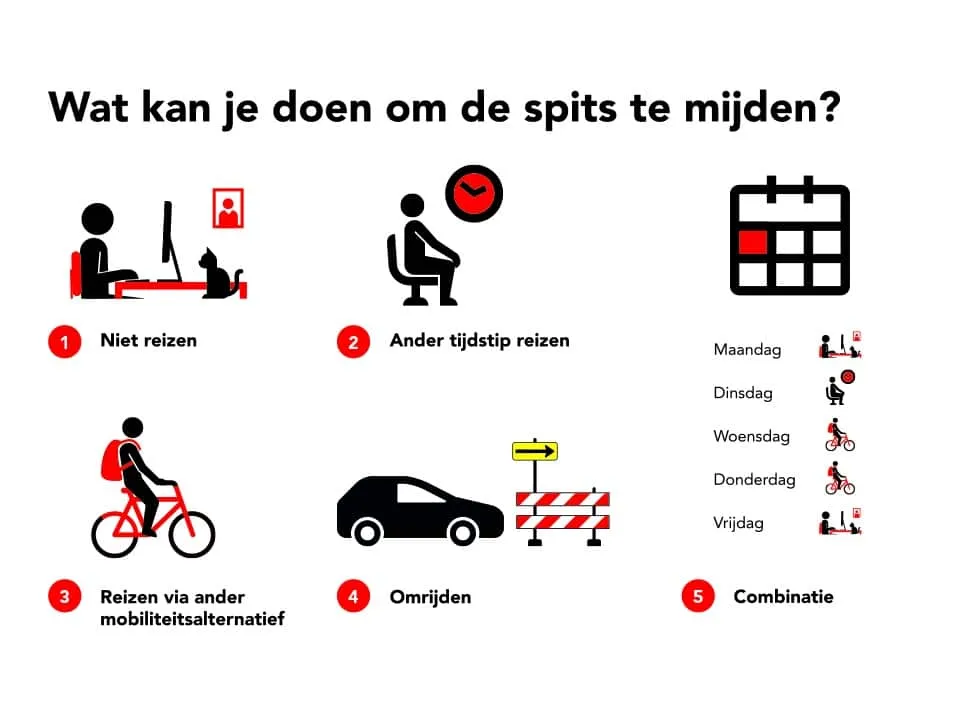
“Our mobility plan aims to avoid 1,500 peak-hour journeys per day during the tunnel closure. We are developing ideas and assessing which measures are most likely to succeed. We base our work on traffic figures from before the coronavirus crisis. First, we analyse who uses the tunnel and how we can reach them. Then we determine how best to encourage them to change their behaviour. That is crucial to the success of the measures,” says De Vries. “Psychology and communication are what set this approach apart,” says De Wijs. “We have identified five behavioural alternatives on which all the measures are based, to keep Amsterdam accessible during the closure of the Piet Heintunnel.” (see Figure 1)
From travel information to an employer-focused approach
“An important part of our approach is travel information. This allows us to target specific groups with relevant information and mobility alternatives,” De Wijs continues. “For example, we use smart apps to tailor the timing and content of messages to the target group. This allows us to influence traffic very precisely. We are also working with Stichting Breikers on an approach for employers in the area around the Piet Heintunnel. Through employers, we are trying to get their employees to travel differently, which should help reduce peak-hour traffic.
Supporting city-wide objectives
“We will make even greater use of developments already under way in Amsterdam, which contribute to lasting behavioural change and city-wide objectives. This includes encouraging the use of shared bikes and scooters. We are already doing a great deal in this area, but both the closure of the Piet Heintunnel and the new challenges arising from the coronavirus crisis show that these developments deserve even more attention in the period ahead,” De Vries concludes.
Question about this story? Ask your question
Who worked on Piet Heintunnel
- constructionHeijmans InfraMentioned in Piet Heintunnel renovation: strict schedule and unique collaboration in an alliance
- detailed engineeringSiemens MobilityMentioned in Piet Heintunnel renovation: strict schedule and unique collaboration in an alliance
- mobility managersXTNTIn this story
- energy distributionSiemens Smart InfrastructureMentioned in Busbar trunking for energy distribution at Piet Heintunnel

Keep following this
Get an email when a new story is published. No account needed.
- ProjectPiet Heintunnel
- SubjectBridge construction
- CompanyXTNT







