









Busbar trunking for energy distribution at Piet Heintunnel
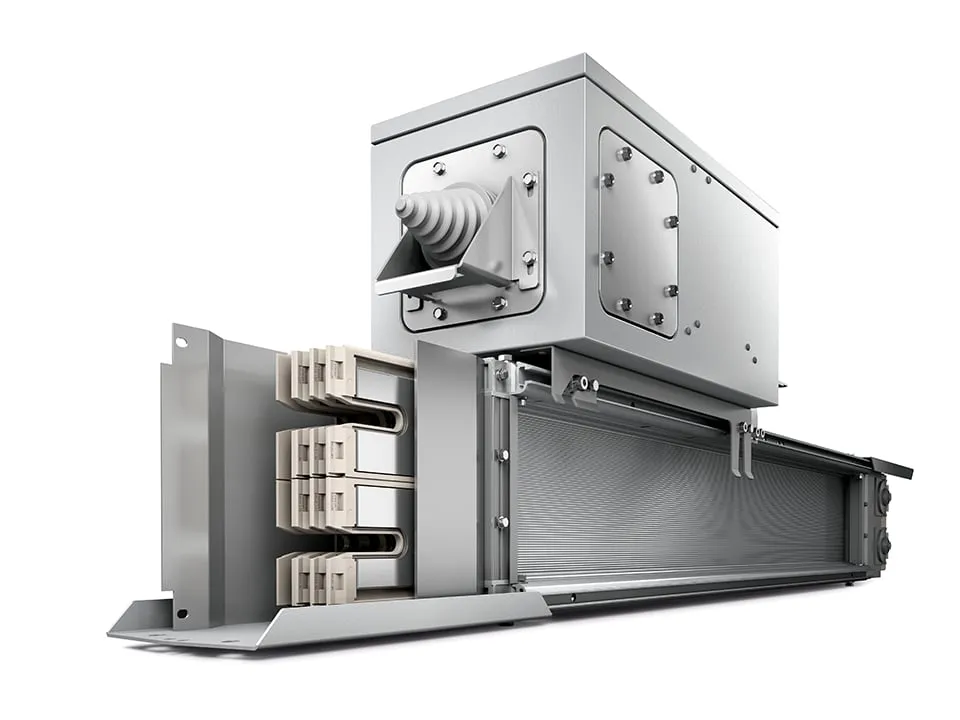
To address its energy supply requirements, the Piet Heintunnel alliance is calling on Siemens Smart Infrastructure.
They are responsible for the detailed design, as well as overseeing and delivering the entire energy distribution system for this challenging project. As a smarter alternative to conventional cables, Siemens is bringing the programme’s vision of a busbar trunking system to life. It can safely transmit large amounts of energy over long distances, even in confined spaces. Siemens’ Jeroen Clardeij and Kazs Krikke explain its benefits.
Three kilometres of busbar trunking
“We are supplying medium-voltage switchgear, transformers and low-voltage switchgear across four sections, with a total of more than three kilometres of busbar trunking,” Clardeij begins. Busbar trunking itself is not new. Siemens has been supplying reliable, fire-resistant power distribution systems using this technology for around twenty years, for countless applications in infrastructure and industry. These include data centres, as well as the metals industry, chemical plants and the food industry. Krikke notes that tunnels often rely on traditional methods, meaning conventional cabling is chosen. “But people are beginning to see that busbar trunking also offers benefits in tunnels,” he continues.
Nothing but benefits
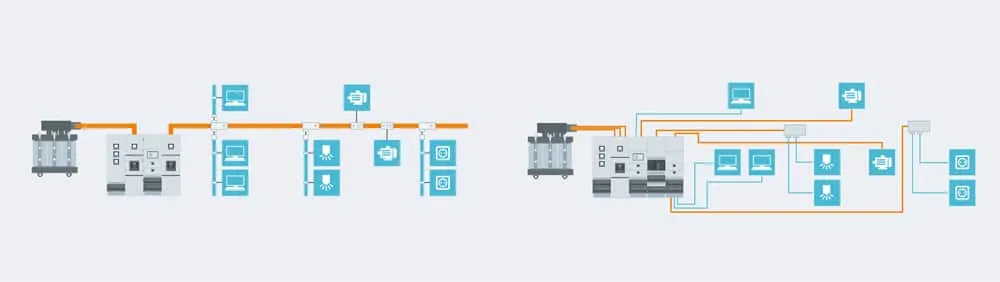
“Space is limited in a tunnel. Installing conventional cabling means putting a lot of cables in a cable tray, with many people working in a confined space. It also takes considerable physical effort to pull kilometres of cable, weighing thousands of kilos in total, from one point to another,” Clardeij explains. “Our busbar trunking system has a compact design. It consists of lightweight, three-metre-long aluminium elements that combine the cable and cable tray in one. You bring an element into the tunnel, connect it and move on to the next one. Installation is much easier and requires less manpower and physical effort. The modular busbar trunking system can also turn through a right angle, making it very space-efficient.” Krikke points to another benefit: safety. “The system’s low fire load is another major advantage over conventional cabling, particularly in tunnels, where safety requirements are continually increasing.”
Integrated, future-proof solutions
As well as safety, a longer service life and ease of installation, the busbar trunking system’s considerable flexibility is an important reason to choose it, according to Clardeij. “Siemens has developed the system to be optimally prepared for future modifications, energy management and individual requirements. Tap-off boxes can be easily clipped onto the tap-off points in the busbar trunking system, allowing extensions to be added quickly and safely, for example to provide additional lighting or ventilation. This is ideal in tunnel environments, where you want to minimise downtime.” Krikke concludes: “It is cheaper, reliable, safer, space-efficient, easier to plan and flexible. There really are nothing but benefits. And Siemens is happy to help, from design through to installation.”
Question about this story? Ask your question
Who worked on Piet Heintunnel
- constructionHeijmans InfraMentioned in Piet Heintunnel renovation: strict schedule and unique collaboration in an alliance
- detailed engineeringSiemens MobilityMentioned in Piet Heintunnel renovation: strict schedule and unique collaboration in an alliance
- mobility managersXTNTMentioned in Keeping Amsterdam accessible during the closure of the Piet Heintunnel
- energy distributionSiemens Smart InfrastructureIn this story
Keep following this
Get an email when a new story is published. No account needed.
- ProjectPiet Heintunnel
- SubjectBridge construction
- CompanySiemens Smart Infrastructure







