Innovation driving the transition to greener transport
Text Kees Beijer Image MAN Trucks
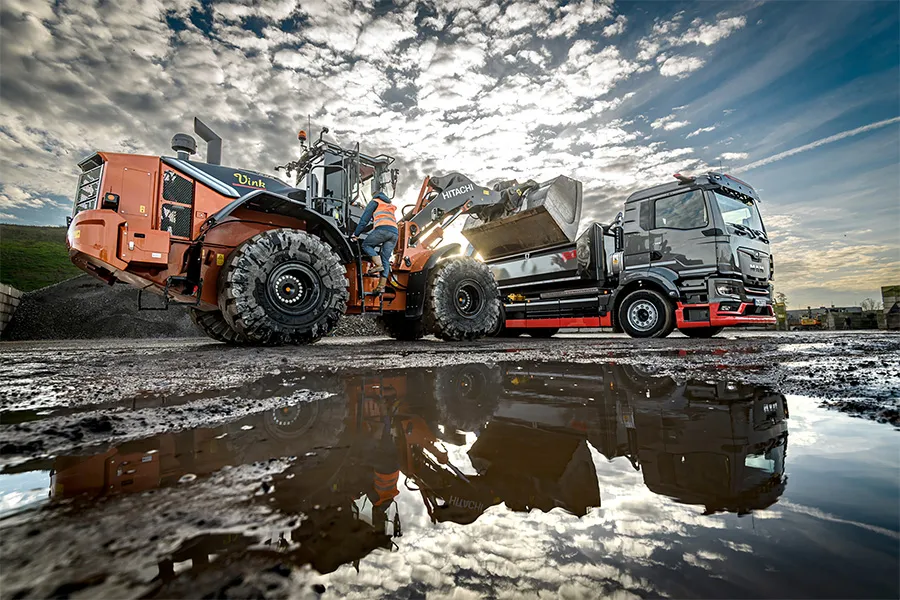
Truck manufacturer guides transport sector towards a sustainable future
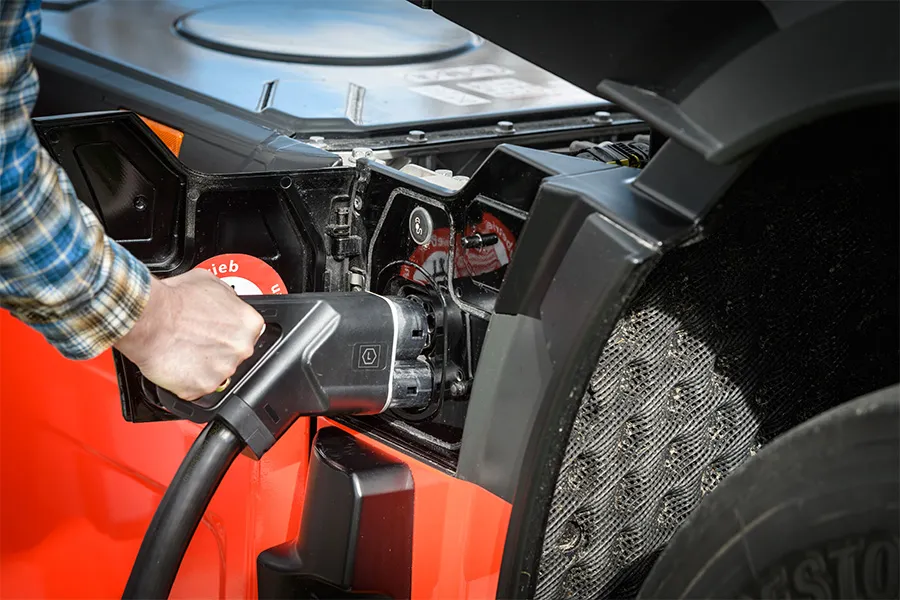
With the battery-electric eTGX, eTGS and eTGL, and the hydrogen-powered hTGX set to follow within a year, MAN Trucks offers a broad factory-built range of solutions to make the transport sector more sustainable. According to Jacobjan Vermeiden, Manager Transport Solutions at MAN Truck & Bus BV, the two technologies complement each other and are crucial to accelerating the transition.
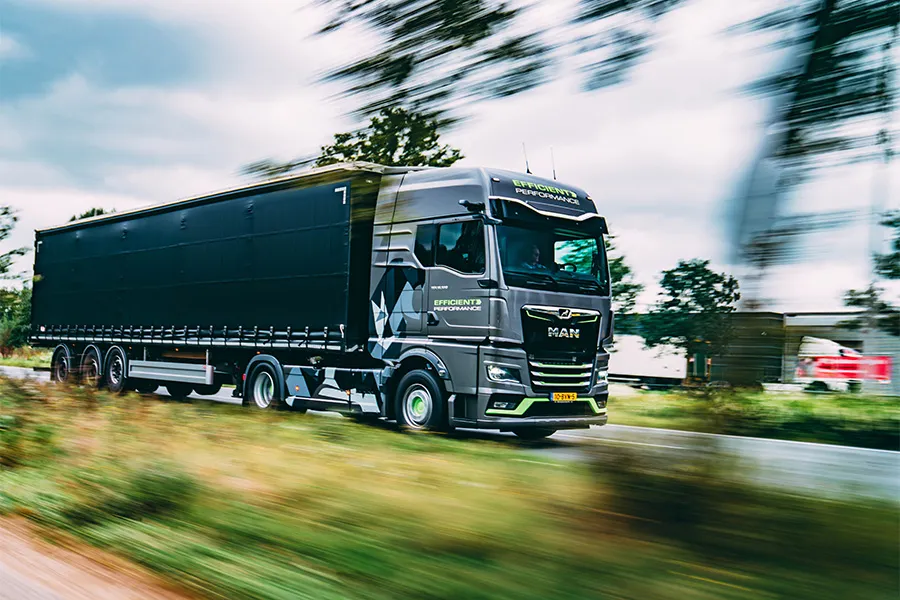
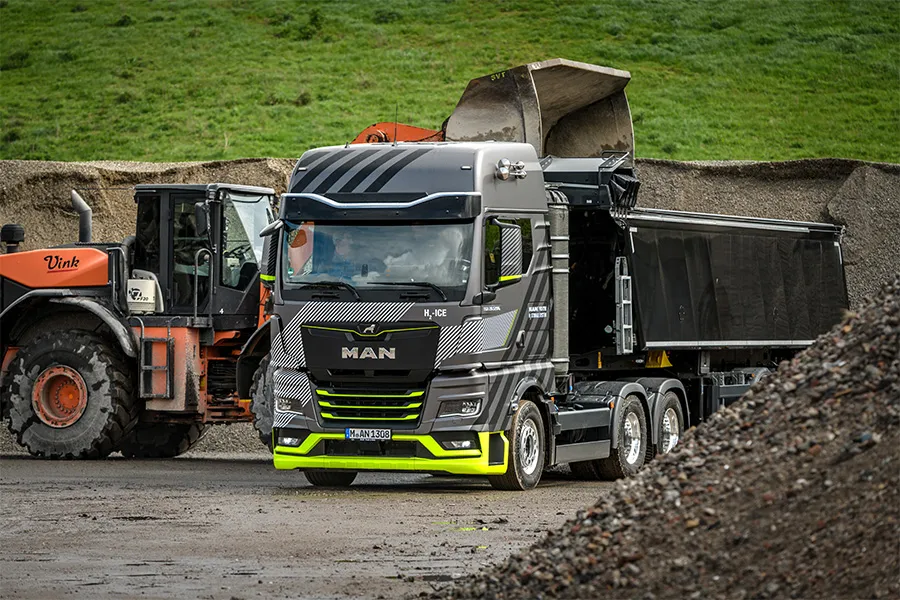
With the hTGX, MAN is pushing the boundaries of innovation, offering the world’s first hydrogen combustion engine developed in-house by a truck manufacturer. The H45 is based on the D38 diesel engine, but with its displacement increased to 16.8 litres. With an output of 520 hp and an impressive torque of 2,500 Nm, it is a powerhouse for the most demanding applications in construction and infrastructure, including ECO-Combis (LZVs), tank transport and heavy haulage. The hydrogen truck has a range of around 600 kilometres and can be refuelled in full in just 10 to 15 minutes. This makes the concept attractive to companies operating in heavy-duty segments, where electric drive often falls short.
Reduced payload
Jacobjan stresses that hydrogen offers a solution in situations where electric drive is not practical. “Electric skip loaders work well, but heavy bodywork such as concrete mixers, tipper bodies and truck-mounted cranes quickly brings limitations. Hydrogen offers a way forward here,” he explains. A battery pack also weighs an average of 700 kg, meaning a battery-electric truck can lose 2.5 to 3 tonnes of payload. Hydrogen trucks are lighter, which is a decisive advantage for specific applications in construction or in the heavy transport of equipment.
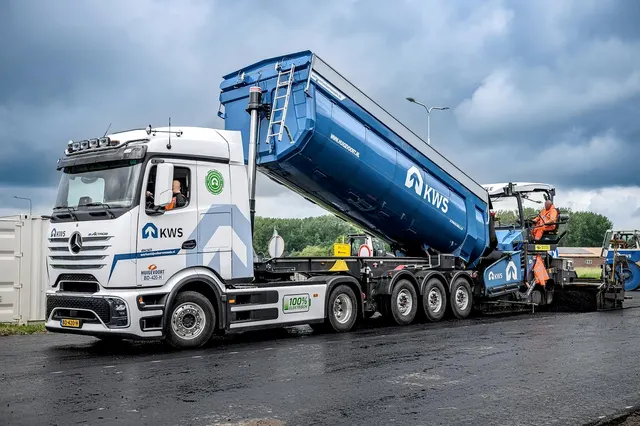
At the same time, MAN continues to invest in electric solutions. The eTGS and eTGX are designed for a wide range of transport needs and ensure that the available capacity is converted into energy efficiently. In early 2025, MAN will expand its zero-emission range with an 8×4 Tridem. This axle configuration is ideal for construction applications, such as a tipper body or hooklift system combined with a truck-mounted crane. This shows that electrification continues to advance, even in more complex vehicles. Another distinguishing feature is the PTO (Power Take-Off), developed specifically for electric construction trucks. While many manufacturers can only offer what is known as an electric PTO, MAN also retains the conventional mechanical PTO, driven via the gearbox, allowing bodies to be powered easily in the same way as on diesel trucks.
Leading the way
Choosing between electric and hydrogen is not straightforward. “Buyers of an hTGX are mainly looking for flexibility. They do not want to depend on a plug and would rather keep driving than stop to recharge. The hydrogen truck also offers a GVW of 50 to 90 tonnes for heavy-duty applications. The construction sector is once again playing a pioneering role.” Jacobjan notes that customers often come in interested in an eTruck, but ultimately choose hydrogen. Or vice versa. “It depends on the business case. In the end, it is all about finding the best solution for the customer, and MAN Truck & Bus is happy to provide that advice.”
To provide operators with the best possible support, MAN has developed an extensive TCO (Total Cost of Ownership) model. This enables companies, particularly those with mainly fixed routes, to simulate their specific situation, including the impact of route planning, bodywork and load. This approach helps customers make informed decisions and thus smooths the transition to zero-emission transport.
A realistic outlook
Although the benefits of sustainable technologies are clear, the transition remains complex. Pressure on the electricity grid and the limited availability of hydrogen stations make it difficult to switch over completely overnight. Economic considerations also play a part. Hydrogen trucks are simply more expensive to buy and run than their electric or diesel counterparts. Nevertheless, MAN offers a realistic outlook for the future, with a mix of technologies.
Jacobjan expects the TCO of eTrucks to be competitive with diesel models around 2030. Factors such as the truck toll coming in from 2026 and the expected rises in diesel prices and excise duties will certainly play a part. However, fuel-efficient diesel trucks will remain a viable option for the time being. In the short term, using HVO biodiesel offers a practical way to reduce emissions. Jacobjan warns that companies investing in a diesel truck now for six years may come to regret it, and advises them to seek good advice so they can make an informed decision.
“MAN aims to work with transport companies to find the best solution for their specific needs, without compromising on sustainability.” With a wide range of innovative vehicles and a customer-focused approach, MAN Trucks is setting the pace for a sustainable transport sector. Electric and hydrogen are proving not to be rivals, but allies in the shared mission to reduce emissions and make a cleaner future possible.
Question about this story? Ask your question
Keep following this
Get an email when a new story is published. No account needed.
- ThemeLower emissions and more reuse
- SubjectMachines & equipment