Tailor-made in Arcen: the Netherlands’ longest self-closing flood barrier
Text Suzanne van Gaale Beeld Dijkzone Alliantie Arcen
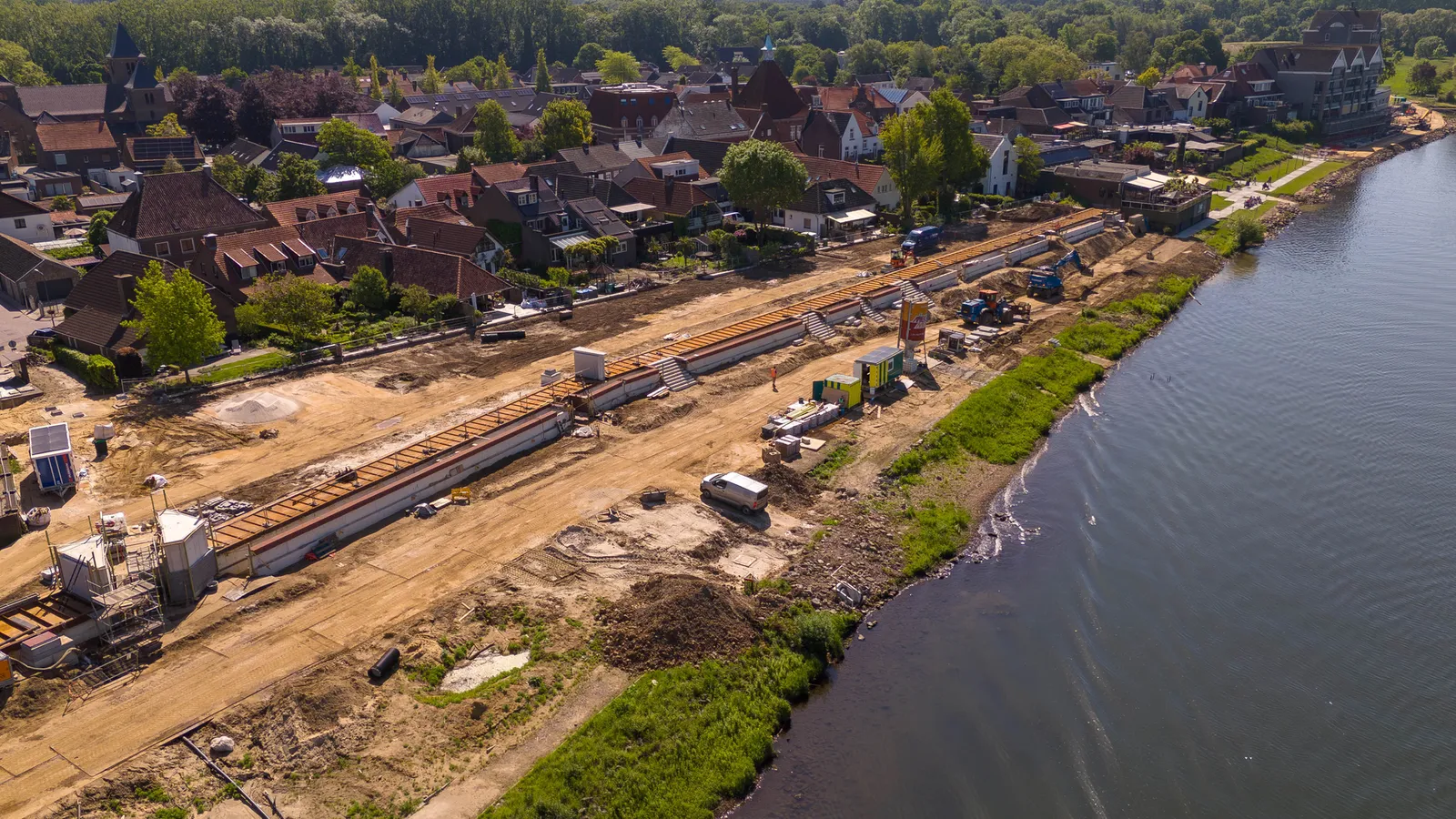
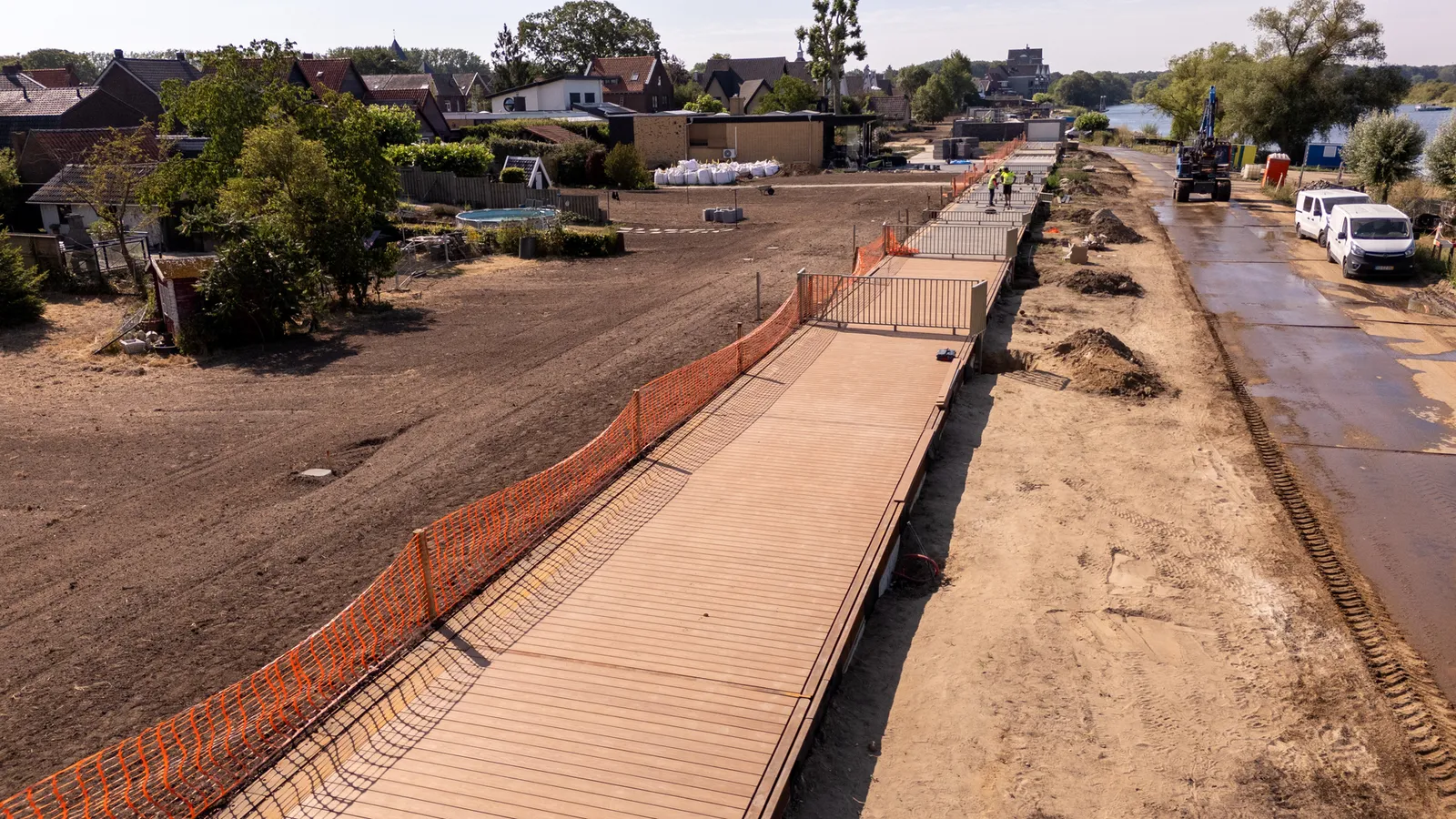
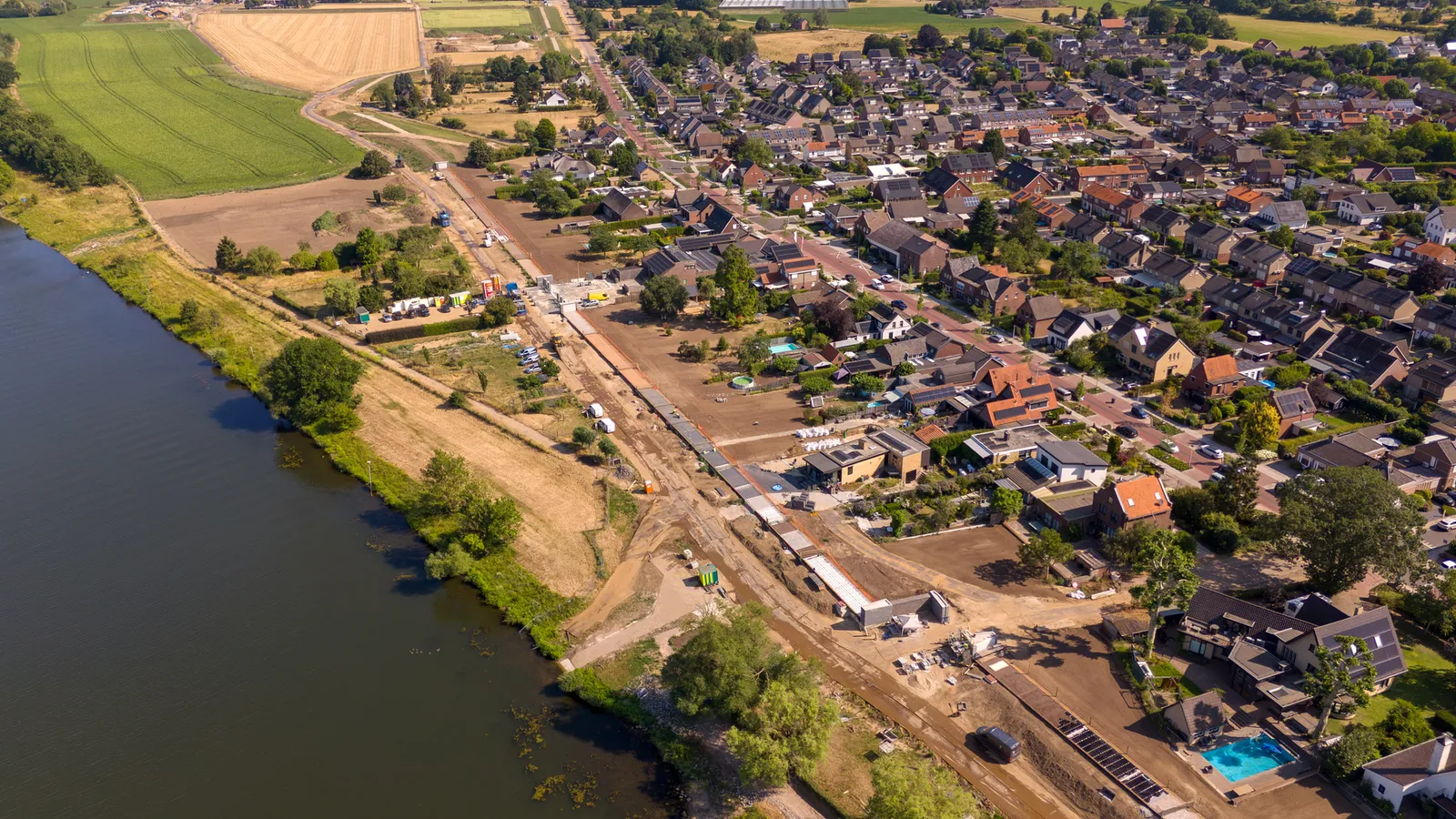
A remarkable piece of hydraulic engineering is taking shape in Arcen: a self-closing flood barrier almost 600 metres long, which will run through 38 back gardens. This will make Arcen home to the Netherlands’ longest self-closing flood barrier. The work is being carried out by Dijkzone Alliantie Arcen, a partnership between Ploegam, Dura Vermeer and Hollandia Infra. They are delivering the project on behalf of Waterschap Limburg. This partnership is particularly important in a project which, according to those involved, has no straightforward solutions.
The existing flood defences in Arcen comprise a mix of grass-covered dikes and hard defences with demountable barriers. Investigations showed that several sections of the dike no longer met safety requirements. The main shortcomings related to height, piping and inward stability. A new flood defence is therefore being built along a 4.8-kilometre stretch, while sections of the existing defence are being strengthened or realigned.
Three areas
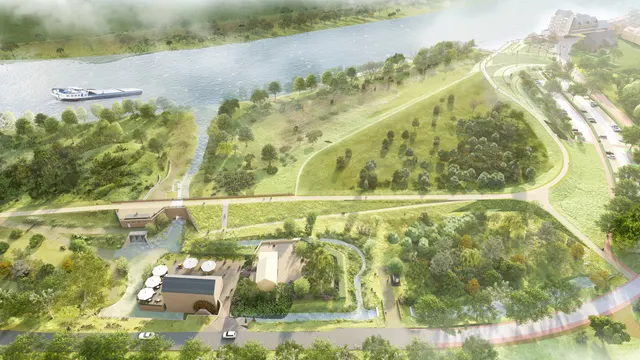
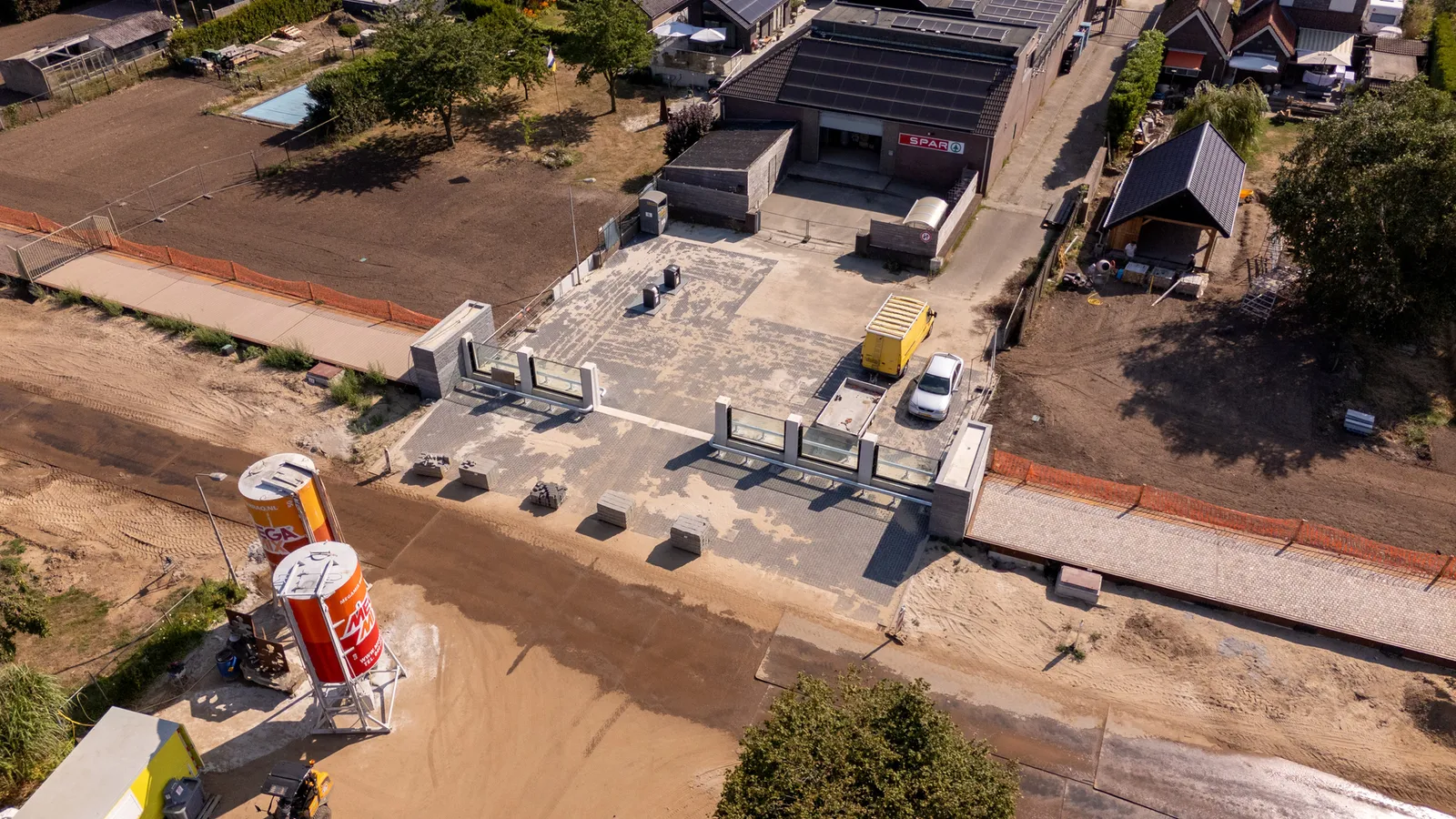
The project is divided into three areas. In Arcen-Noord, dikes are being realigned. Arcen-Midden is largely within the built-up area. Here, a self-closing flood barrier will be installed over approximately 590 metres, supplemented by a glass flood barrier and various demountable barriers. In Arcen-Zuid, the grass-covered flood defence is being strengthened within and around the Natura2000 area. Work is also being carried out on the Lingsforterbeek and the area around the watermill, and a fish pass is being constructed. The reinforcement is also linked to a so-called system measure. By realigning sections of the flood defence, more space is being made for the Maas. This will allow water to be stored and discharged more effectively, reducing the risk of high water levels and flooding.
Tailor-made solutions at every location
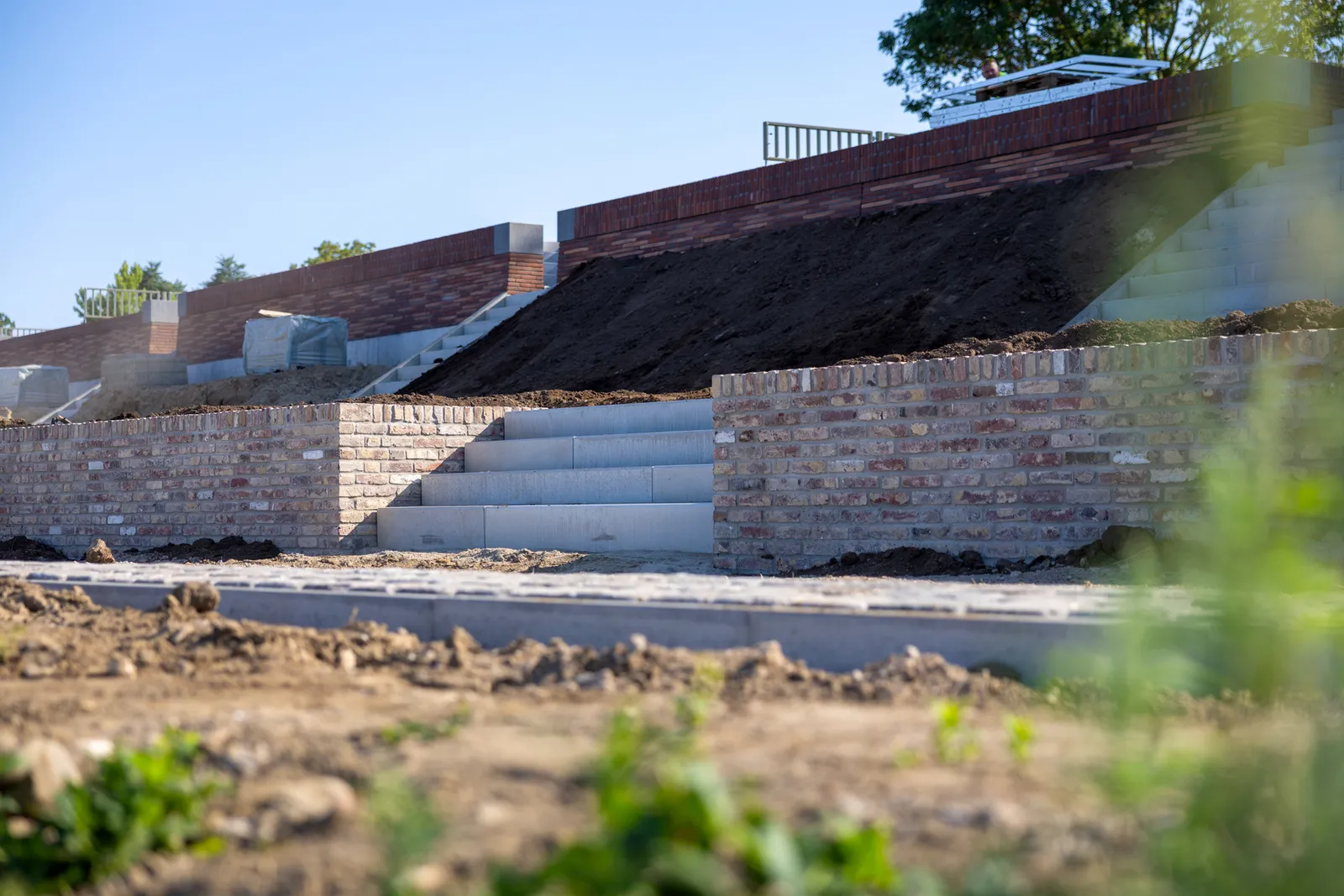
The location of Arcen is what makes the project particularly challenging, both technically and organisationally. The new flood defence has to fit around the existing surroundings. At the Alt Arce hospitality venue, for example, part of the building is being demolished to make room for the new defence, after which the restaurant will be rebuilt around the new structure. In the La Tour Meuse apartment building, the flood defence is being designed to connect with the existing façade and balconies. The glass flood barrier will therefore effectively serve as a balustrade. A design that fits the character of Arcen has also been developed for the historic buildings and old town walls.
This is not a case of rolling out one standard solution over 4.8 kilometres. The flood defence continually adapts to its surroundings. This calls not only for tailor-made technical solutions, but also for extensive coordination with residents and other stakeholders. “The whole project is tailor-made. Nothing is straightforward,” says Dennis Hageman, civil engineering technical manager at Dura Vermeer. “It has been integrated into and adapted to the surroundings and residents’ wishes.”
A flood defence that does not have to be visible
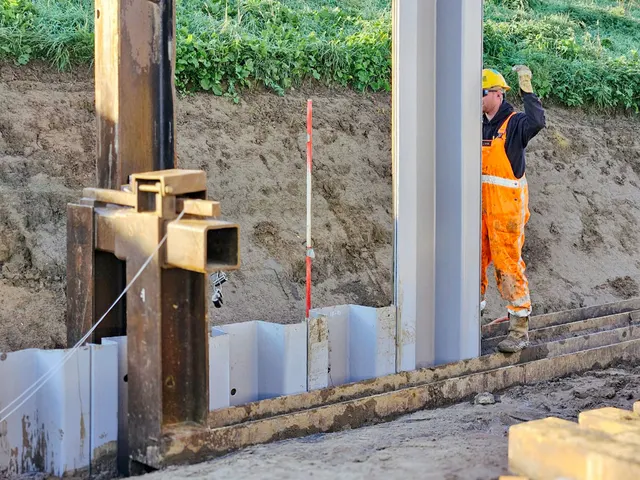
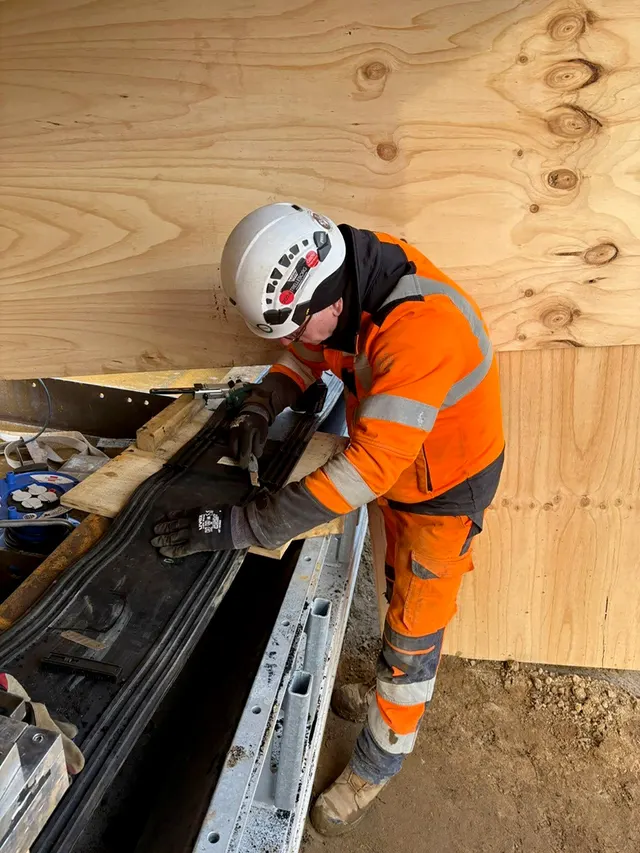
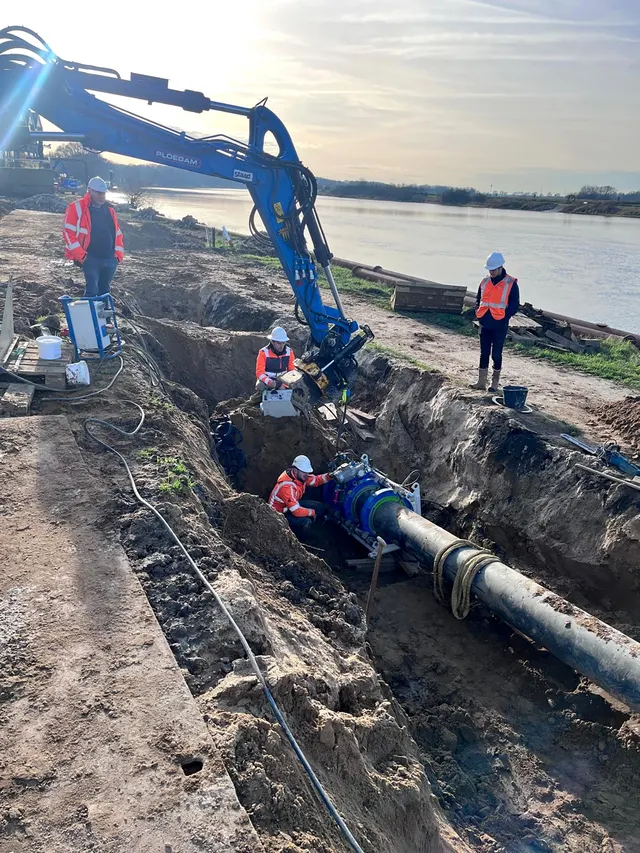
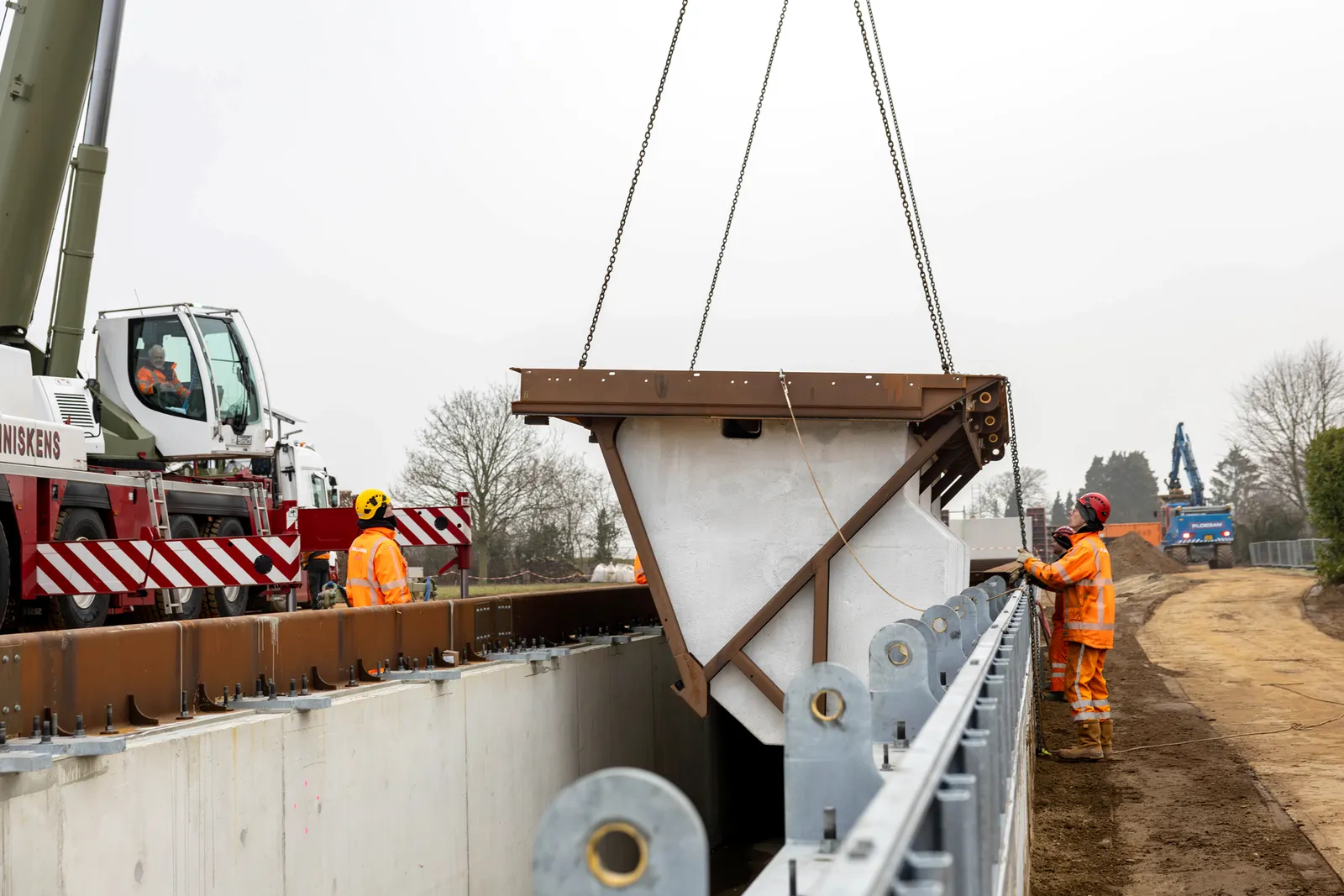
One of the most unusual elements is in Arcen-Midden. There, a self-closing flood barrier will run through 38 back gardens. Under normal water conditions, the barrier is barely visible and residents can use their gardens as usual. Only when the water level in the Maas rises does the barrier automatically lift into position. The principle sounds simple, but putting it into practice requires the utmost precision. “The gates have been custom-made for each section of the route. They are about 9.5 metres long and weigh around 7,000 kilograms each,” says Dennis. “Lifting them into position and installing them is a matter of millimetres. The gates are then fitted with water seals and finished as agreed with the residents. The flood defence is therefore both a fully integrated part of the living environment and a technical flood protection structure.”
Learning from previous projects
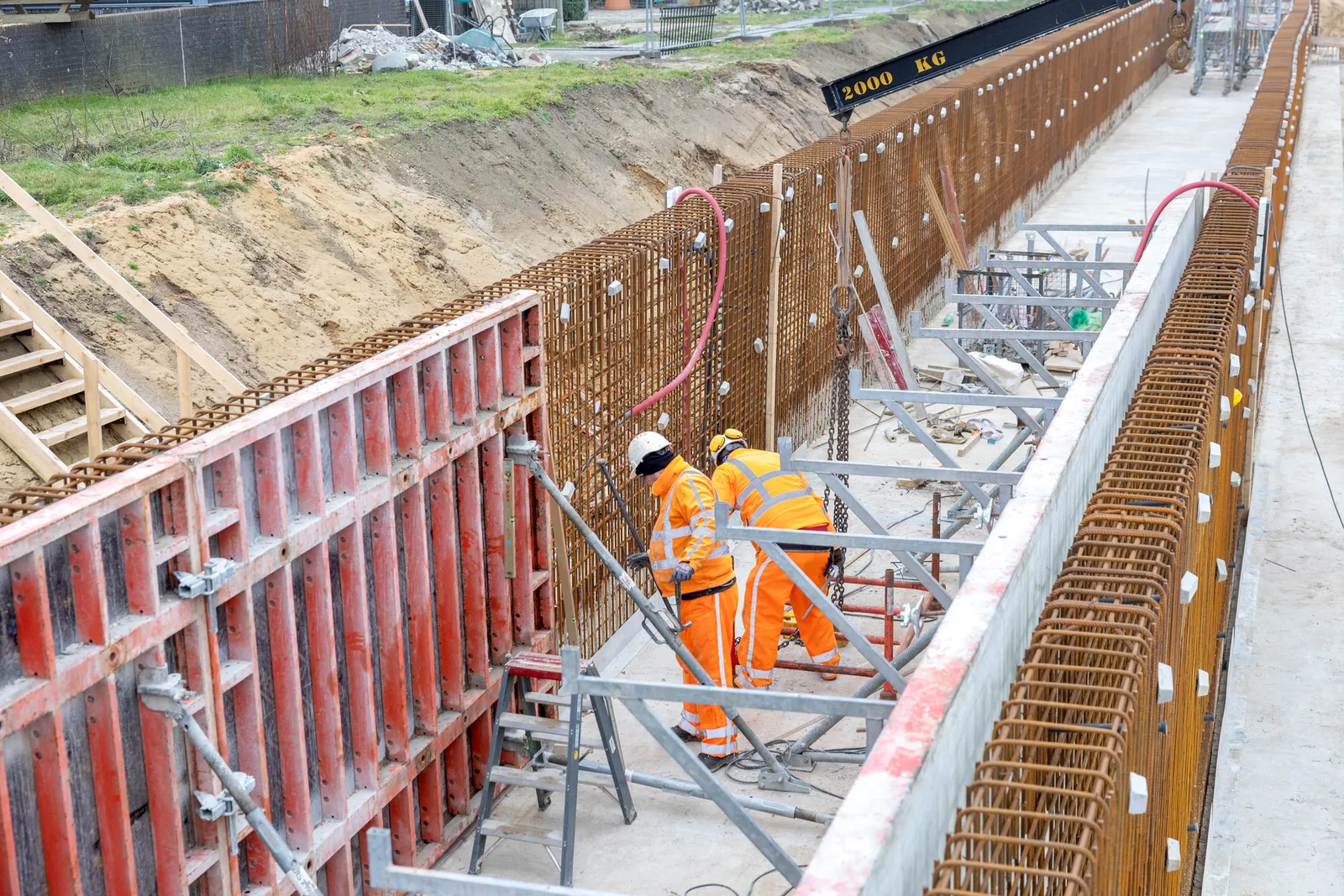
The technical design builds on experience from previous projects. For the self-closing flood barrier in Arcen, for example, the team drew on the construction work in Steyl. One important lesson from that project concerned the hinge points. In Arcen, a continuous hinge beam has been chosen, making dimensions easier to control. The design of the concrete troughs has also been revised. Dennis explains: “Where longer structures would normally be divided into sections with expansion joints and rubber connections, in Arcen we opted for a maximum trough length of 150 metres. Using steel-fibre-reinforced concrete meant we could omit the expansion joints and simplify the connection between concrete and steel.”
Focus on reusing materials
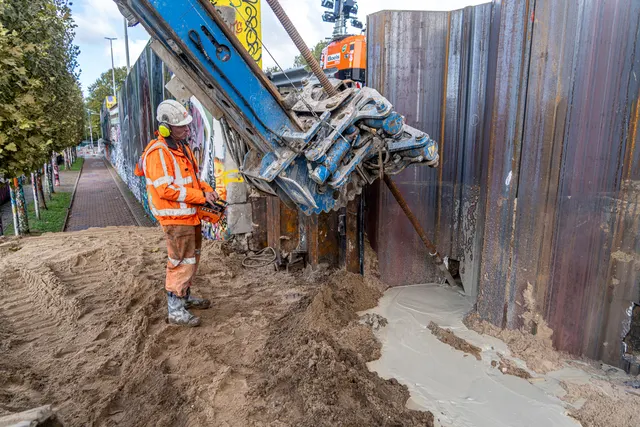
Sustainability is also part of the approach. Electric equipment is being used during construction, and as much soil as possible is being reused locally. “So far, around 100,000 cubic metres of sand and clay have been brought in and used, much of it sourced from the nature restoration projects Lommerbroek, Straelensbroek and Vreewater run by Stichting het Limburgs Landschap,” says Marijn Arts, technical manager at Ploegam. “We have also been able to reuse around 100 tonnes of sheet piling from the dike reinforcement project in Steyl in Arcen. In addition, we have carried out trials with biochar. Biochar is made from plant residues that have absorbed CO2. These plant residues have been incorporated into the concrete mix. We used it in the concrete mixes for the inspection chamber covers of the self-closing flood barrier.”
High water
A further section of the flood defence is scheduled for this autumn. This is the remaining part of Arcen-Midden. It is also the most challenging section, as it is close to buildings, there is little room to work and the structure is being built on piles. Marijn says: “So far, we have been able to build around the existing flood defence. Now we have to demolish part of it to build the new defence. That means putting the necessary emergency measures in place in case of high water. We are working on the river side of the defence, so we are very dependent on water levels. We could well end up with wet feet at some point.”
Working together
Those involved say that the way Dijkzone Alliantie Arcen and Waterschap Limburg work together is one of the project’s key strengths. Martijn van den Essen, technical manager at Waterschap Limburg, says: “There is a high degree of openness. We keep each other informed throughout the process and share knowledge. This means technical issues, construction challenges and management considerations can be discussed jointly during the project.”
The latter is becoming increasingly important as the project progresses. Two streams, for example, converge near the watermill, and the historic Wijmarsche watermolen has to be integrated into the plans. “The first two fish lifts in Limburg are also being built here, as well as the largest pumping station in Limburg in terms of surface water capacity. For us at Waterschap Limburg, these are new types of structures. They require attention not only during construction, but also have implications for future management and maintenance.”
If all work proceeds according to plan, Arcen will be protected from flooding by the end of 2027, with the final work completed in 2028.
Question about this story? Ask your question
Wie aan Zelfsluitende waterkering Arcen werkte
- constructionDijkzone Alliantie ArcenIn this story
- manufacturerHollandia InfraMentioned in Safely lifting 7-tonne steel gates for the Arcen dike reinforcement project
- designers of landscapes and living environmentsTrafiqueMentioned in Spatial design makes the flood defence an integral part of Arcen
- landscape architectH+N+S LandschapsarchitectenMentioned in Spatial design makes the flood defence an integral part of Arcen

Keep following this
Get an email when a new story is published. No account needed.
- ProjectSelf-closing flood barrier Arcen
- ThemeFlood protection and climate-resilient water management
- SubjectDijkversterking Arcen
- CompanyDijkzone Alliantie Arcen