Safely lifting 7-tonne steel gates for the Arcen dike reinforcement project
Text Suzanne van Gaale Image Jenniskens
Test first, then lift
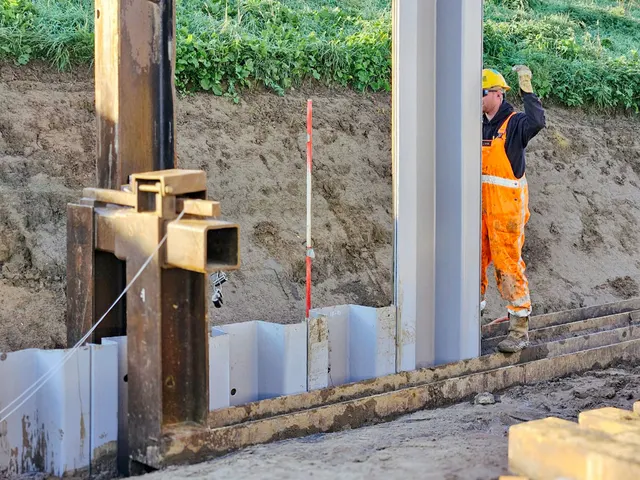
The self-closing flood defence is taking shape as part of the dike reinforcement project in Arcen. The first steel gates have been installed since January, but there is still a long way to go. The gates, each weighing 7 tonnes, must be transported, turned and precisely installed along a route that will eventually stretch for around 600 metres. For Nijmegen-based Jenniskens, this presents a logistical and technical challenge that required thorough preparation.
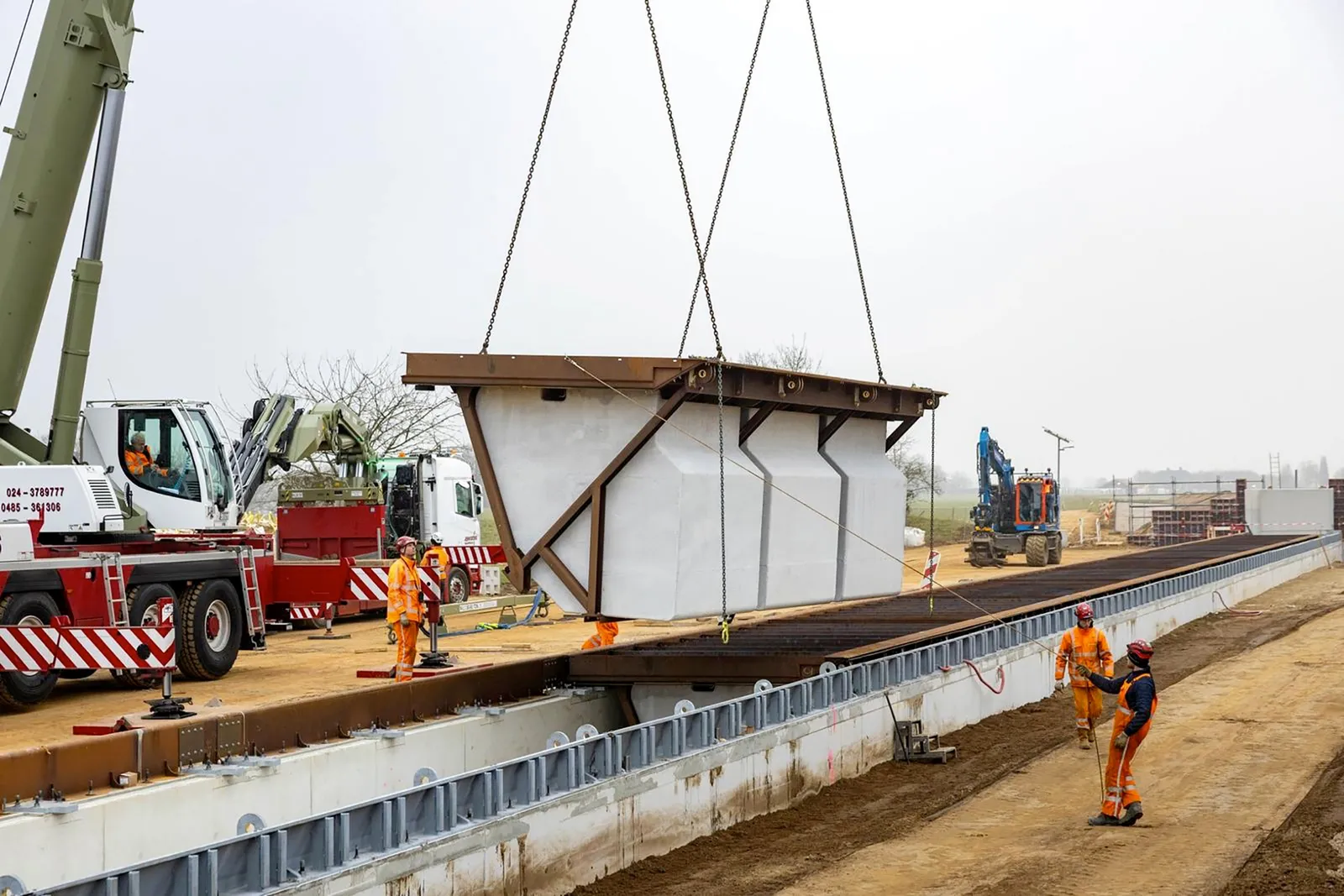
The self-closing flood defence is a distinctive feature of the project. It consists of interconnected steel gates mounted in a concrete trough. When the Meuse fills the trough during high water, the buoyancy of the plastic causes the gates, each weighing around 7,000 kilograms, to rise automatically and form a flood barrier. The first gates were successfully installed at the end of January. Each gate has been specially manufactured for its position along the alignment and measures around 9.5 metres long, almost 4 metres wide and 3 metres deep.
From the site compound to the flood defence
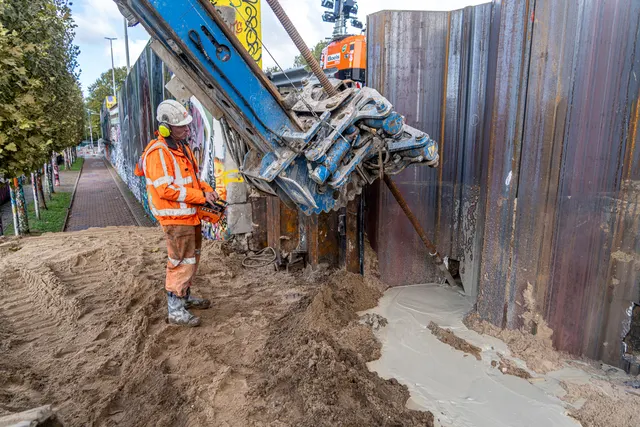
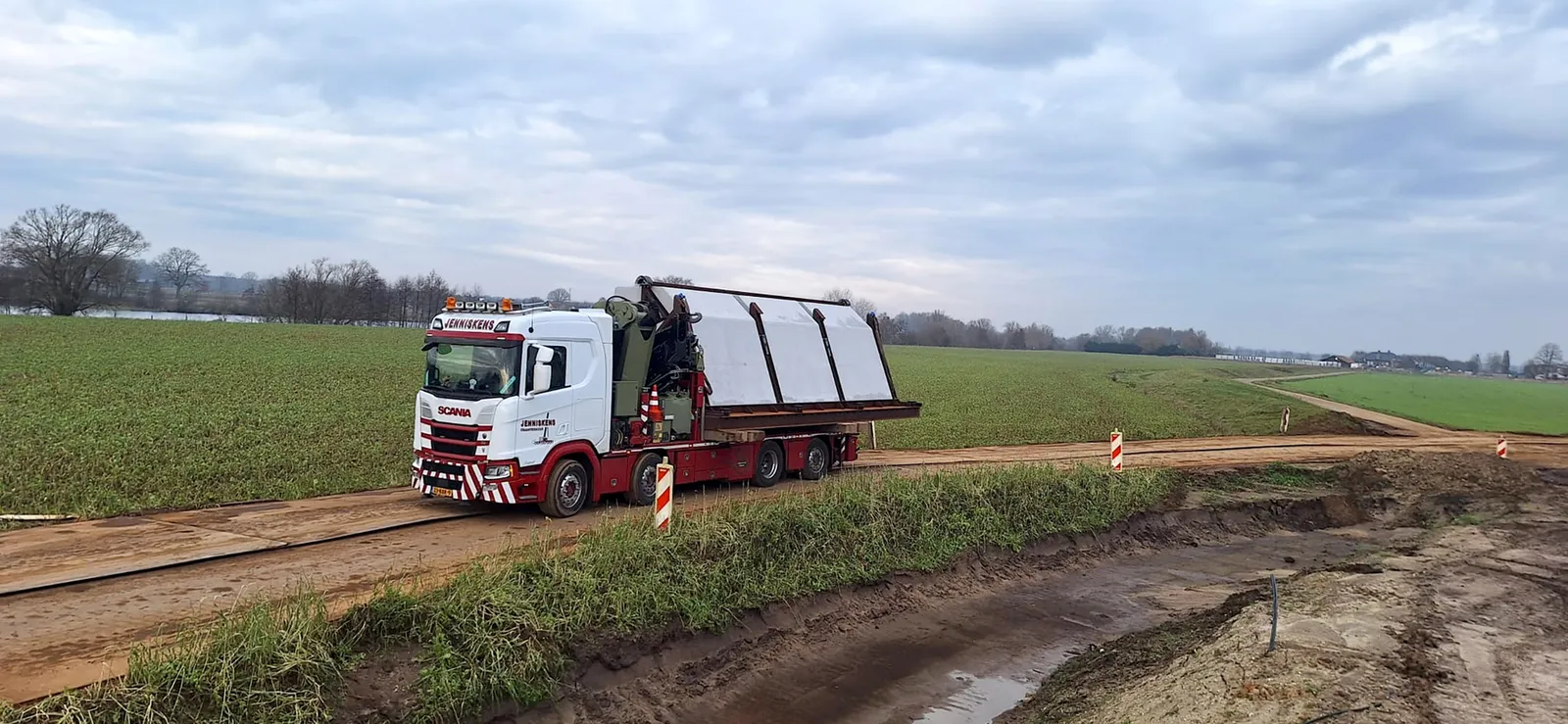
Jenniskens is responsible for both transporting and lifting the gates into place. The components are moved from a temporary site compound on the edge of Arcen to the construction site using a lorry-mounted crane. At the site, a telescopic crane takes over and positions the gates precisely in the concrete structure.
Test first, then lift
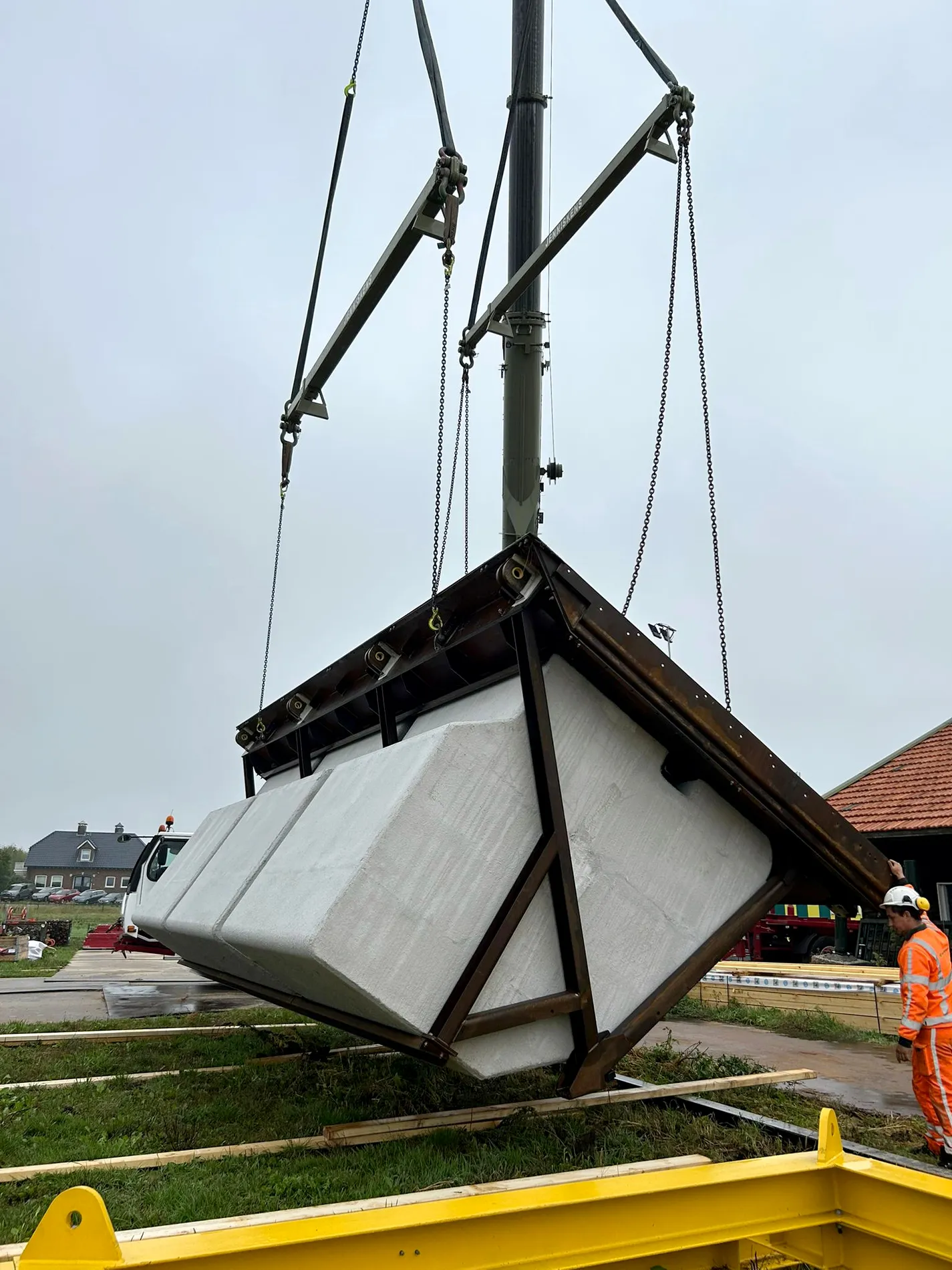
Turning and lifting the large steel gates in particular required extensive preparation. Jenniskens therefore developed a lifting plan together with manufacturer Hollandia Infra. “The gates arrive upside down and then have to be turned over before they can be installed in the structure,” says Jaap Wijenberg, work planner at Jenniskens Kraanverhuur. “You start thinking: how can you do this safely, what lifting equipment do you need, and where can the loads be safely applied to the structure?”
The combination of size and weight made the preparations especially challenging. The solution was to use two cranes to guide each gate simultaneously as it was turned. One crane supports the bottom, the other the top. This allows the gate to be turned in a controlled manner while suspended in the air before being lifted into place vertically. Special spreader beams are used to distribute the lifting forces evenly. A full-scale test was carried out beforehand, checking the lifting points, the turning movement and even the optimum length of the lifting chains, with adjustments made where necessary. This preparation is paying off during the work. Around eight gates can now be installed per day.
Working well together
This technique is not entirely new to Jenniskens. The company was previously involved in installing the self-closing flood defence in Steyl and is working in Arcen with largely the same crew. “That works well,” says Wijenberg. “You know each other, know what to expect and can respond quickly. With this kind of lifting work, good teamwork is just as important as the equipment.”
Question about this story? Ask your question
Wie aan Zelfsluitende waterkering Arcen werkte
- constructionDijkzone Alliantie ArcenMentioned in Tailor-made in Arcen: the Netherlands’ longest self-closing flood barrier
- manufacturerHollandia InfraIn this story
- designers of landscapes and living environmentsTrafiqueMentioned in Spatial design makes the flood defence an integral part of Arcen
- landscape architectH+N+S LandschapsarchitectenMentioned in Spatial design makes the flood defence an integral part of Arcen

Keep following this
Get an email when a new story is published. No account needed.
- ProjectSelf-closing flood barrier Arcen
- ThemeFlood protection and climate-resilient water management
- SubjectDijkversterking Arcen
- CompanyHollandia Infra