









First in Voorschoten: overflow structure made from geopolymer concrete
Text Roel van Gils Image Aannemingsbedrijf Schouls
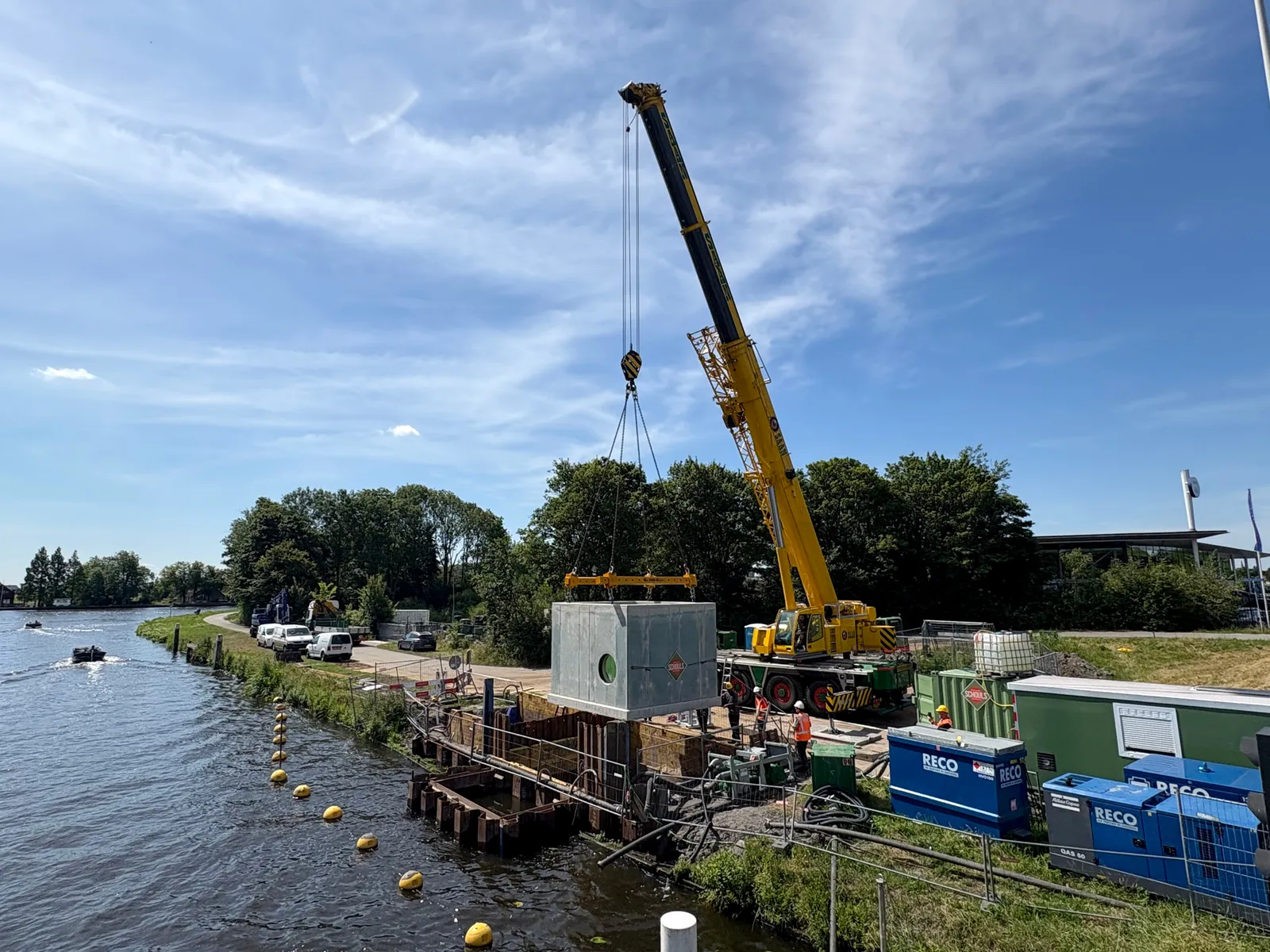
A special overflow structure was built in the municipality of Voorschoten this year. Commissioned by the Hoogheemraadschap van Rijnland, the project is unique because the concrete chamber was made from geopolymer concrete, a sustainable alternative to conventional concrete. For both the client and Aannemingsbedrijf Schouls B.V., this was the first time the material had been used as part of a sewer system.
An overflow structure is an essential part of the sewer system, says Corné de Vogel, project manager at Schouls. “The sewer system in Voorschoten drains to the Leiden-Zuidwest wastewater treatment plant. During extreme rainfall, however, the system’s capacity can be insufficient. Water levels in the system then rise rapidly, creating a risk of sewage spilling onto the streets. The overflow structure prevents this. When the water level in the sewer system rises too high, water flows in a controlled way through the new concrete chamber into surface water, in this case the Korte Vliet, a canal forming part of the regional water system. This keeps the sewer system operating and prevents disruption to the surrounding area.”
Tendering and the choice of sustainability
The Hoogheemraadschap van Rijnland put the project out to tender in the fourth quarter of 2024. Three parties were invited to bid, and Schouls won the contract. “Our bid was not the lowest, but we scored well against the EMVI criteria, particularly on emission-free construction,” says De Vogel. “A key consideration in the tender was the choice of material. The contract specified that the overflow structure had to be made from geopolymer concrete. It was also a pilot project for the Hoogheemraadschap van Rijnland. This concrete is known for its substantially lower CO2 emissions, saving around 105 kilos of CO2 per cubic metre. With 26 m³ of concrete used on this project, that delivered significant environmental benefits.”
Technical challenge
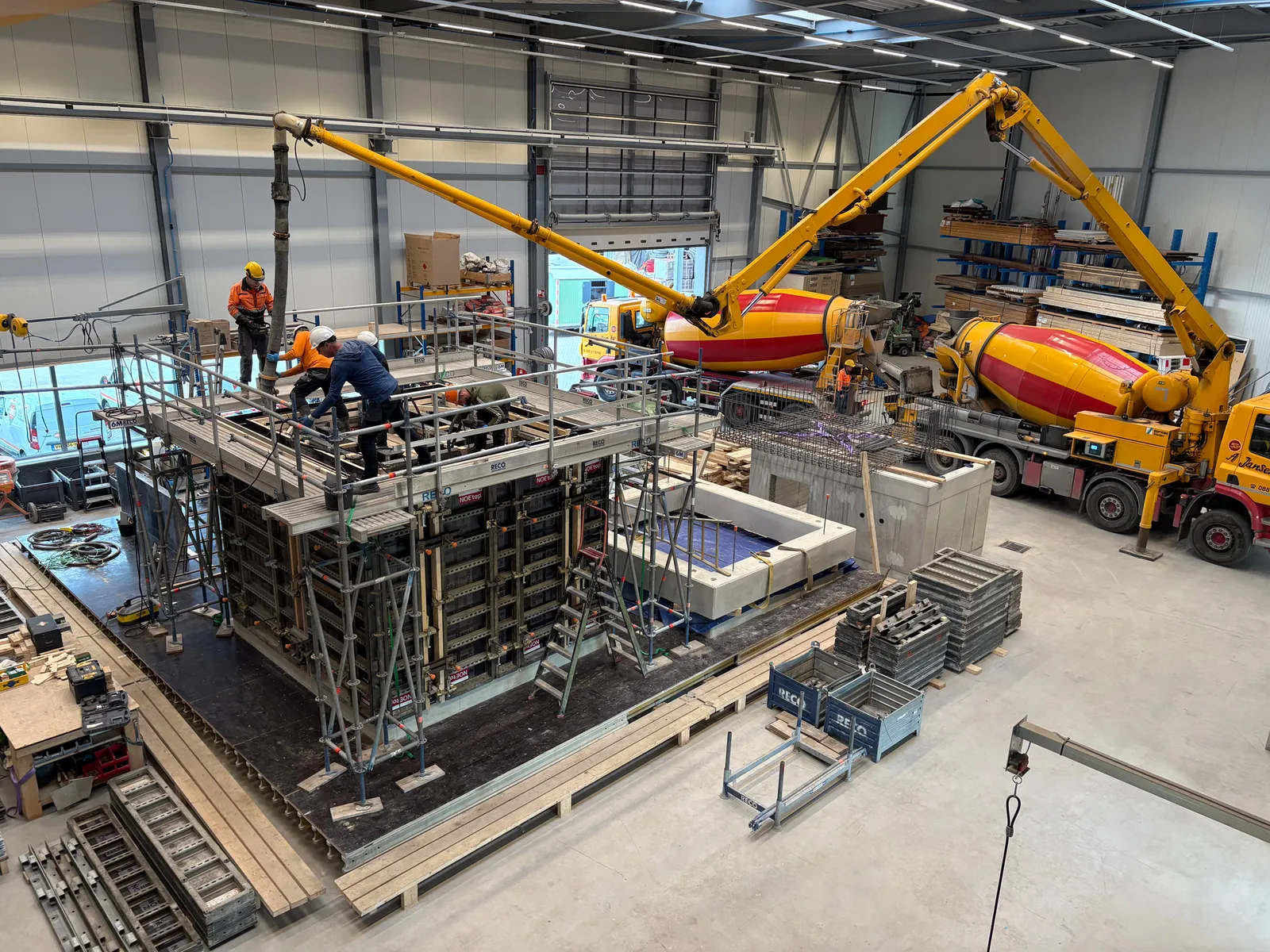
The overflow chamber itself is 3.60 metres long, 4 metres wide and 3.30 metres high. The base slab, side walls and overflow wall were cast as a single piece, with a total weight of 39 tonnes. The separately manufactured cover slab weighs a further 10 tonnes, bringing the chamber’s total weight to around 50 tonnes. “We chose to manufacture the structure at our own workshop,” says De Vogel. This proved not only that the approach was feasible, but also generated valuable knowledge for future applications. “An overflow blade is mounted on the overflow wall inside the chamber, allowing the overflow level to be set precisely. There are also floating non-return valves to prevent water flowing back from the surface water into the sewer system. In addition, the inside is lined with cast-in HDPE, which protects it from the aggressive environment in the sewer system, partly due to the presence of H2S gas.”
Emission-free construction
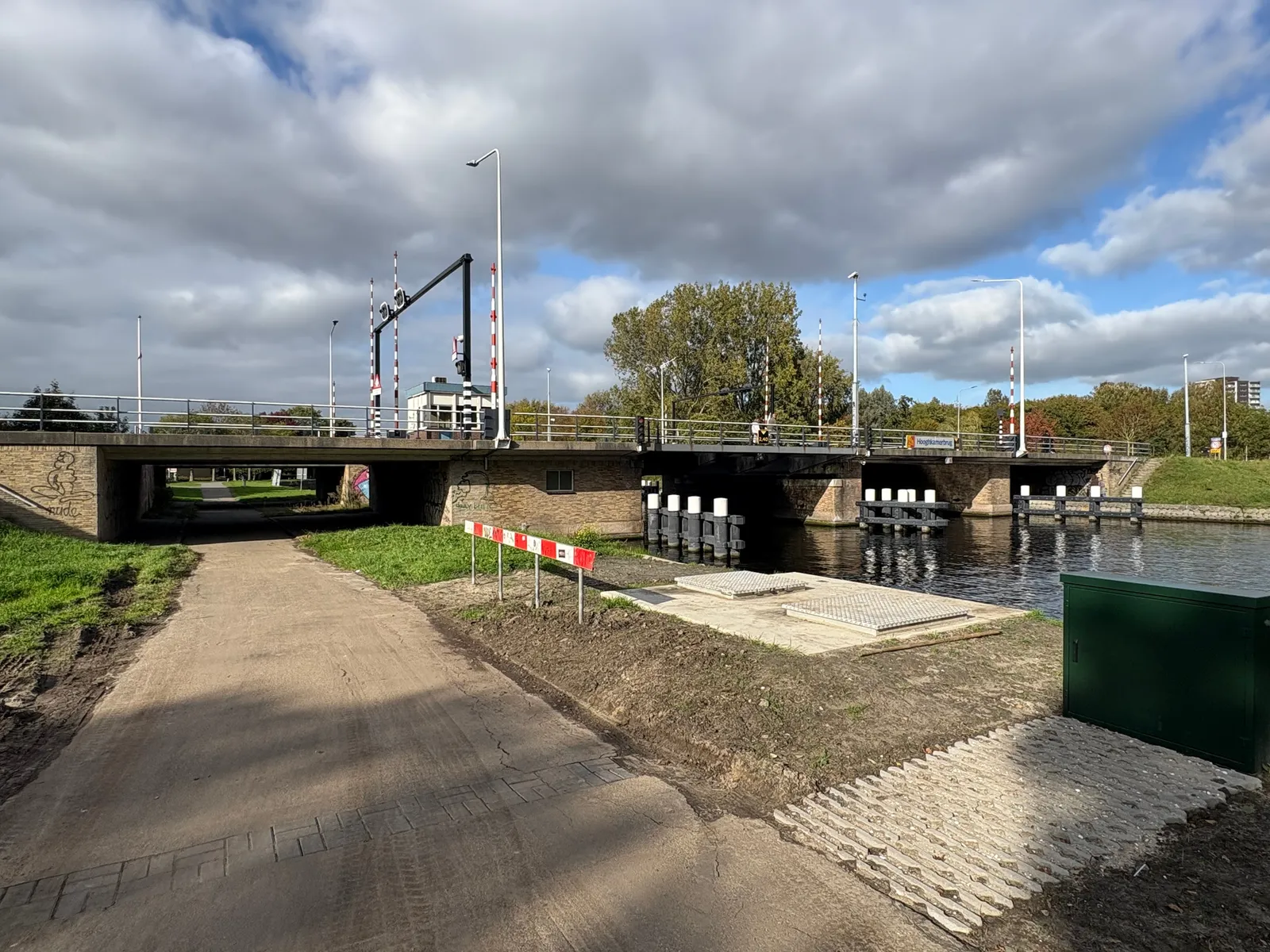
Following thorough preparations from early 2025, Schouls began the on-site work just after Ascension Day. Steel sheet piles were installed along the Korte Vliet, also allowing a section of the quayside to be replaced. The existing timber sheet piles were then removed, piles were driven and an excavation was dug. “After installing the chamber, which we had prefabricated at our workshop, we connected it to both the sewer system and the surface water, then backfilled the excavation. Finally, the quayside was finished with new stone cladding,” De Vogel recalls. “We placed a strong emphasis on emission-free construction during the works. We had offered to carry out 45 per cent of operating hours emission-free during the tender, but ultimately achieved 71 per cent, largely thanks to the use of an electric crawler excavator.”
Greater resistance
The overflow structure has now been completed and has been in operation since September 2025. The experience gained opens the door for Schouls to use geopolymer concrete more widely. “We build a lot of pumping stations for various water authorities. Geopolymer concrete also has strong potential in that market,” says De Vogel. He adds that geopolymer concrete is thought to be inherently much more resistant to corrosive conditions such as exposure to H2S gas. “This could mean that future applications in sewer systems can be built without protective HDPE lining. That would be another step towards making sewer structures simpler, more sustainable and more cost-effective. More to come.”
Question about this story? Ask your question
Who worked on it
Overstortvoorziening Hoogheemraadschap van Rijnland Voorschoten in Voorschoten
- clientHoogheemraadschap van Rijnland
Keep following this
Get an email when a new story is published. No account needed.
- ProjectOverstortvoorziening Hoogheemraadschap van Rijnland Voorschoten
- ThemeViable projects and strong collaboration
- SubjectYearbook
- CompanyHoogheemraadschap van Rijnland







