









Why traditional coal tar epoxy coatings are unsuitable as protective layers in wastewater treatment plants
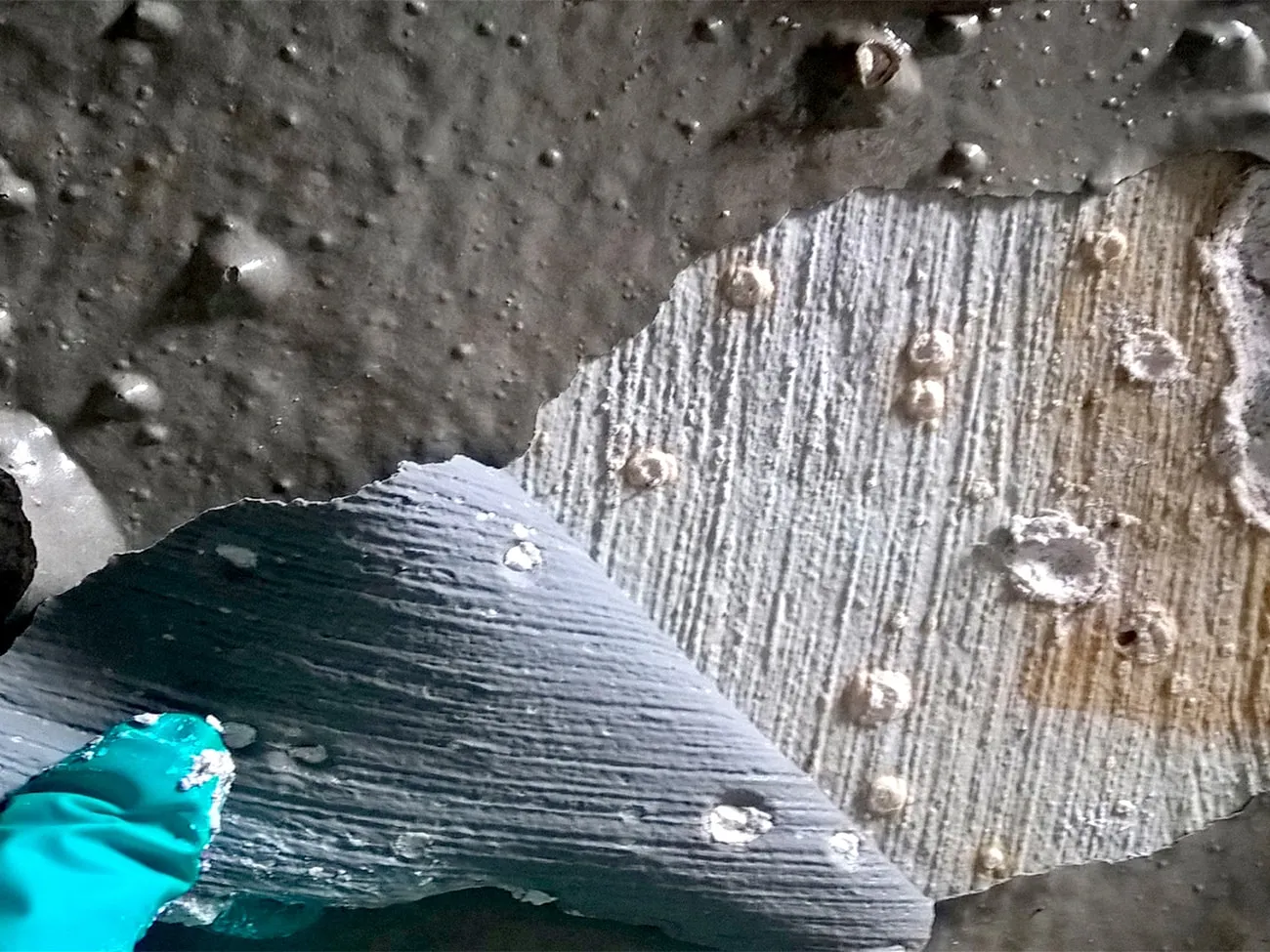
It is generally assumed that domestic wastewater does not damage concrete when the two come into direct contact. Untreated municipal or industrial wastewater, however, can attack concrete if it contains aggressive chemicals (such as sulphates) and/or has a low pH (below 7). However, we often hear that the upper section of enclosed wastewater and sewer systems, above the waterline and beneath concrete covers or roofs, has suffered damage.
If the space above the wastewater in an enclosed tank, sewer pipe or manhole is poorly ventilated, anaerobic (oxygen-poor) conditions can develop. Bacteria then produce hydrogen sulphide gas in the wastewater. This hydrogen sulphide gas accumulates in the space above the water, mixes with moisture, such as condensation, on the surface of the wastewater and is converted into sulphuric acid. Sulphuric acid has a low pH and therefore attacks the concrete.
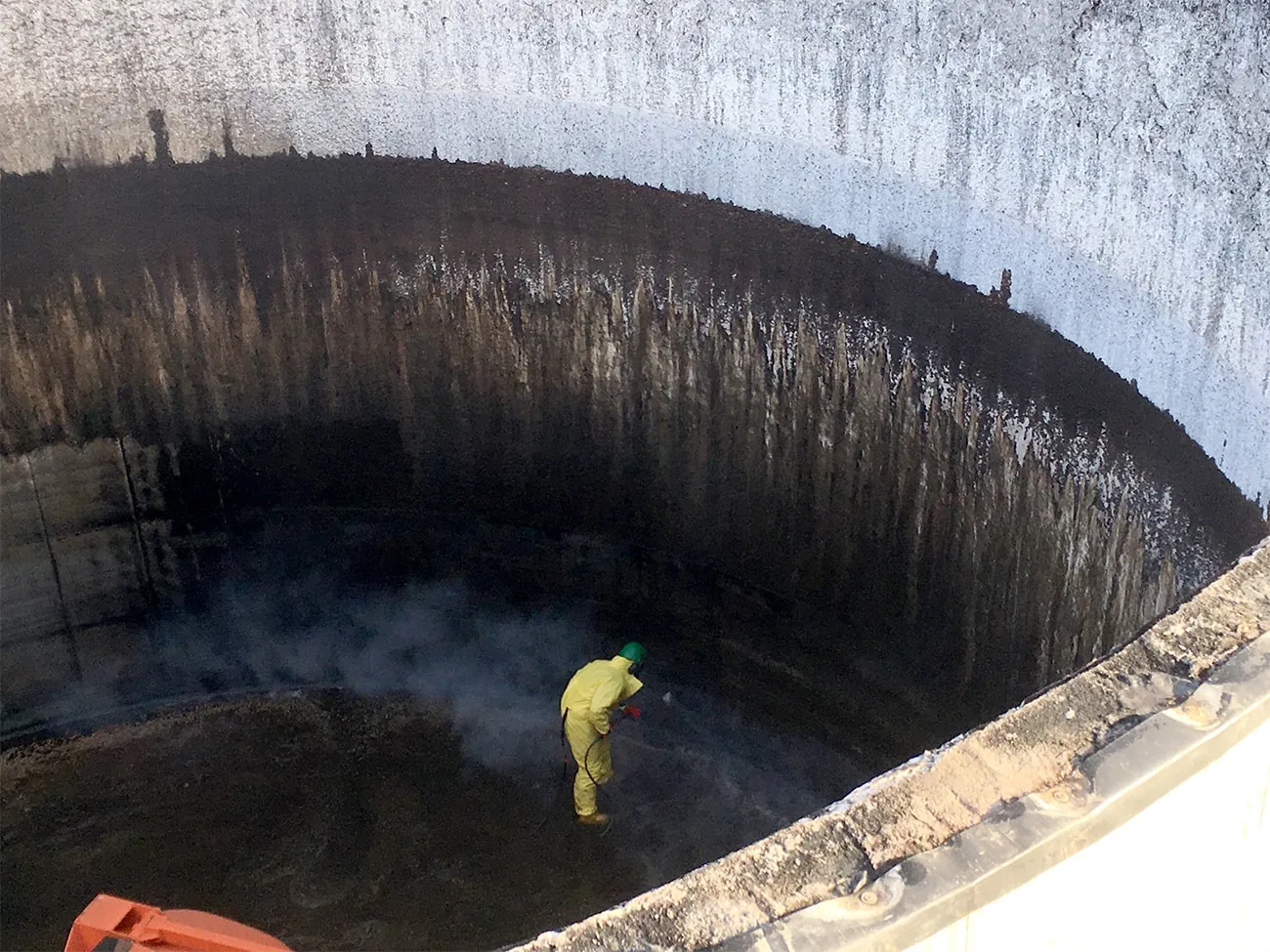
Significant damage is therefore often found on the inside of the upper sections of concrete pipes, storage tanks and/or precast concrete manholes in poorly ventilated, enclosed sewer systems. Conditions are changing because of the composition of the wastewater.
Wastewater composition has become more aggressive
Before the 1980s, municipal wastewater typically contained around 10 parts per million of hydrogen sulphide. This was due to the volume of water used to flush toilets and the presence of heavy metals, which reduced the sulphide concentration in the water.
Since then, the presence of heavy metals in wastewater appears to have declined due to new regulations and certain programmes intended to reduce domestic water consumption and increase the reuse of rainwater and greywater. These regulations and practices have led to a tenfold increase in H2S gas levels, from 10 ppm to 100 ppm, and in some cases as high as 300 ppm. As a result, wastewater has also become more aggressive. The consequences are:
· higher concentrations of biogenic sulphuric acid
· surfaces exposed to acids continuously and over long periods, as sulphuric acid forms more consistently.
· higher H2S levels and the penetration of other gases into coatings,
· greater colonisation by sulphur-oxidising bacteria, resulting in thicker deposits
Traditional solutions using coal tar epoxy coatings
Coal tar epoxy has long been used in wastewater applications because it performs well and provides effective protection for many years. Coal tar epoxy is a relatively easy-to-apply, cost-effective coating that resists low concentrations of sulphuric acid for a certain period. The epoxy bonds to dry concrete, but can only seal active cracks to a very limited extent.
When coal tar epoxy coatings are applied to concrete surfaces, the residual moisture content must not exceed 4%. Curing typically takes at least 7 days at temperatures above 10°C before the coating can be immersed. The coating is generally no thicker than 0.5 mm, as thicker coatings are difficult to apply. However, a thicker coating may be required for uneven surfaces or a higher level of protection.
Inspections of existing facilities show that the shift to more aggressive exposure conditions limits the durability of coatings based on this technology. This is because coal tar epoxy offers good chemical resistance to low acid concentrations, but falls short as concentrations rise. The stringent application requirements, limited crack-sealing capability and low film thickness also reduce the safety margin of these products.
Resistance to bacterial activity
When a new product is developed to protect water treatment plants, laboratory results often do not match the actual performance of the various technologies used in these plants. One reason is that standard laboratory tests consider only resistance to sulphuric acid, not resistance to bacterial activity.
In view of today’s more aggressive conditions, specifications for coatings or membranes used in sewer pipes and water treatment plants should include the following properties:
· better long-term resistance to sulphuric acid
· lower permeability, including low water vapour permeability and low water absorption
· resistance to bacterial activity
· optimum adhesion to the substrate
· crack-sealing capability
· high mechanical resistance (abrasion and impact)
Coating specifications should take into account not only the performance criteria listed above, but also several application criteria to prevent initial defects in the membrane:
· tolerance of moisture during application and curing, particularly on refurbishment projects
· ease of obtaining pinhole-free layers
· full curing time and recoat limitations
· ability to apply the product overhead or to vertical surfaces without sagging
· adhesion to metal substrates
· straightforward procedures for applying the coating in confined spaces
Conclusion: traditional systems are no longer sufficient
Coal tar epoxy coatings are inexpensive, easy to apply and require only a low application rate. They bond poorly to damp concrete, cure very slowly at low temperatures and have a very limited service life due to the more aggressive composition of wastewater. Traditional tests of a coating’s resistance to sulphuric acid do not reflect the complexity of the chemical and biological processes that take place in wastewater environments. Resistance to bacterial activity must also be considered when assessing durability. Finally, the coatings selected must offer not only chemical and biological resistance, but also good application properties, such as suitability for application to wet substrates and in thick layers. More importantly, the selected coatings must have excellent crack-bridging capabilities to prevent cracks in the substrate from damaging the coating.
More information:
Question about this story? Ask your question
Keep following this
Get an email when a new story is published. No account needed.
- ThemeMaterials and techniques for infrastructure
- SubjectSpecials







