









Why renew timber structures when they can be repaired?
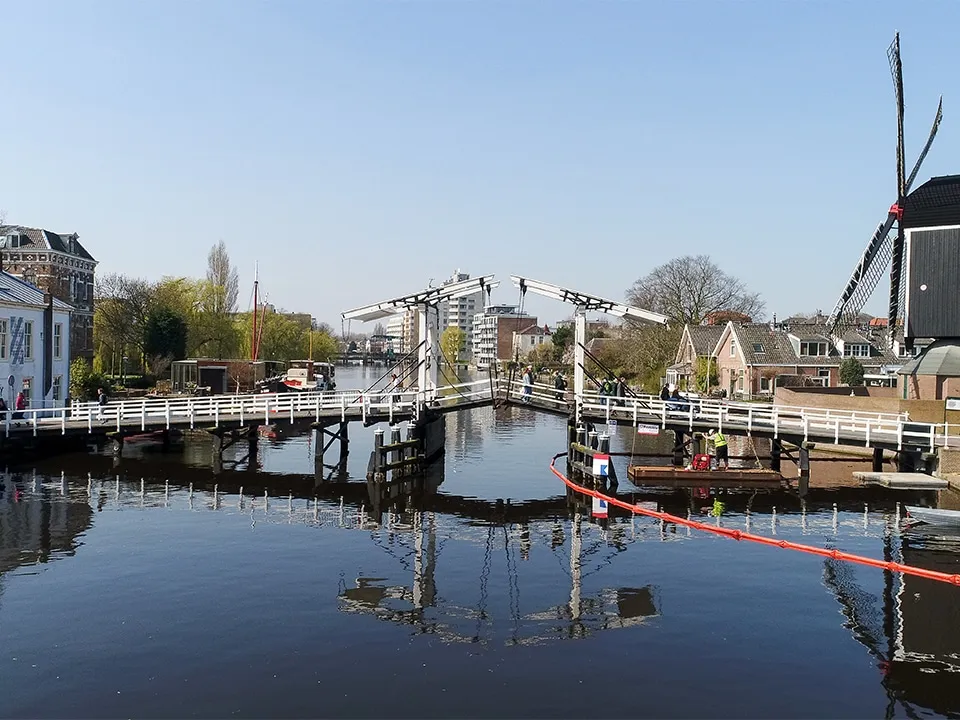
Repair is not only more cost-effective, it is also better for the environment.
The Netherlands and water: two elements inextricably linked. We protect ourselves from water by building dikes, bridges and locks. We benefit from water through our ports, rivers and canals. To keep doing so in the future, many water infrastructure structures need a thorough overhaul. Although these structures are often only partially damaged, many municipalities, provinces and water boards still choose to renew timber structures rather than repair them. This not only costs a great deal, but also results in high CO2 emissions and the waste of tropical hardwood.
Timber in water engineering
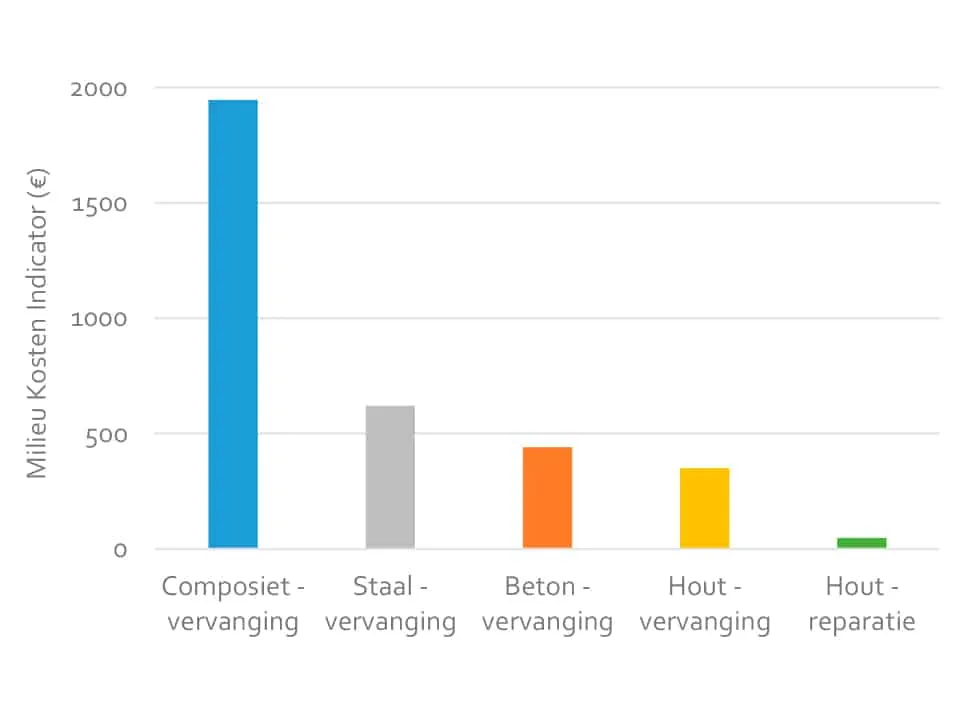
When renewing timber structures, materials such as concrete, composite and steel are often chosen. Besides being costly, these materials also have a significant environmental impact, as shown in the comparative Life Cycle
Assessment (LCA) for mooring piles in fig. 1. Replacement with composite causes by far the greatest environmental damage, followed by replacement with steel, concrete and timber. Repairing timber, by contrast, has by far the lowest environmental impact.
Timber service life
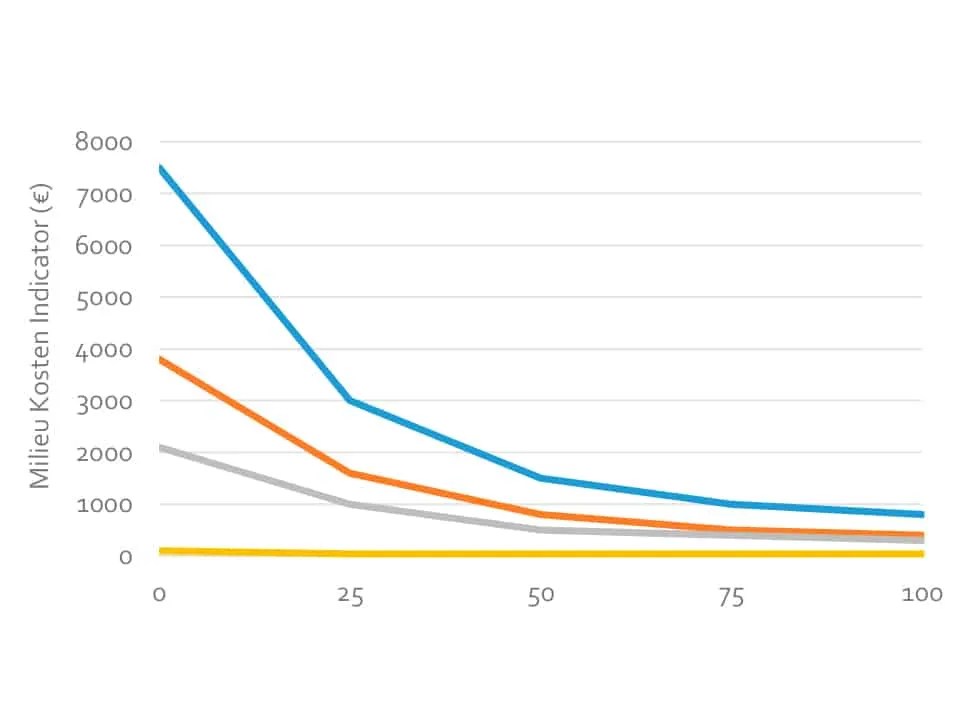
When replacing timber with steel, concrete or composite, it is often argued that timber does not have a long service life, making steel, concrete or composite more sustainable. Research commissioned by the Rijksdienst voor Ondernemers (RvO) shows that timber still has the lowest environmental impact when it is replaced or renovated during its service life, making it the most sustainable option (see fig. 2). In addition, replacing timber with composite, steel or concrete causes considerable disruption to the surrounding area due to pile extraction and driving.
Repair rather than replacement
Working with TU Eindhoven, Protekta developed a restoration method for timber structures in 2009 following extensive testing. The method restores the structure to its original strength: the patented Protek Aqua© method. It uses a specially developed epoxy, tested for tensile and flexural strength, bond durability, environmental impact and the effects of temperature differences (coefficient of thermal expansion). After carrying out the repair, Protekta provides a twenty-year guarantee on the work.
Water engineering timber repair specialist
Restoration rather than replacement preserves historic timber structures. This helps us retain the protected village and townscapes of the Netherlands. Repair rather than replacement also reduces environmental harm, including through much lower CO2 emissions. As well as being the most sustainable option, restoration is also the most cost-effective, because the problem is addressed locally and no sound tropical hardwood is wasted.
For these reasons, over the past ten years more and more municipalities, provinces, contractors and water boards have chosen our Protek Aqua® repair method for work on locks, bridges, fender systems, mooring piles and dolphins. Protekta is working with its clients towards a sustainable future.
Question about this story? Ask your question
Keep following this
Get an email when a new story is published. No account needed.
- SubjectSpecials







