









Wet excavation of the Kapitein Rooiboskanaal in full swing
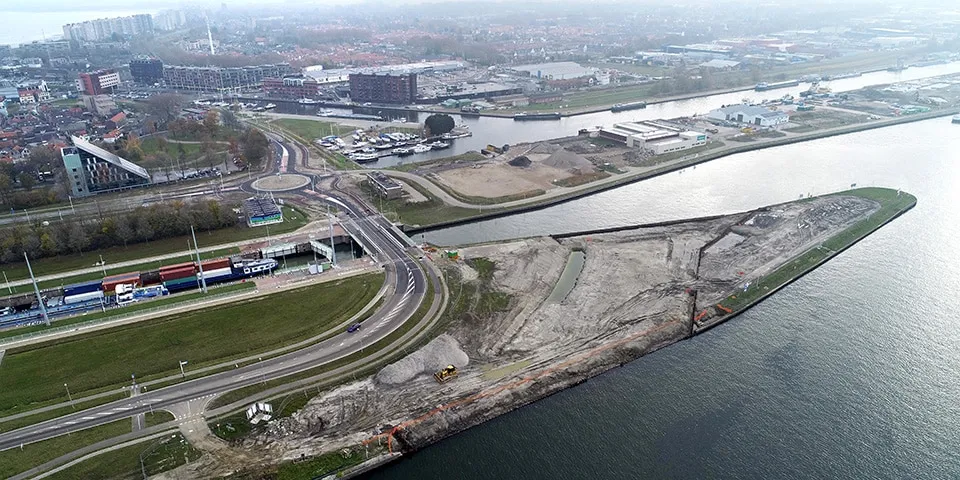
To ensure shipping can continue during construction of the Nieuwe Sluis Terneuzen, a temporary navigation channel is planned. The channel will be approximately 280 metres long, 40 metres wide and 5 metres deep. It will therefore be suitable for CEMT Class IVa vessels, in other words inland vessels up to a maximum length of 105 metres and a maximum beam of 9.5 metres, with a maximum draught of 3 metres. As reported earlier, this navigation channel has the rather evocative name “Kapitein Rooiboskanaal.”
Excavation work on the Kapitein Rooiboskanaal is now in full swing and will continue until the end of March. The channel is being excavated under water, with around 35,000 m3 of soil in total being transported away by water.
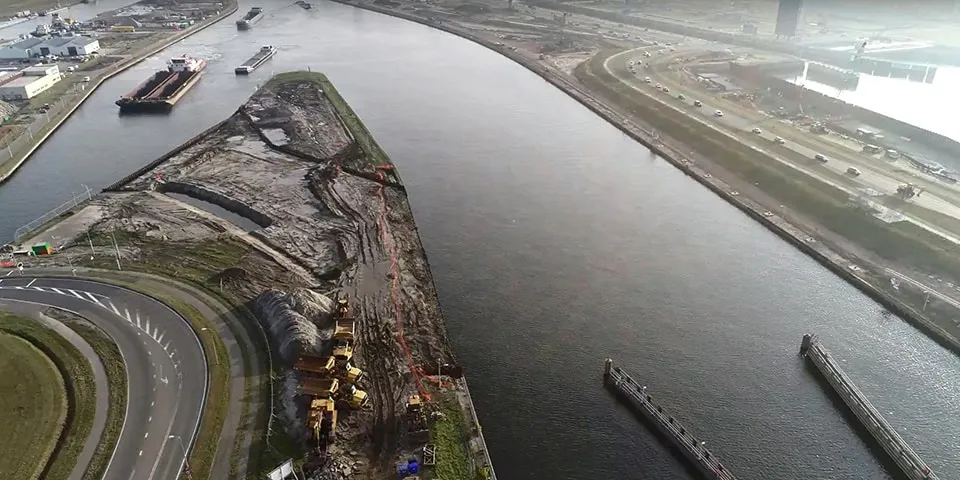
Final work on the Kapitein Rooiboskanaal in May
Some of the excavated soil is contaminated and is being transported by push barges to a treatment facility in the Netherlands. Clean excavated soil is being deposited in designated areas on the Westerschelde by split-hopper vessels. To carry out the excavation work, the sheet piles to the east and west of the future entrance to the temporary navigation channel have been removed from the shore. At the time of writing, the wet excavation work on the eastern side has reached halfway across the channel, working from the water.
Electricity and water cables and pipes will run through a siphon, a pipe that crosses beneath the waterway. The siphon will be located in the middle of the channel. The 143-metre-long steel pipe is currently ready on the quay at Schependijk, awaiting installation from the water. At the end of February, the pipe will be lowered to the bed of the Kapitein Rooiboskanaal, after which excavation will continue westwards. The remaining soil on the western side will be left in place until the channel is actually opened to traffic. The final work will then be carried out in April and May, including installing bank and bed protection, placing navigation marks, and modifying signs and signals. The channel can be opened once the entrance to the Middensluis has been modified.
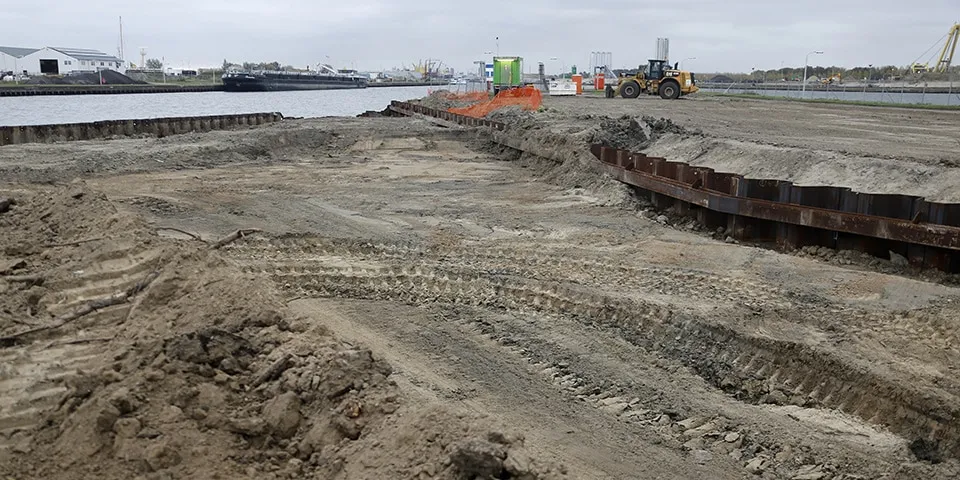
Groundwater abstraction is necessary
To ensure the safe construction of the Nieuwe Sluis Terneuzen, groundwater inevitably has to be abstracted at certain times. This dewatering is needed to prevent groundwater pressure from below pushing up the dry construction pit, which could cause damage. Given their complexity, the lock heads are being built in a dry construction pit. To build the lock heads, the walls are constructed first, followed by the pouring of underwater concrete to form the base of the lock head. The construction pit is then pumped dry, with the water returned to the Gent-Terneuzen Canal or the Buitenhaven. Groundwater pumped from beneath the construction pit is conveyed through pipes and discharged deep underground at another location.
Groundwater pumping is a highly controlled process. Groundwater levels are monitored using observation wells. Many additional observation wells have been installed around the Nieuwe Sluis Terneuzen to measure rises and falls in groundwater levels. Nearby houses are also monitored using survey bolts installed in their façades. Water levels around the construction pits, as well as the volumes and pressure of the recharge wells, are also monitored, along with groundwater quality. This means that corrective action can be taken quickly if any unwanted changes occur.
Question about this story? Ask your question
Keep following this
Get an email when a new story is published. No account needed.
- SubjectSpecials







