









Unique and remarkable: 800-metre floating reed bed in the Krabbeplas near Vlaardingen
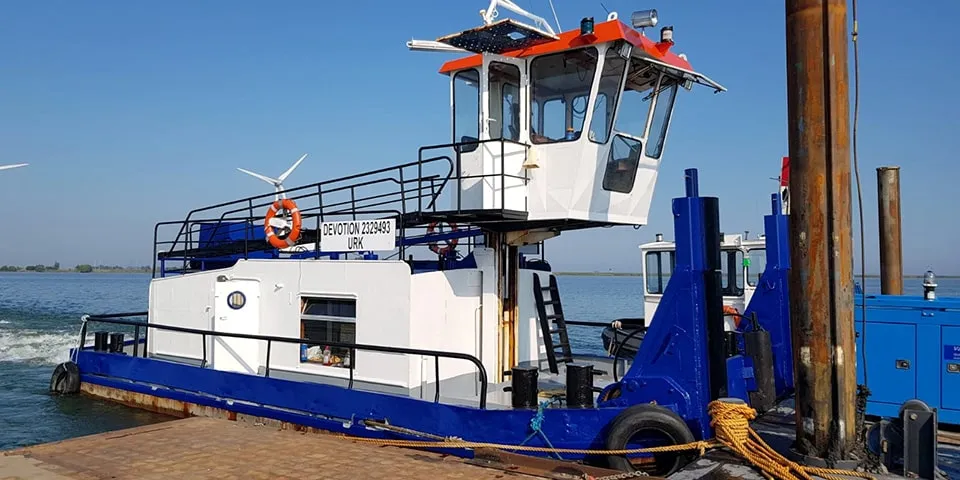
To improve access to the Rotterdam region, construction consortium BAAK is building the Blankenburg connection on behalf of Rijkswaterstaat. This new motorway, the A24, links the A20 near Vlaardingen with the A15 near Rozenbrug. Near the Krabbeplas, west of Vlaardingen, the new road joins the A20 at a sunken interchange. Building the interchange requires the removal of some of the reeds in the Krabbeplas. Bats need the shelter provided by the reeds when hunting, so an alternative had to be found. Van Aalsburg BV was asked to help devise a solution.
Traditional expertise combined with modern working methods
At Van Aalsburg BV, a specialist willow and coppice timber company, the craft of coppicing has been passed down from father to son, and now to his sons. The business has since grown into a large, dynamic family firm run by six brothers, all of them determined to succeed. With a team of around 60 specialists, Van Aalsburg is renowned in the Netherlands and beyond for its expertise and experience, particularly in the construction of fascine mattresses, windbreaks and revetments. The timber is traditionally and sustainably grown in the Biesbosch and at the company’s own 150 ha nursery. At Van Aalsburg, traditional expertise, modern machinery and working methods go hand in hand, with a strong sense of social responsibility.
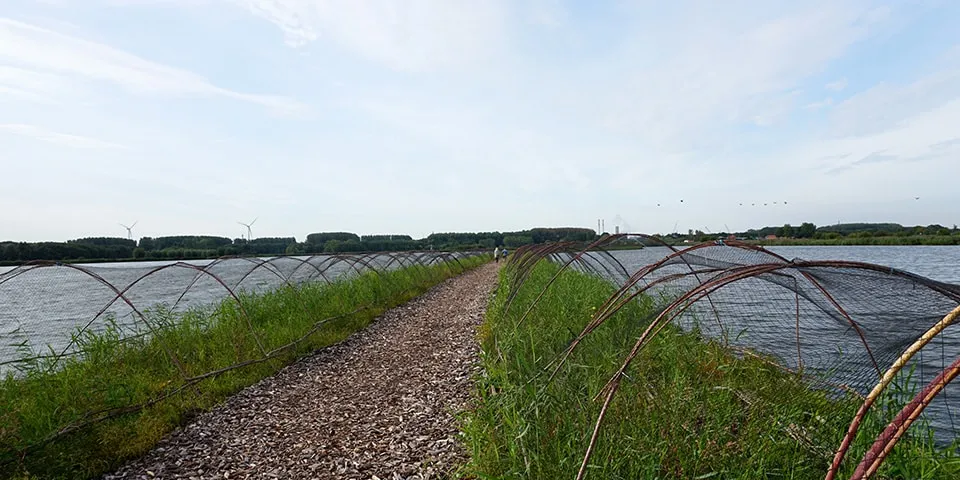
To stop geese eating the young reed plants, willow branches were used to install goose-proof nets.
Floating reed bed
Commissioned by BAAK, Van Aalsburg designed and built a floating reed bed an impressive 800 metres long, from bank to bank, and 10 metres wide. Dick van Aalsburg explains: “The floating reed bed is essentially a variant of the patented floating platforms we build. In this case, we used only the upper section of the platform, topped with a sheltered structure made from willow branches. Recyclable PVC pipes beneath the entire structure keep the reed bed afloat, while wooden piles anchor it in the right place along the reed-lined bank. Excavated soil from this same project was placed in one-by-one-metre willow fascine grids and planted with reed cuttings. A two-metre-wide footpath surfaced with wood chips runs through the middle, allowing walkers to cross the Krabbeplas.” Van Aalsburg continues: “What makes our work so rewarding is not just the combination of old and new techniques, but also working in and with nature. To stop geese eating the young reed plants, for example, we installed nets using willow branches. The geese can still land on the central path, but cannot damage the young reeds.”
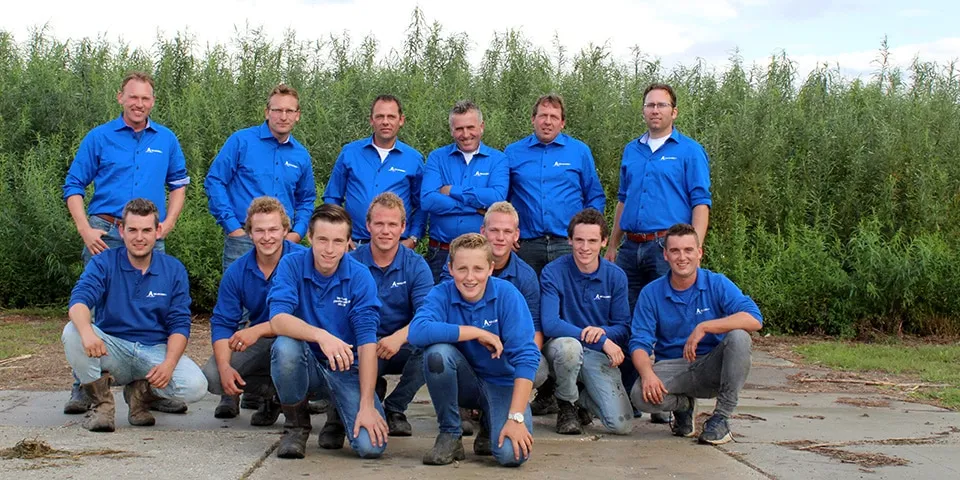
The Van Aalsburg team.
Endless possibilities
“Floating reed beds of this kind can be used in lakes, inland waters and even some rivers, for example as breakwaters or to create habitat where it is lacking. In January 2020, Van Aalsburg will begin building a fully natural recreational island using willow fascine grids in the Langeraasche plassen. “With the permit for expansion in Hellouw secured, we can take the necessary steps in terms of location and equipment to make our work even more efficient and effective, and so maintain our unique position in the market,” concludes Van Aalsburg.
A business enquiry for Van Aalsburg BV? Get in touch
Companies in this story

Keep following this
Get an email when a new story is published. No account needed.
- SubjectSpecials
- CompanyVan Aalsburg BV







