‘Floor finishes are about more than aesthetics’
Text Armand Landman Images Triflex
Underground construction requires protection that is right from the design stage
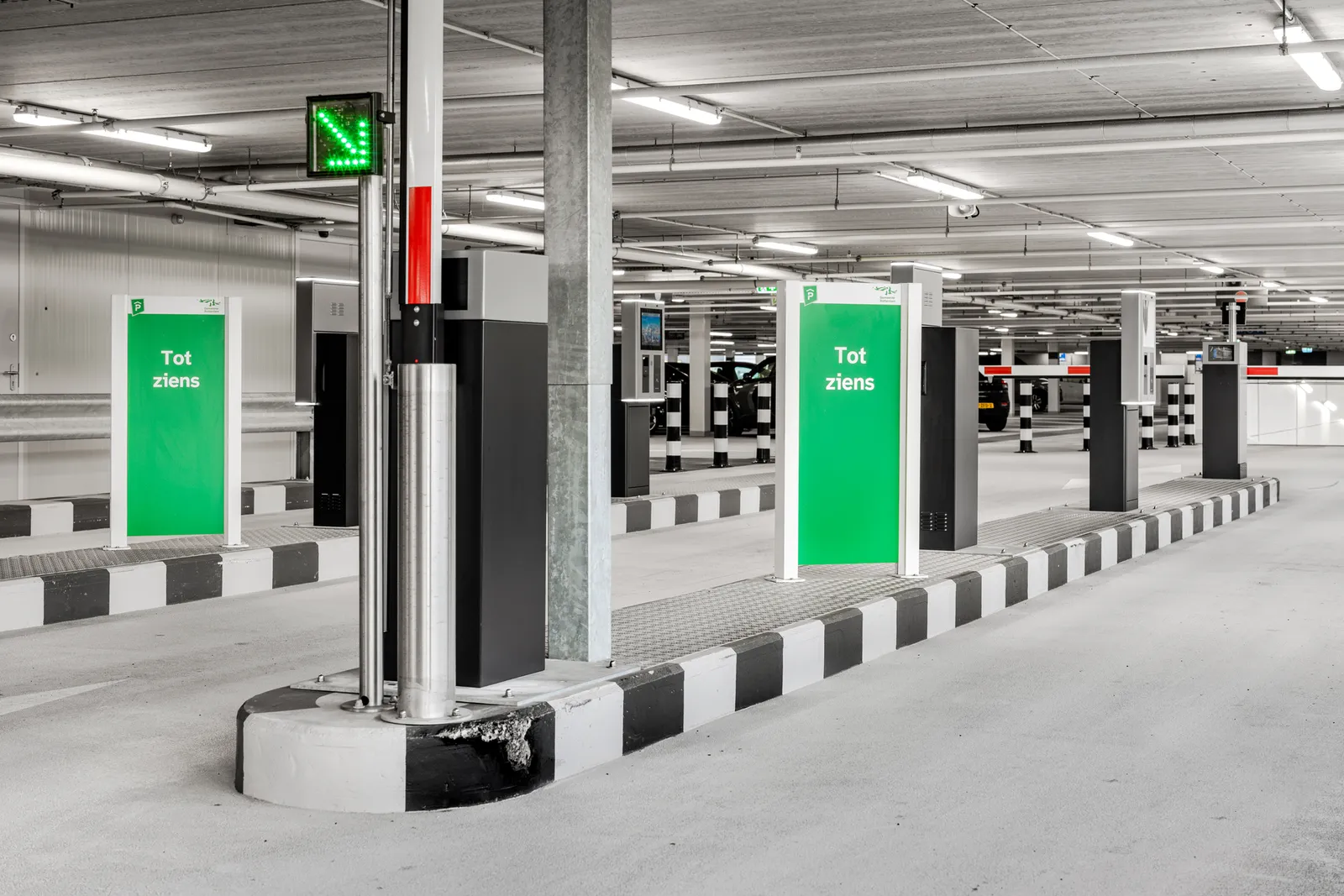
Underground construction has become an integral part of urban development. Where space is scarce, functions are increasingly moving below ground. Parking beneath residential buildings, shopping areas, offices, station districts and mobility hubs frees up space above ground for homes, workplaces, green spaces and places to spend time. But underground construction also brings technical challenges. According to Mario van Ginkel, sales manager at Triflex, a durable car park therefore starts not with the finish, but during the design phase.
“An underground car park is a heavily used structure subject to a range of different loads,” says Mario. “Alongside the structural challenges of building underground, the design phase must also take account of the conditions the structure will face during use. Moisture, de-icing salts, dirt, mechanical loads, safety, drainage and maintenance all play a part. If you only start thinking about these during construction, you have left it too late.”
More than a floor finish
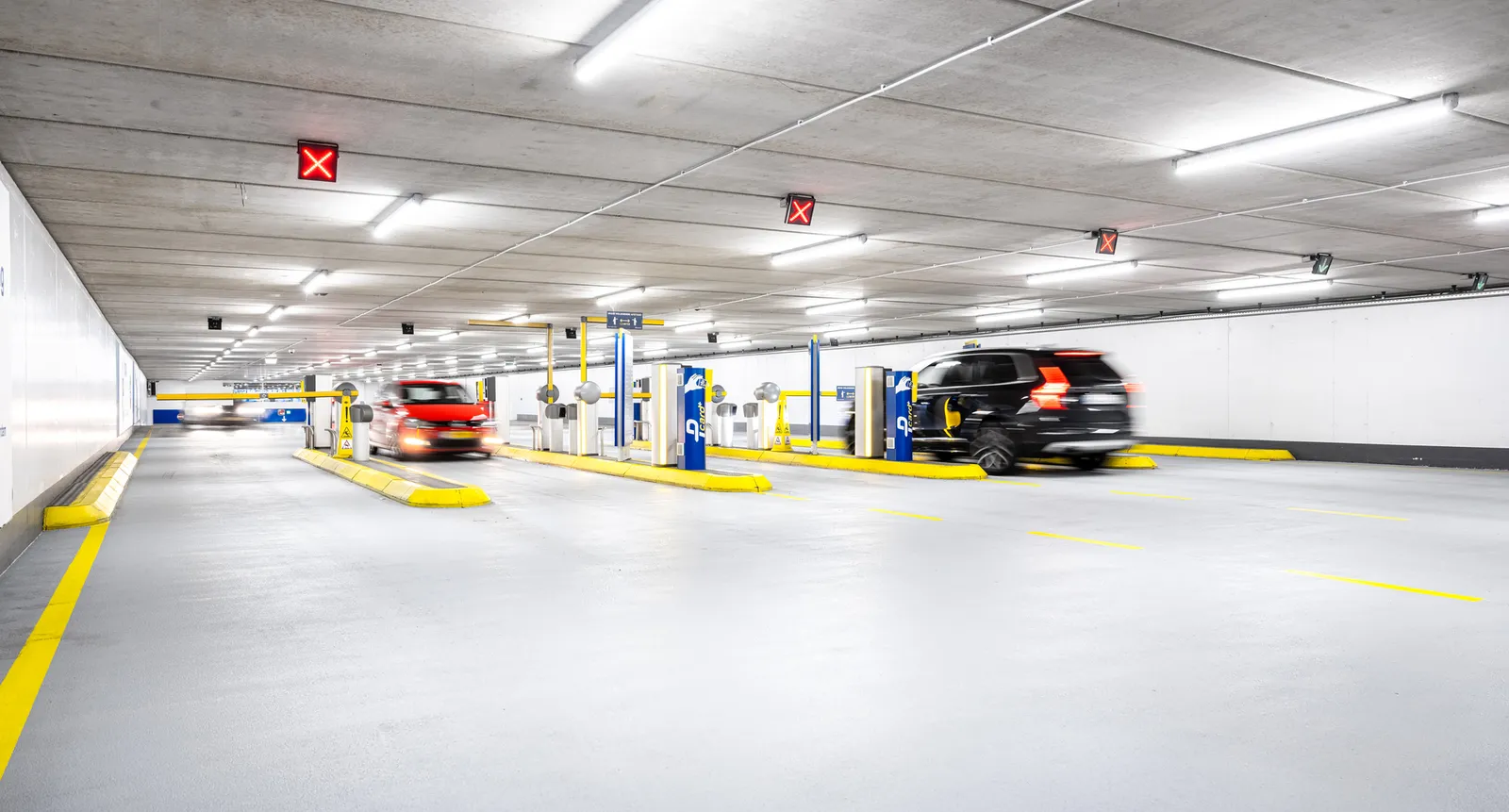
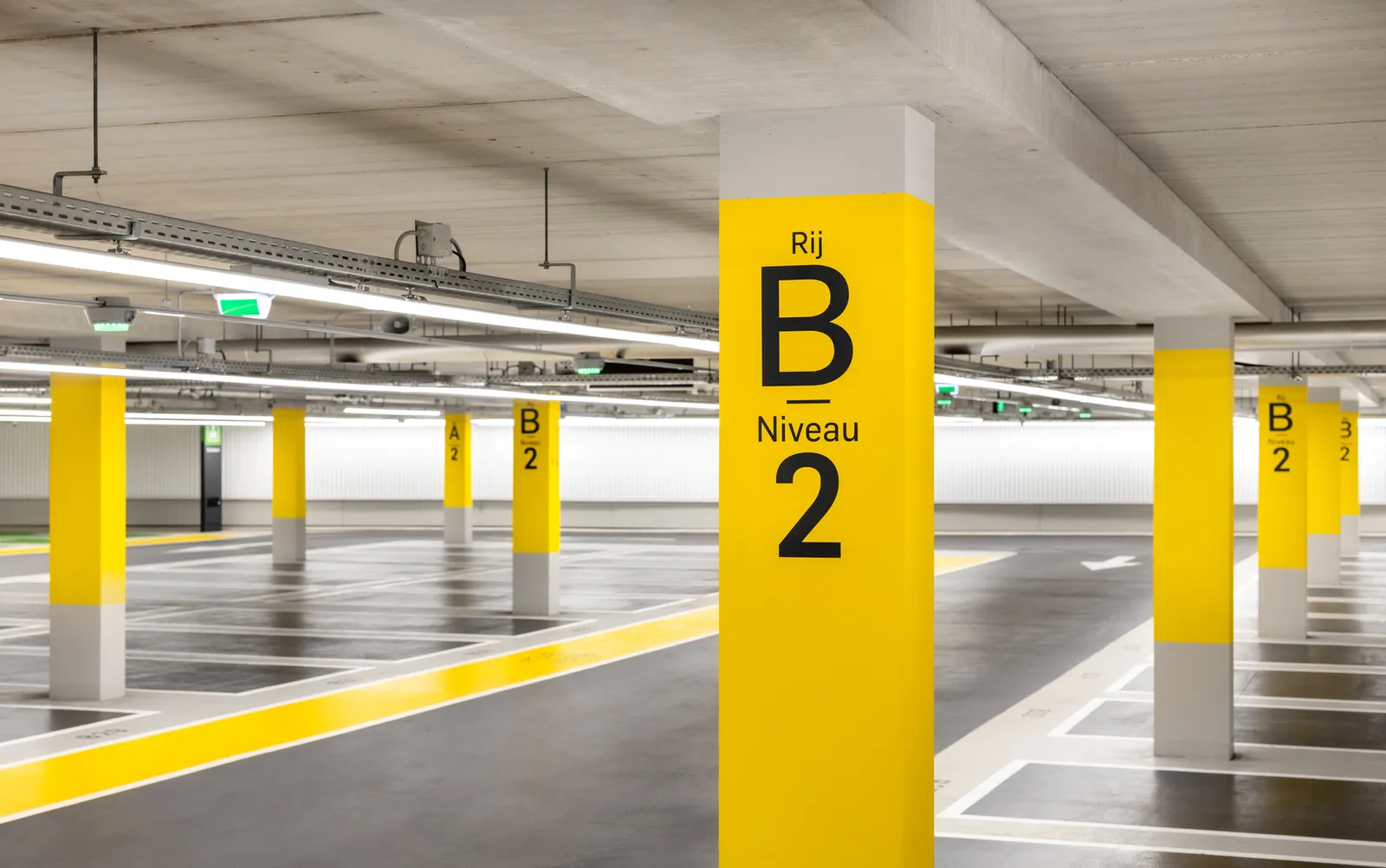
When it comes to car parks, the first thing people often think of is the visible floor: traffic lanes, parking bays, ramps and markings. But the technical performance depends on the system as a whole. Every day, cars bring water, dirt and oil inside, as well as de-icing salts in winter. Chlorides in particular can cause serious damage over time if they penetrate the concrete structure through cracks, joints or damaged finishes. In the presence of moisture, this can lead to reinforcement corrosion and costly repairs.
“The floor finish is not just about aesthetics,” Mario rightly points out. “It also serves a protective purpose. It must prevent moisture and salts from penetrating the structure. That is extremely important, especially in underground car parks, where damage often only becomes visible once the problem has already progressed.”
Mario explains that, as well as chemical exposure, the structure is subject to constant mechanical loads. “Think of tyres twisting on bends, braking and acceleration forces on ramps, and heavy traffic in the lanes. This calls for systems that are not only waterproof, but also wear-resistant and suited to the actual use.”
Details determine service life
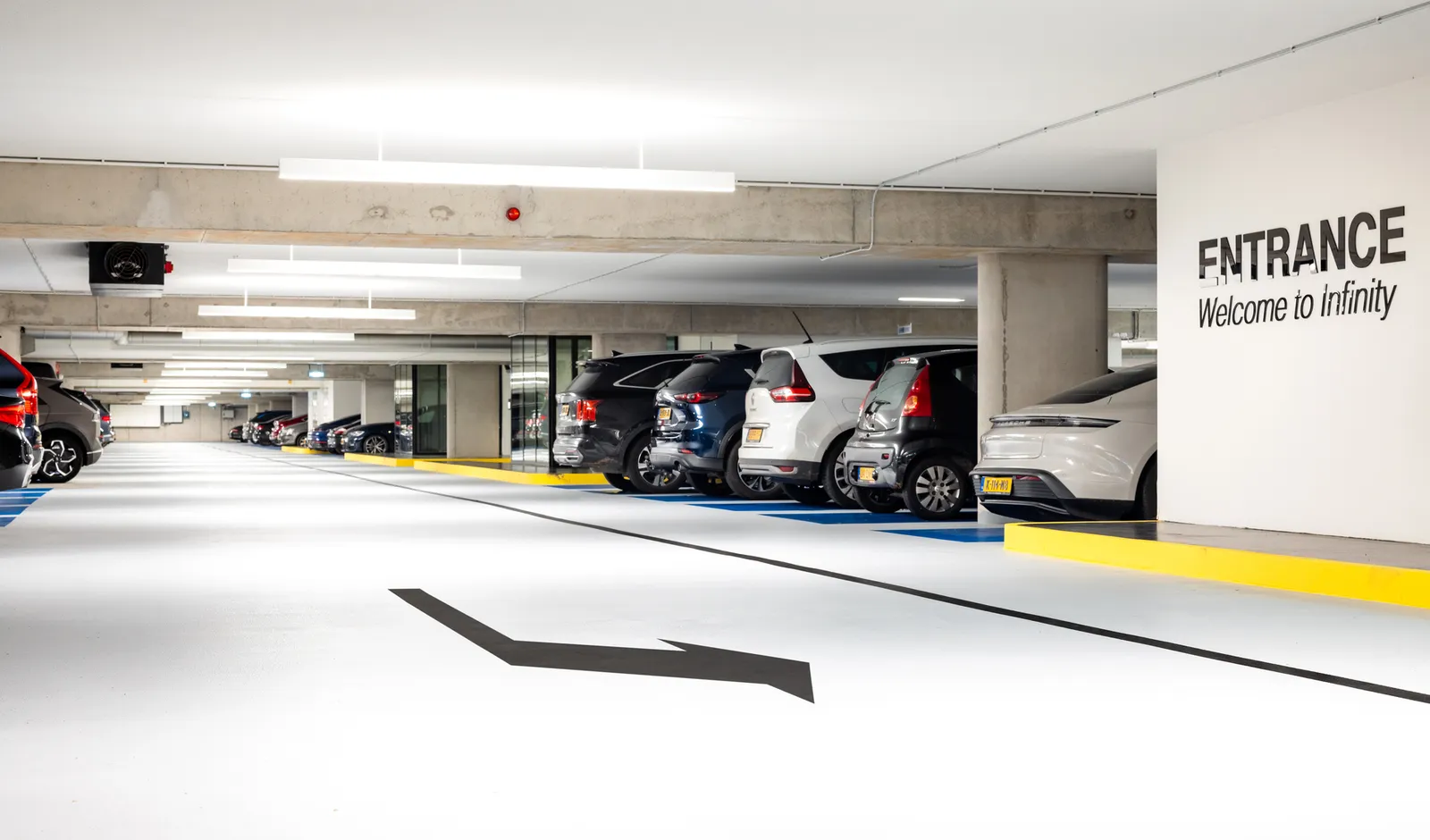
In practice, problems rarely occur on the simplest part of the floor. “You can usually get the main area right,” says Mario. “But it is the details that ultimately determine how long a car park continues to function without problems. The junction with a drain, column base or movement joint must be technically sound. If water gets beneath the system there, problems often begin.”
According to Mario, liquid-applied plastics offer advantages in these locations. “They can be applied seamlessly around complex shapes and junctions. Once cured, they form a continuous, waterproof and wear-resistant protective layer, with no overlaps or joints in vulnerable areas.”
Ramps need extra attention
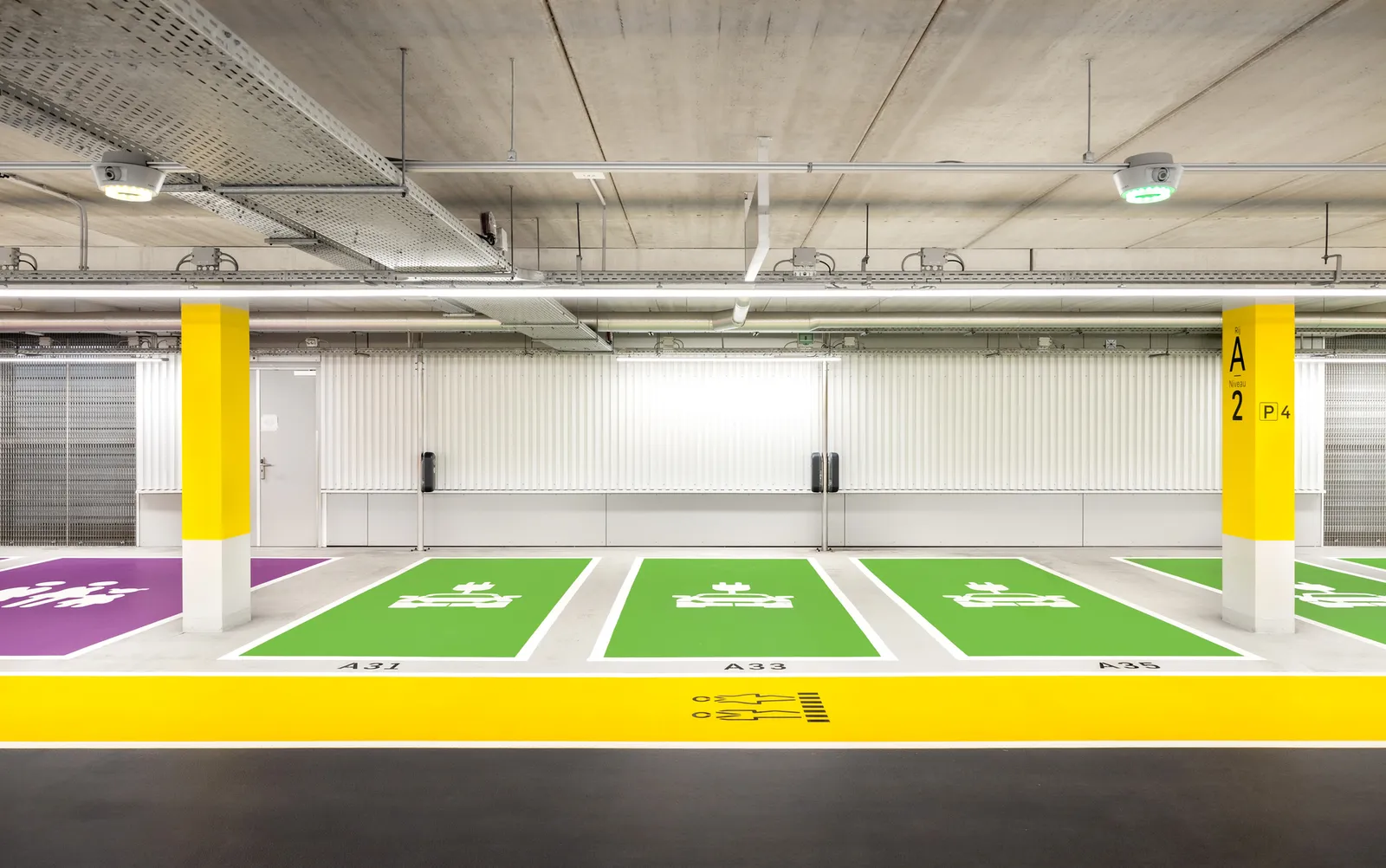
Another element that requires extra attention in both design and construction is the ramp. Ramps combine almost every load found in a car park: moisture, dirt, de-icing salts, gradient, braking forces, acceleration forces and tyres twisting.
“A ramp may well be the most heavily loaded part of a car park,” says Mario. “That is often where wear, slippery surfaces or damage first appear if the finish is not properly suited to its use.”
A durable anti-slip finish is essential for ramps. This is important not only to limit wear, but also to keep users safe. The right surface roughness, adhesion, layer build-up and detailing are all key. The transition to the level floor, drainage and junctions with walls and channels must also be carefully considered.
Early collaboration prevents costly rework
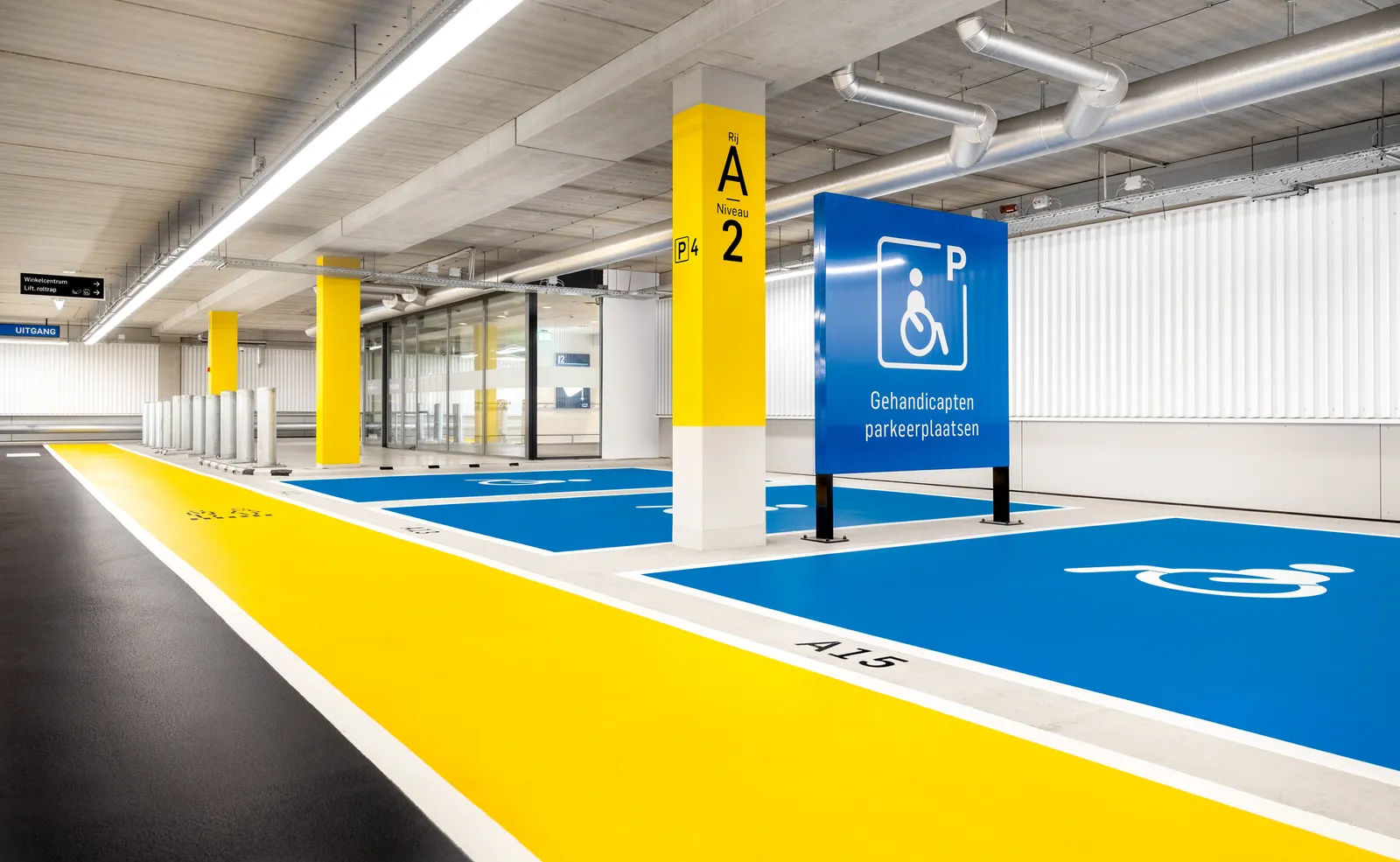
According to Mario, a good solution always starts with a careful assessment of the situation. “No two car parks are the same. A residents’ car park beneath an apartment block requires a different approach from a public car park with high traffic volumes. A ramp, in turn, requires a different solution from a parking bay or an intermediate deck.”
He continues: “The best results come when the design, construction and maintenance teams start talking to one another early. That makes it possible to make choices that are technically sound and practical to deliver. This prevents costly rework and extends the service life of the structure.”
Underground car parks are increasingly becoming part of broader mobility concepts, such as mobility hubs, charging facilities, shared mobility and cycle parking. As a result, safety, circulation, sustainability and maintenance requirements are becoming more important. The technical fundamentals, however, remain the same: the structure must be protected against moisture, chlorides, wear and intensive use.
Ready for future use
“Underground construction frees up space above ground,” says Mario in conclusion. “But that gain in space is only truly sustainable if the underground structure continues to function reliably. To achieve that, you need to look beyond the floor alone. It is about protection, detailing, safety and use that is fit for the future.”
With this approach, Triflex supports the work of designers, contractors, asset managers and clients in the civil engineering sector.
Have a business enquiry for Triflex BV? Get in touch
Companies in this story

Keep following this
Get an email when a new story is published. No account needed.
- ThemeUnderground construction
- SubjectUnderground construction
- CompanyTriflex BV