









‘The potential of geosynthetic materials is still in its infancy’
The potential of geosynthetic materials in the infrastructure sector is far from being fully realised. That is according to Dick van Regteren, Managing Director of Genap Waterproof Solutions.
Genap has been producing and processing geosynthetic materials since 1951, including plastic sheeting and geotextiles for various markets, including infrastructure. Time and again, the company surprises with seemingly new applications, such as installing geomembrane structures underwater for underpasses or sunken road sections, with all the benefits that brings.
“Issues relating to water, water storage, energy and space are playing an increasingly important role in our society,” says Van Regteren. “With our sustainable solutions based on geosynthetic materials, we minimise the impact on natural resources. We have been producing and processing these materials for many decades, building up extensive knowledge and experience in the process. We have our own engineering department, manufacture in-house, operate an accredited testing laboratory and also carry out installation work with our own teams. In short, we handle everything from A to Z.”
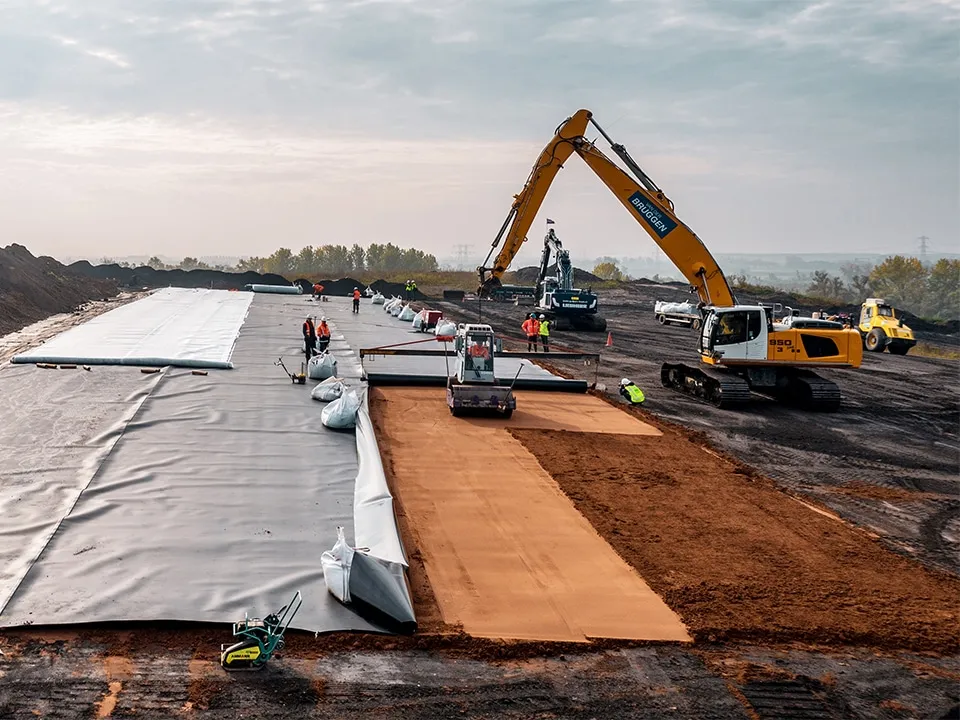
“Our geosynthetic materials have a very wide range of applications,” Van Regteren continues. “For example, we are currently working on capping the largest landfill site in the Netherlands, at Derde Merwedehaven. The 56-hectare site is being capped with a support layer made from a mineral product, combined with 2-millimetre-thick HDPE plastic sheeting (an HDPE geomembrane). This fully isolates the landfill from the outside world. Drainage mats are placed on the membrane and finished with a layer of topsoil. This can then be planted or even built on. We are currently capping landfills in the same way at other locations around the country.”
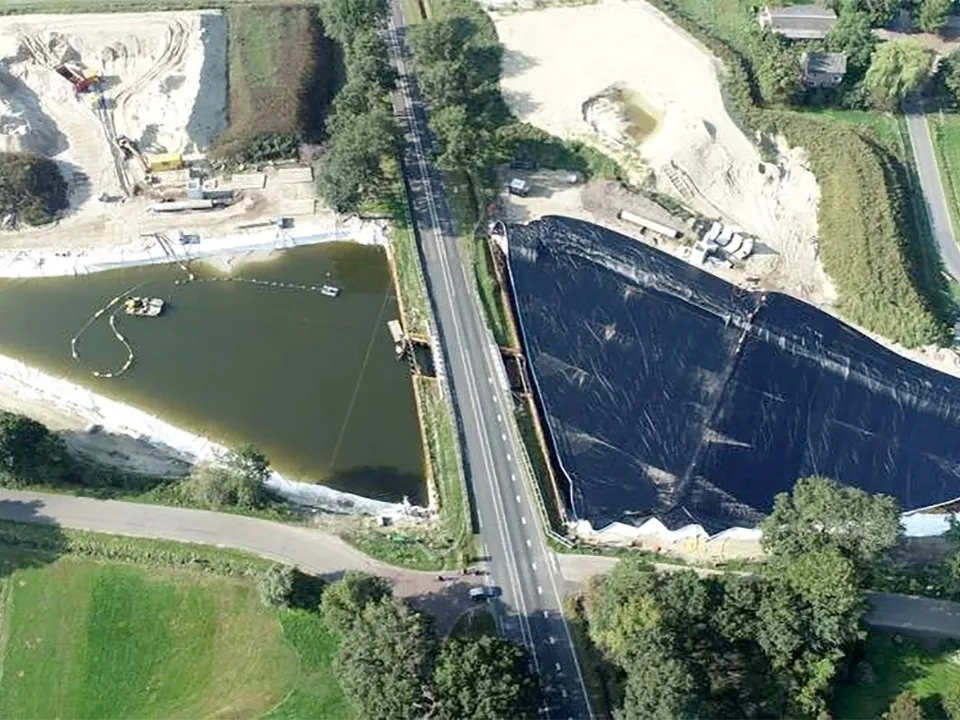
According to Van Regteren, another application that clearly demonstrates the added value of geosynthetic materials is the construction of underpasses or sunken road sections. “We can install our geomembrane structures both in dry conditions and underwater. The latter is a genuine specialism of ours. First, a cofferdam is excavated under water. We then prefabricate the geomembrane structure alongside the excavation and pull it into position in one piece across the water. By pumping water onto the membrane, the structure sinks to the bottom and, if necessary, is connected to an existing structure. A major advantage is that there is no need to abstract groundwater, so no subsidence occurs in the surrounding area. We receive enquiries from all over the world about using this technique.” The two underpasses on the N348 provincial road were built this way, and Genap’s technique will also be used for the 2-kilometre sunken section of the new ViA15.
A business enquiry for Genap? Get in touch
Companies in this story

Keep following this
Get an email when a new story is published. No account needed.
- ThemeMaterials and techniques for infrastructure
- SubjectSpecials
- CompanyGenap







