









The backbone of our economy is showing signs of strain
Text Roel van Gils Image Rijkswaterstaat
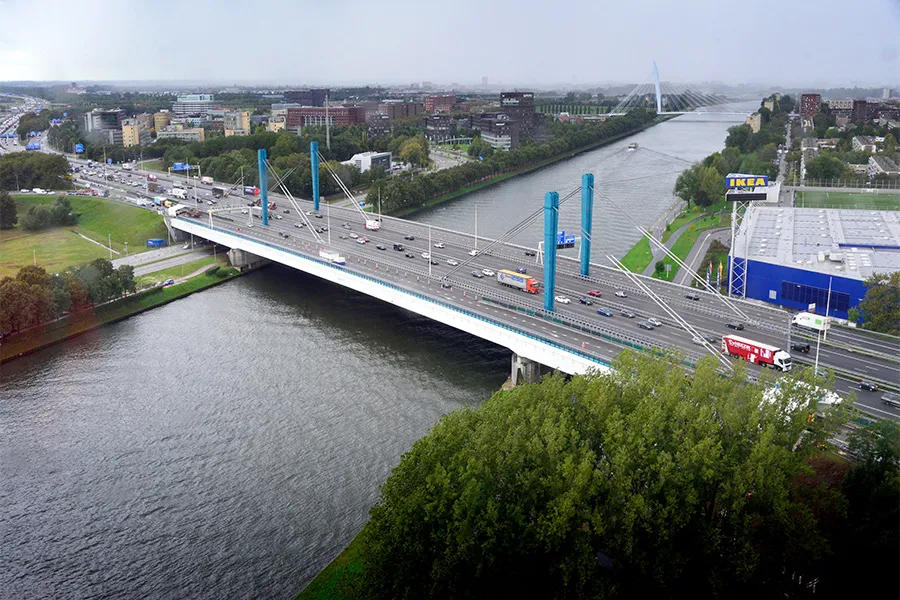
Work is under way to restore it
Many of our bridges, locks, tunnels and roads date from the post-war reconstruction period, shortly after the Second World War. Construction of the Netherlands of the future proceeded at a rapid pace, with canals also being expanded and adapted to a growing economy. For a long time, it was assumed that many structures could last for generations with routine maintenance. That assumption has proved incorrect. The backbone of our economy and society is now showing signs of strain. “Decades of intensive use mean that large-scale asset management is now needed: preserving what is in good condition, replacing what no longer meets requirements and, at the same time, preparing for the future. I am optimistic, because work is under way to restore it,” says Martin Wijnen, Director-General of Rijkswaterstaat.
What once symbolised progress now needs renewal. “The pace at which our infrastructure is ageing is almost impossible to keep up with,” Wijnen observes. “At the same time, this creates huge opportunities for the civil engineering sector. Climate change, digitalisation and data-driven technologies are advancing rapidly and offering new possibilities.”
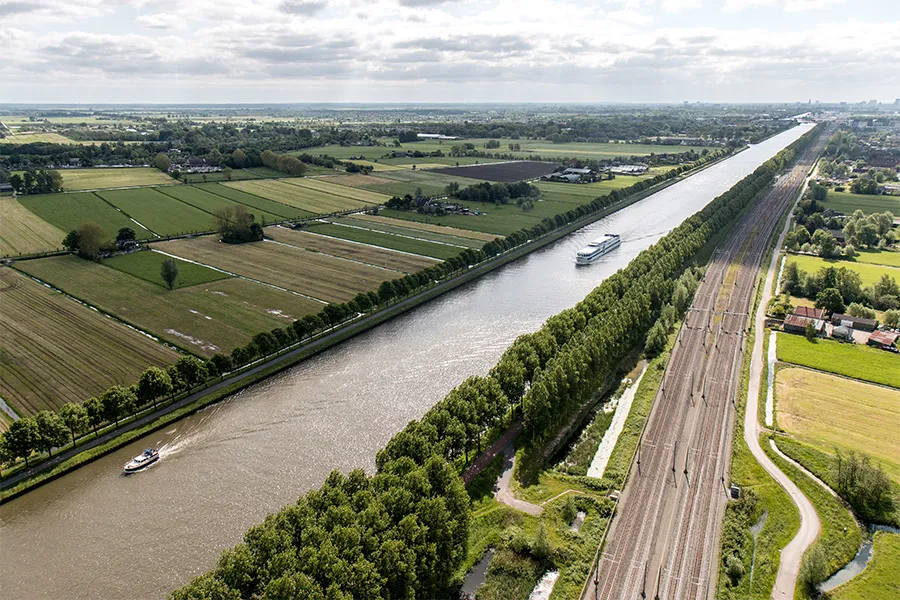
Fit for the future
The Netherlands is expected to grow by two million people by 2040, and mobility per capita is also set to increase. “This puts extra pressure on networks that are already heavily burdened by traffic and transport,” Wijnen continues. “New infrastructure must be fit for the future: resilient to climate change, designed for circularity and energy-efficient to build and operate. But most of the challenge lies in what is already there: maintaining and renewing existing networks while road and water traffic continues. At the same time, working in existing environments is becoming more complex. When replacing a major network link, there is not always room to build a new one alongside it. Examples include the widening of the Julianakanaal and the upgrade of the Galecopperbrug, where the cables and pylons were replaced while traffic continued to use the A12 with minimal disruption. This calls for planning, expertise and smarter collaboration. Asset management is therefore no longer simply a ‘maintenance task’, but a complex, high-level national systems challenge, in which the traditional client-contractor relationship is giving way to partnership.”
Resilient in an uncertain world
When it comes to the vital processes that keep our economy running, Rijkswaterstaat’s role is to ensure efficient traffic flows on roads and waterways and safeguard water security. “We live in a highly vulnerable delta, crossed by two enormous rivers. We face rising sea levels, and our land is still subsiding,” Wijnen says, listing the critical factors. “Our task is to keep the system robust. That means targeted investment in asset management, so that vital connections remain available in all circumstances. And there is an important factor to consider first: vulnerability.” Wijnen is referring to natural threats such as storm surges, spring tides, clusters of heavy rain or extreme heat and drought, as well as man-made threats such as cybercrime and sabotage, and finally vulnerability caused by age. “All these factors shape the way we design our asset management programme: adaptive, risk-based and, above all, safe. In short, there is work to be done, a lot of work!”
Over the coming decades, the focus will shift decisively from construction to asset management. “The challenge is clear: keep the Netherlands safe, accessible, liveable and resilient by investing more intelligently, more quickly and together in renewing what we already have. The challenges are substantial: staff shortages, a lack of nitrogen emissions headroom, permits and raw materials. Yet there is also a huge opportunity to make a step change as a system,” says Wijnen, who is championing a resilient and sustainable infrastructure sector that serves worldwide as a showcase for civil engineering innovation.
Question about this story? Ask your question
Keep following this
Get an email when a new story is published. No account needed.
- SubjectSpecials







