Measuring is knowing how to minimise disruption
Text Roel van Gils Image Fugro
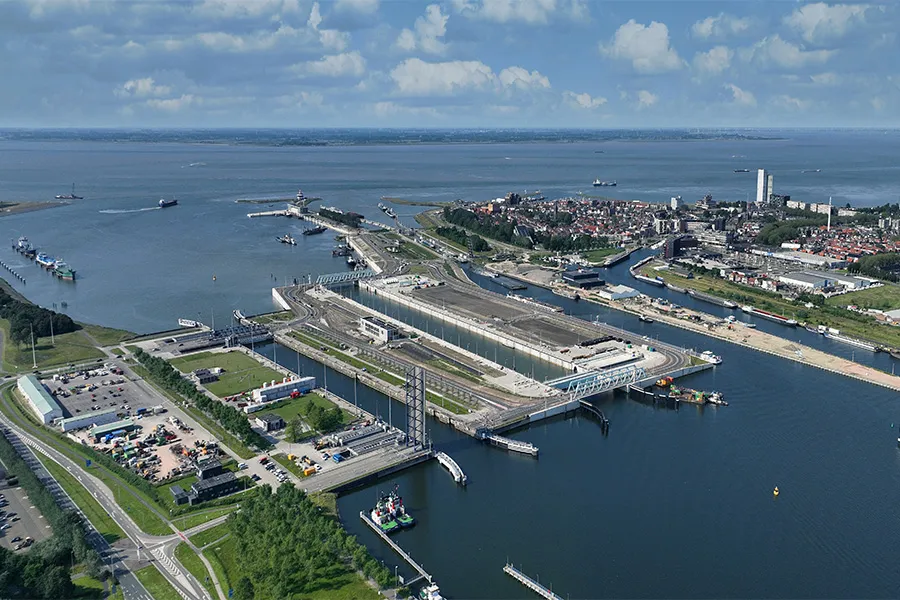
The construction of the Nieuwe Sluis Terneuzen was a huge undertaking and, of course, not without disruption. To minimise the impact on local residents and neighbouring sites, Fugro had been monitoring noise, vibration and groundwater levels since 2018. But Fugro’s role in the project went much further. In this article, we highlight some of the work carried out by the geo-data specialist in ground investigation, consulting and monitoring.
“Fugro was first asked to advise on various monitoring activities back in 2017,” says Frank van der Kroon, senior project manager for monitoring at Fugro. “When constructing a large excavation pit, there are significant differences in water levels, as was the case at Terneuzen for both lock heads. It is important to control these differences. Here, this was done by pumping out water, or dewatering. If you do not, the excavation pit will collapse. Even steel sheet piles cannot withstand the enormous water pressure. On the other hand, pumping out too much water can cause settlement, which may lead to houses tilting and cracking. Pumping is therefore necessary, but not too much, so that the water level stays within the specified limits. The only way to check this is by measuring. In other words, by monitoring. That is why we installed dozens of standpipes at the start of the project.”
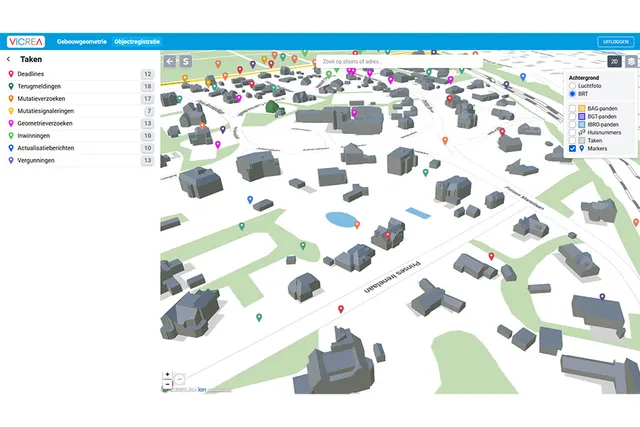
All geo-data in one portal
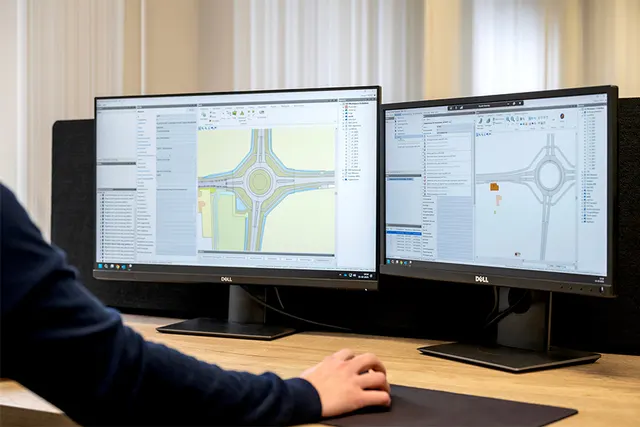
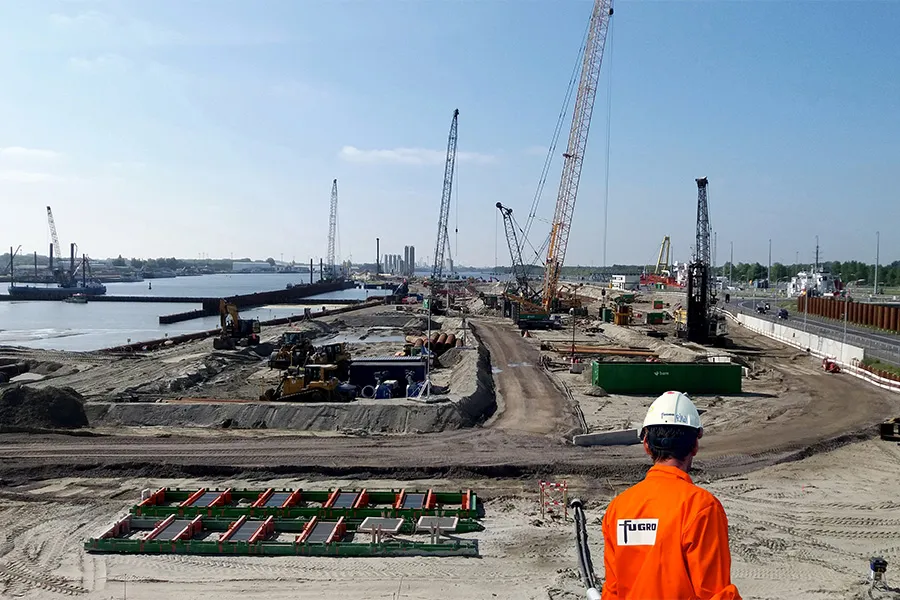
Fugro began large-scale monitoring, including water levels, in September 2018. “As the project progressed, our scope expanded to include vibration and noise measurements, to prevent damage to adjacent structures and sites and to minimise noise nuisance,” Frank explains. “We were involved in the preparatory phase of a trial involving the driving of tubular piles and sheet piles. We also installed prisms along the Westsluis and at stable points on neighbouring sites, and measured them to map the movement of the lock. In addition, we measured water levels in the existing locks and in the Schelde, and took pore water pressure measurements in the ground. The latter are very important, because excessive pore water pressure can cause soil liquefaction, leading to instability and potentially major damage. Another great feature of our service is that we present all monitoring data in one digital portal. That is truly unique.”
Management and monitoring plan
Such a large-scale monitoring task is underpinned by comprehensive management and monitoring plans, says Dave Wessling, geotechnical adviser at Fugro. “They form the link between design and construction.
The management plan identifies all the risks to the surrounding area, as well as the design rationale for why certain effects may occur and how they will be monitored and controlled. The monitoring plan describes, for each object, which measurement techniques will be used and how action will be taken and communicated if a threshold is exceeded.”
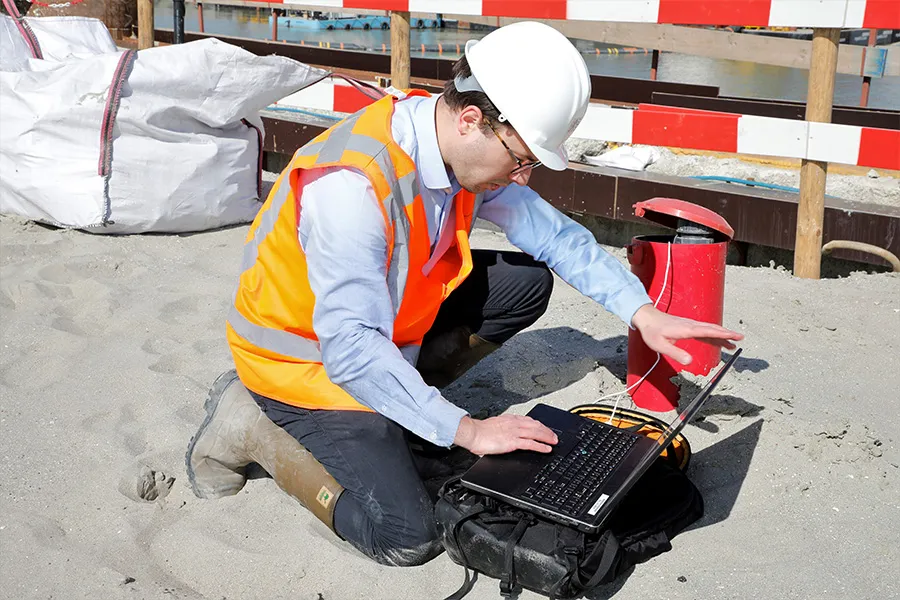
Alarm phone
During construction of the excavation pits for the lock heads and lock chamber, regular monitoring meetings were held with the Sassevaart construction consortium, comprising BAM Infra, Stadsbader Contractors, DEME Infra Marine Contractors B.V. and Dredging International N.V., Van Laere N.V. and Equans, and the client, the Vlaams-Nederlandse Scheldecommissie (VNSC). General findings were discussed, and any threshold exceedances and the measures taken were reviewed. While groundwater monitoring was under way, a so-called ‘alarm phone’ was also in operation 24/7. This system ensured that any potential deviations in groundwater levels were always detected and managed, including when no work was taking place on site. The excavation pits were flooded in November 2022. From that point, the regular monitoring meetings were discontinued and groundwater monitoring was no longer necessary. Vibration and noise measurements in Terneuzen will continue until the Nieuwe Sluis is handed over.
Flow slides
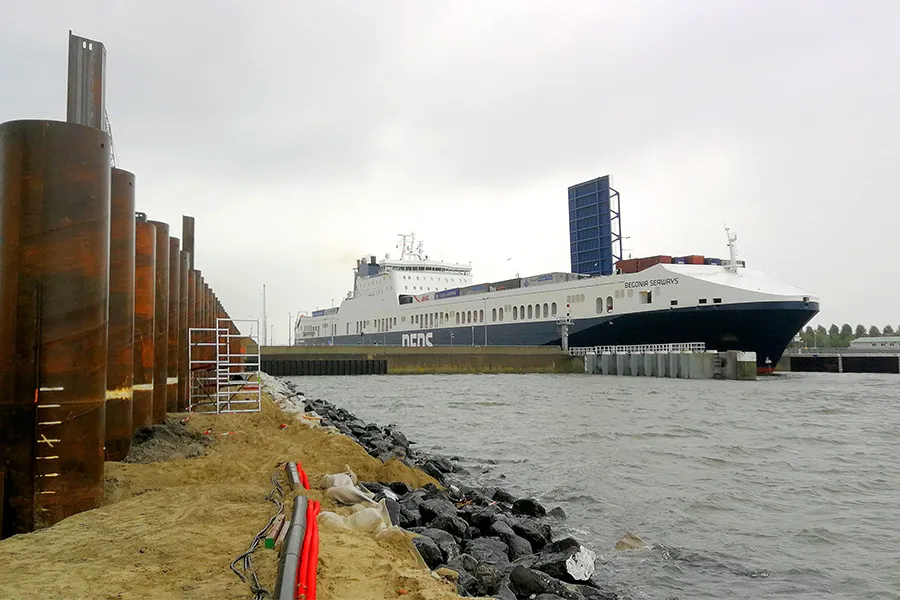
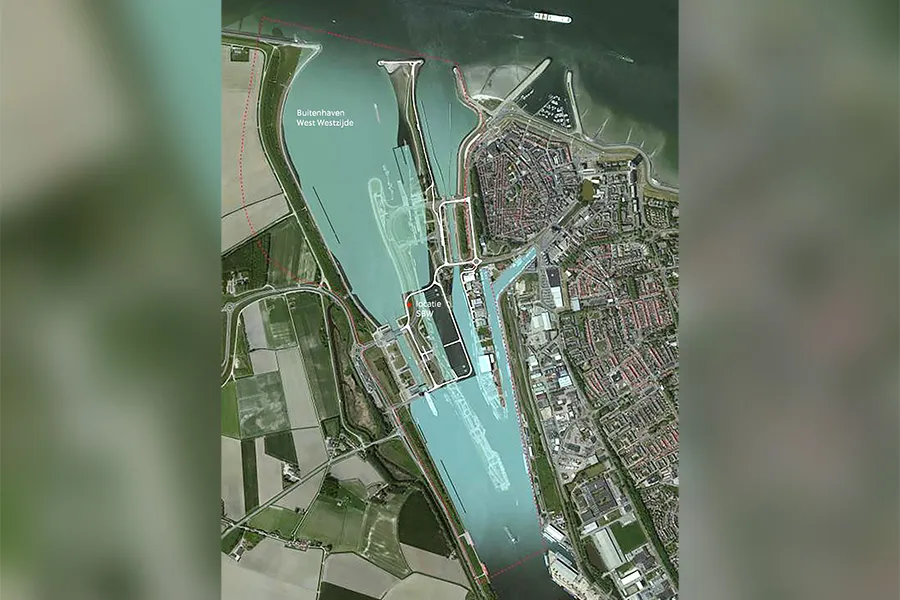
Fugro was closely involved in the 2018 vibration trial at Sluishoofd Buiten Westzijde (SBW), thanks to its extensive expertise in managing flow-slide risks. “The dikes at the Nieuwe Sluis form part of a primary flood defence. Vibrations caused by installing tubular piles and sheet piles can lead to increased pore water pressure in a fine-grained sand layer. This reduces the effective stress between the soil particles, which in turn reduces the stability of the dike as a whole. This can lead to a flow slide, causing instability and potentially failure of the flood defence,” Dave explains. “During the trial, two tubular piles were installed by both impact driving and vibration, along with three sheet piles. Vibration and pore water pressure were measured up to 60 metres from the trial site. The measurement data were used to verify and/or adjust the predictive model for vibrations and pore water pressures in relation to stability. Similar issues arose further along at Buitenhaven West Westzijde. There, too, ahead of the vibration trials scheduled for 2020, we were involved in planning the trial, carrying out monitoring (vibration and pore water pressure measurements, and visual monitoring using marker posts), processing and interpreting the measurement data, and making adjustments where necessary.”
Combination cones
The trial concluded that the measured pore water pressures were in line with the forecast, while the stability analyses showed that pore water pressures and vibrations reduce a dike’s stability factor by 20%, Dave explains. “Dewatering was therefore used to manage stability during construction. Lowering pore water pressures through dewatering offsets the increase caused by installing the tubular piles and sheet piles. Extensive monitoring was carried out during construction using pore water pressure sensors, combination cones (a cone that measures both vibration and pore water pressure at high frequency, ed.) and marker posts to measure deformation along the crest. The installation was also monitored by an on-site team, so that they could continuously check whether the minimum required lowering of the water level was being achieved and whether the increase in pore water pressure caused by vibration work remained below the specified thresholds.”
Natural deformation
Fugro also carried out a settlement risk analysis for the adjacent existing Westsluis. Dave says: “This focused on geotechnical risks that could affect the Westsluis, such as changes in groundwater levels and the impact of bollard forces. The Westsluis remained in operation throughout construction of the Nieuwe Sluis. All these effects were mapped. A large number of measurement points and vibration meters were also installed. The latter are useful when excavation begins. However, it was striking that considerable deformation of the Westsluis had already been measured before construction of the Nieuwe Sluis began. In summer, the water in the lock chamber is warmer, which affects the concrete. It expands. The lock therefore naturally undergoes considerable deformation, more than originally expected. The level of deformation was already approaching the original threshold. We were therefore able to revise it.”
According to Frank, the effect of temperature on the lock highlights an almost fundamental issue with monitoring. “Clients are often interested in how an object behaves as a result of work taking place elsewhere, but the object does not know that. It responds both to temperature and to work elsewhere. The challenge is to determine what causes what. A long baseline measurement period is crucial to drawing sound conclusions. With our expertise in ground investigation, consulting and monitoring, we have made a significant contribution to successful construction. It is precisely this integrated approach that sets us apart in the market.”
A business enquiry for Fugro? Get in touch
Companies in this story
Keep following this
Get an email when a new story is published. No account needed.
- ThemeUnderground construction
- SubjectSurveying & geo-ICT
- CompanyFugro