









Specialist work 15 metres underwater
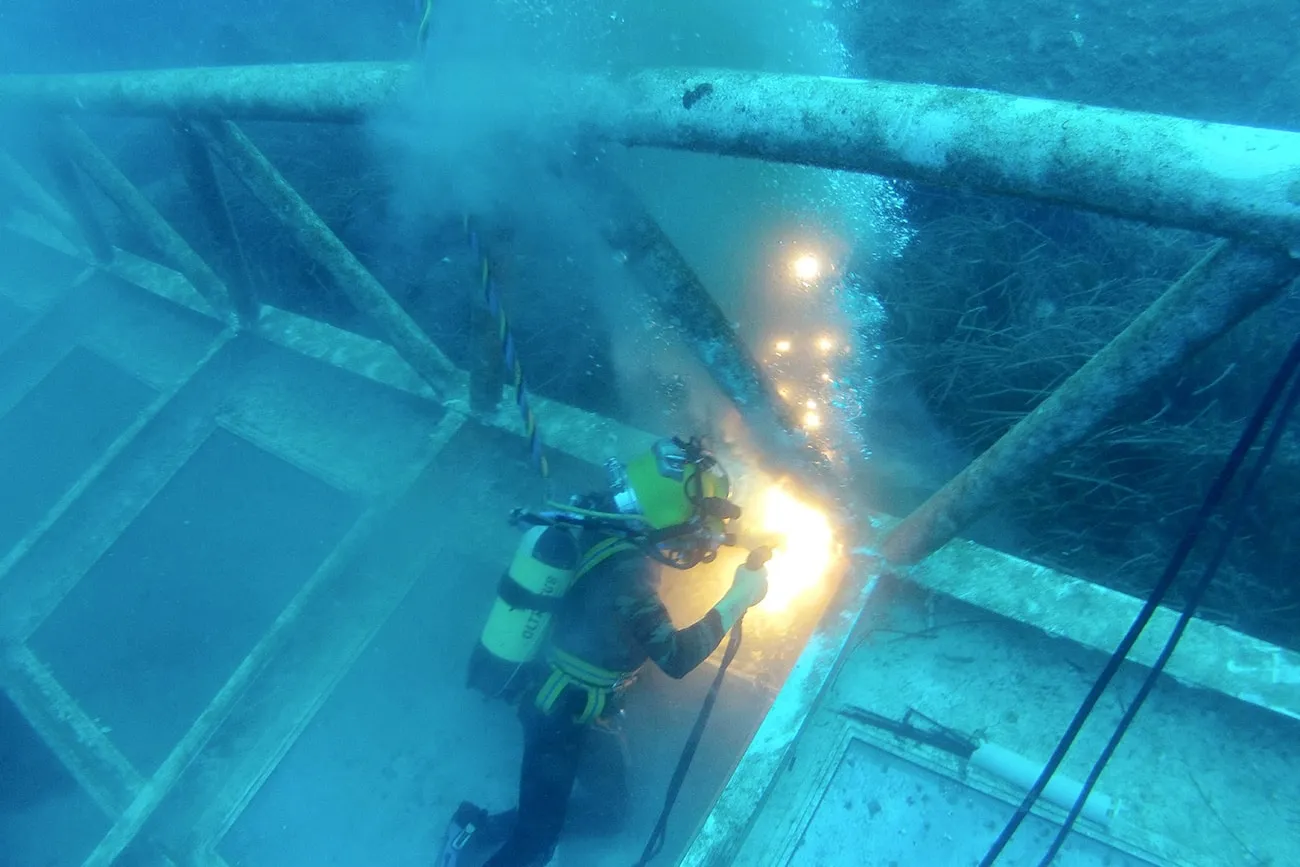
To prepare for the bridges being floated into position, the two combi walls separating the lock chamber from the Western Scheldt and the Ghent-Terneuzen Canal must be cut away. This is a job tailor-made for the divers at DISA International. How do water and fire work together underwater? Two DISA experts explain: professional diver Victor Demoniere and site manager Marc Veldhuizen.
Cutting away the sheet pile walls
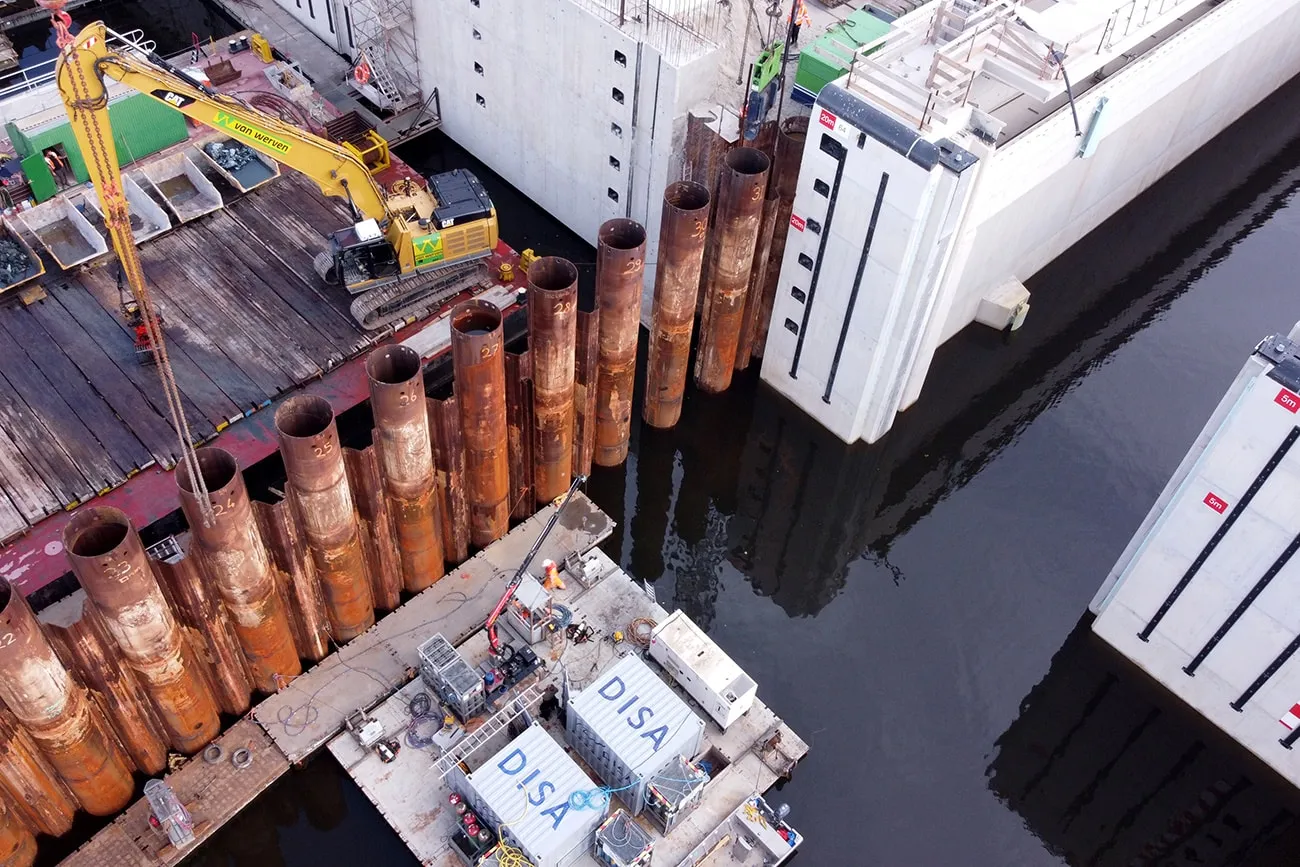
Cutting away the two outer combi walls involves a great deal of work. For instance, the combi wall at the outer head can only be cut away once the land spit behind it has been dredged away. That is why an initial section of the combi wall is cut away to allow the bridges to be floated into position. The combi wall consists of tubular piles with sheet piles in between. To cut away the tubular piles safely, the water level outside the combi wall must be the same as the level in the lock chamber. This prevents any current from forming when the combi walls are removed, allowing the divers to work safely. “It will take us a total of three months to cut away the two combi walls,” says Demoniere, one of the regular professional divers on the project. “It is highly specialised work, which is what makes it so rewarding. Many people find it hard to believe that we cut through steel underwater using fire. Surely water and fire don't mix? But we can cut through steel up to 15 centimetres thick at temperatures of up to 2,500 degrees. That makes DISA unique. We have specially developed tools and the right people.”
Safety
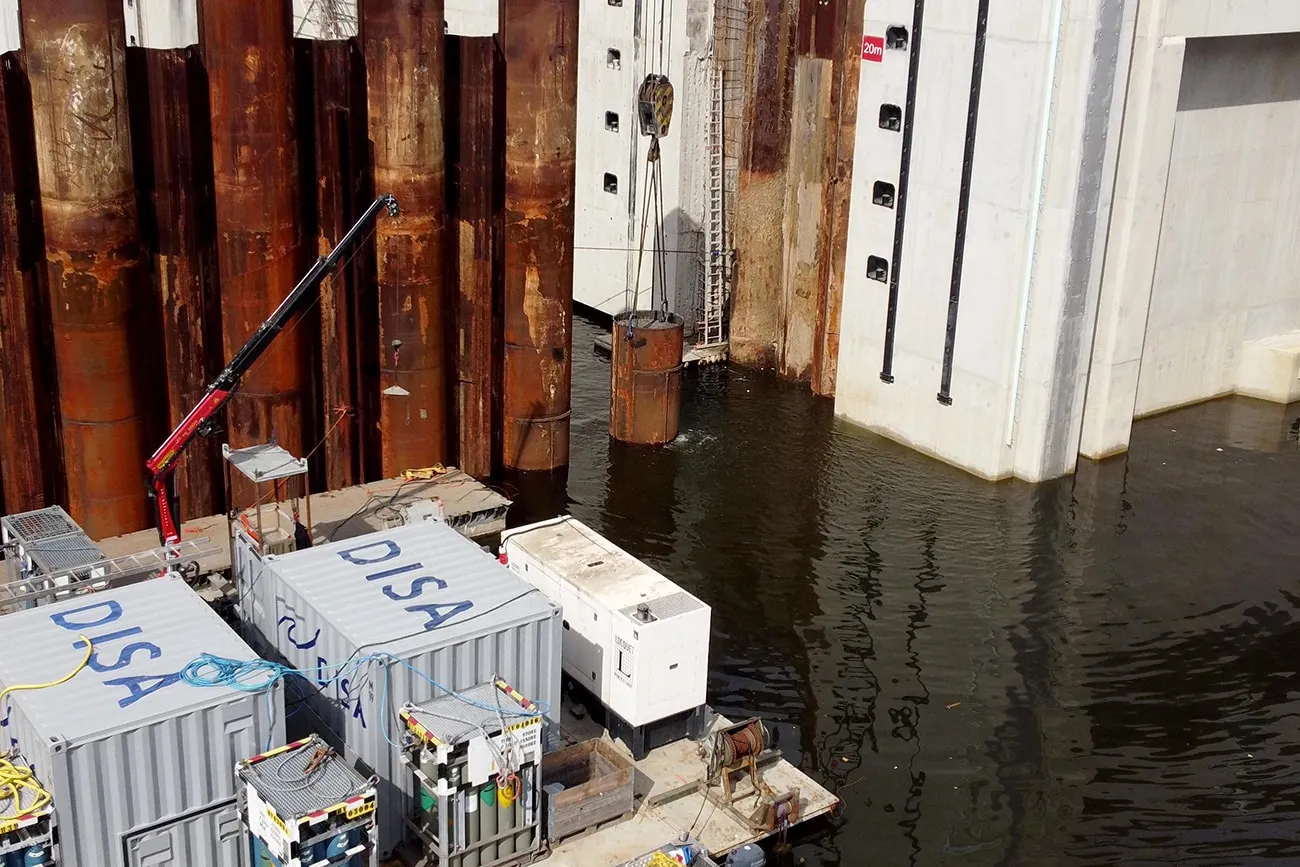
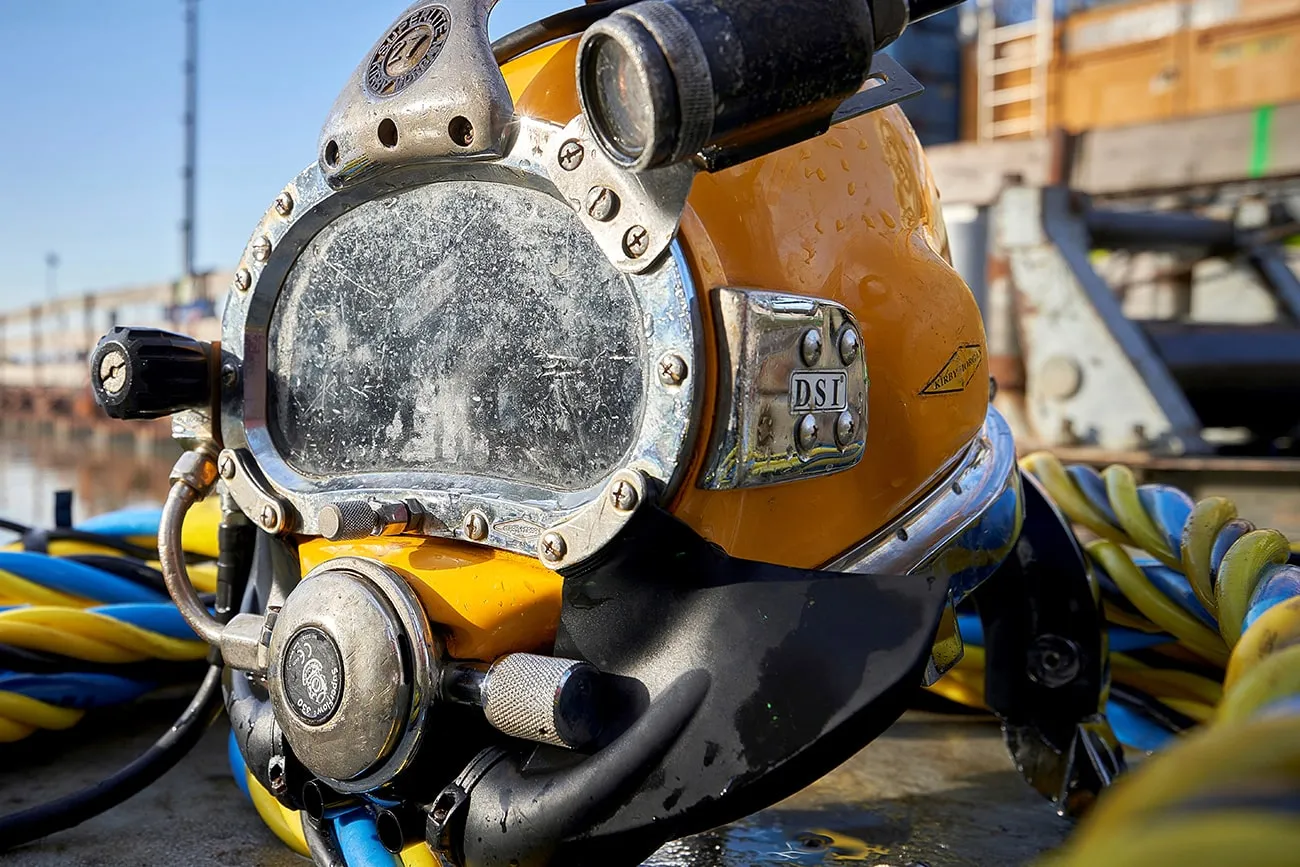
To work safely, Demoniere always works in a team of three, and a decompression chamber is on hand depending on the depth of the work. To spend longer underwater, the divers use a specially adjusted gas mixture containing up to 36 per cent oxygen and 60 per cent nitrogen. By comparison, the air above water contains 21 per cent oxygen and 79 per cent nitrogen.
A challenging solution
The challenge at Nieuwe Sluis Terneuzen was that the combi wall was difficult to access. The outer walls were also heavily fouled. To make the cutting work possible without compromising the divers' safety, DISA came up with an effective and cost-saving solution. Veldhuizen explains: “A combi wall consists of tubular piles with sheet piles in between. To cut away the wall safely, the divers cut a manhole approximately 70 cm by 1 metre in each tubular pile. This allowed them to cut away the wall elements from the inside. That is no easy task when you consider that a tubular pile weighs around 30 tonnes.” According to Veldhuizen, this demonstrates DISA International's strengths. “We have extensive experience and expertise, as well as the right people. We work in the Netherlands and internationally, with 200 divers. That enables us to deploy quickly and flexibly on projects, including those with longer durations.”
Visibility in the dark
What makes the diving work in Terneuzen especially enjoyable for Demoniere and his colleagues is that they have visibility underwater. “For three-quarters of the time, we work in pitch-black water with virtually no visibility. At Nieuwe Sluis, we could see 2 to 3 metres ahead. It was a great experience!”
Have a business enquiry for DISA International? Get in touch
Companies in this story
Keep following this
Get an email when a new story is published. No account needed.
- SubjectSpecials
- CompanyDISA International
- CompanyVeldhuizen b.v.







