









New polymer composite pipe prevents permeation
With a storage capacity of around six billion cubic metres of natural gas, RAG Austria AG is Austria’s largest gas storage company and, consequently, its largest energy storage company. Supplied gas is temporarily stored in depleted natural gas reservoirs. As natural gas absorbs moisture in the reservoir, it is dried and purified after extraction. This process produces formation water, which is pumped back into the gas storage facility. Salts and hydrocarbons dissolved in the water must not be released into the environment under any circumstances. AGRU therefore supplied a new type of permeation-proof polymer composite pipe, the AGRU Sureline IV Barrier Pipe. The specialist installation was carried out by RTi Austria GmbH, which specialises in trenchless pipeline installation.
RAG Austria AG operates one of the largest porous storage facilities in Central Europe. The 7Fields natural gas storage facility, with a storage volume of 1.7 billion m³, comprises several former gas fields in Upper Austria and Salzburg. Unique in Europe, the facility has five storage stations connected by natural gas pipelines to both the national and international networks, and a total of three metering stations. Once the natural gas has been extracted, the cavities are reused as underground natural gas storage facilities. They offer the highest level of natural safety and solve the problem of providing space for temporary storage. Unlike electricity, gas can therefore be stored safely and in large quantities.
Safe transport
Formation water is produced during the extraction and drying of temporarily stored gas. RAG Austria AG prioritises the highest environmental standards in all its processes and was looking for a pipeline system that would effectively prevent hydrocarbons from the formation water from spreading. A steel pipeline installed several years ago had begun to corrode due to the high salt content and needed replacing. The company opted for AGRU Kunststofftechnik GmbH’s new reservoir pipeline, the permeation-proof multilayer AGRU Sureline IV Barrier Pipe. This fully pressure-resistant polymer composite pipe was specifically developed to transport contaminated wastewater or chemicals through ecologically sensitive areas. It can also be used to transport drinking water or ultrapure water through contaminated ground.
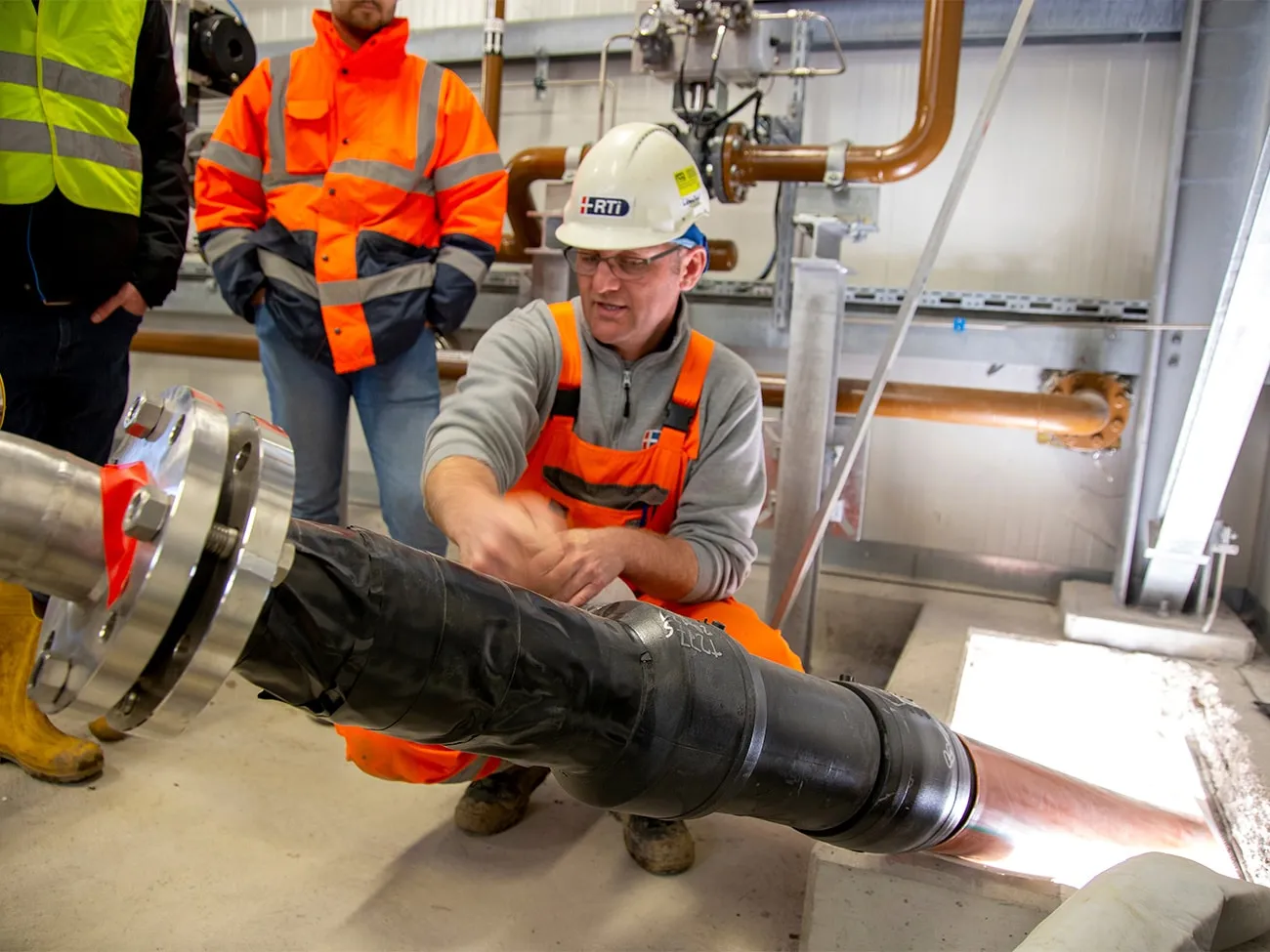
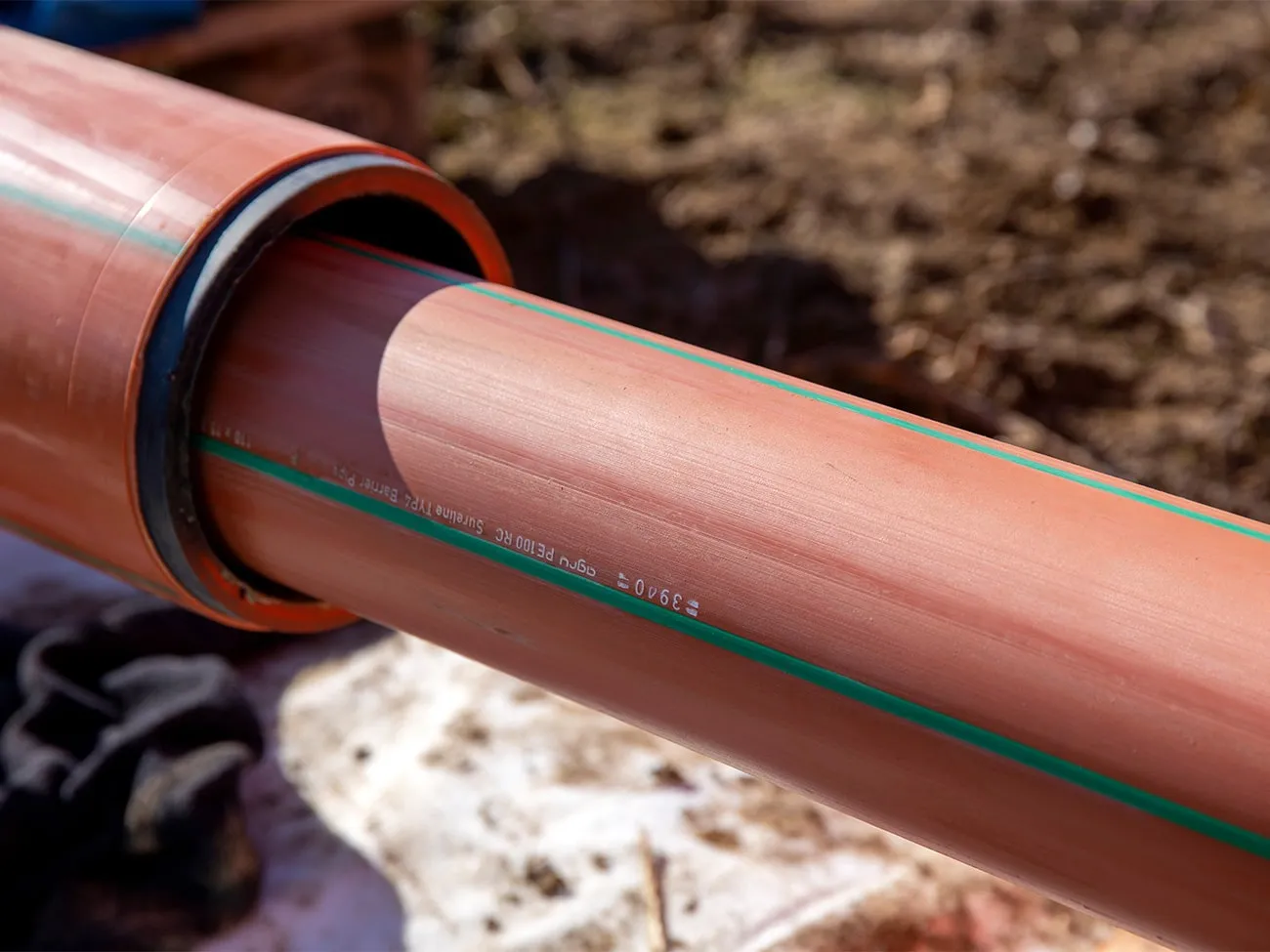
The revolutionary three-layer construction, made from high-quality, durable polymers, effectively prevents gradual soil contamination through permeation and ensures maintenance-free operation. The inner, robust pipe carrying the medium is made of point-load-resistant PE 100-RC, is permanently corrosion-free and prevents deposits thanks to its smooth internal surface. Above it is a permeation-proof barrier layer made from high-quality polymer. This protects the environment from all media transported in the pipe, preventing them from permeating into the surrounding area under any circumstances. An outer protective jacket made from scratch-resistant PP also allows installation using alternative trenchless techniques, such as pipe ramming, impact mole or ploughing, without causing deep scratches. Jointing methods include proven techniques such as heated-tool butt welding and heated-coil welding.
Double pipe, double safety
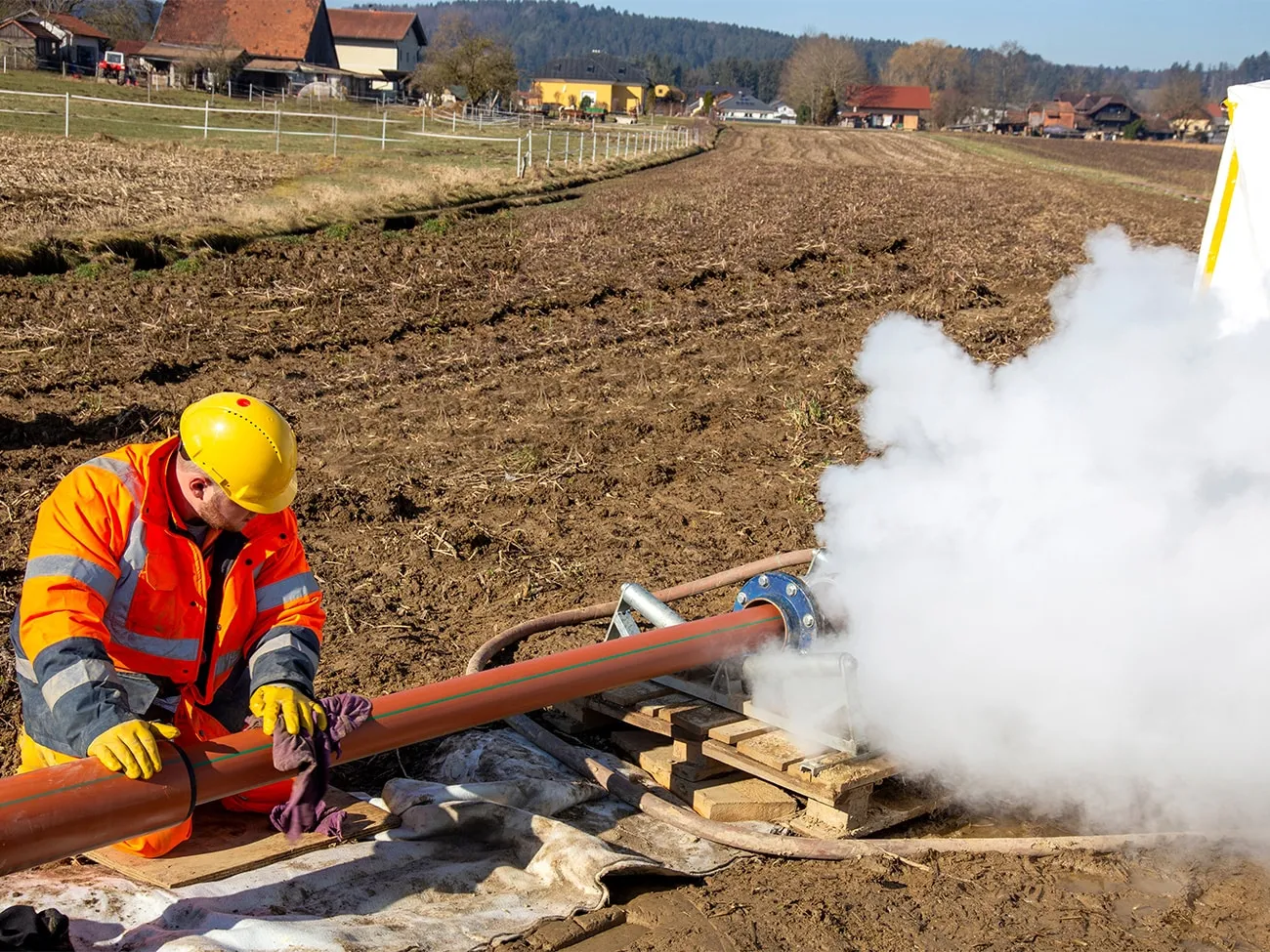
To enable continuous monitoring of the safe transport of the aggressive ancient seawater, RAG Austria AG’s engineers chose a double-pipe system with integrated leak detection. The Sureline IV Barrier Pipe, which carries the medium, was pulled into a larger-diameter Sureline III pipe, which serves as a protective outer pipe for maximum safety. To ensure a clean annular space, the outside of the Sureline IV Barrier Pipe was cleaned with hot steam during the pulling-in process. The remaining annular space between the two pipes is designed as a pressure-resistant containment space to prevent any medium from escaping in the event of a leak.
4,800 m of Sureline IV Barrier
The reservoir pipeline replacement took four months. In total, 4,800 m of Sureline IV Barrier Pipe in da 140 mm SDR 17 and Sureline III Pipe in da 160 mm SDR 17, along with the associated PE 100-RC fittings, were used. Various technical solutions were considered for removing the existing steel pipe. The most cost-effective option was a specially developed trenchless installation technique. The Sureline III pipe was installed without excavation, using the pipe-ramming method. The completed double-containment pipeline is designed to withstand pressure peaks of up to 25 bar, with an operating pressure of 10 bar. The medium reaches a maximum temperature of 50 °C. One of the challenges during construction was laying the pipeline. Using a pilot bore, two streams had to be crossed at a depth of 4.5 m along a 90 m radius.
Question about this story? Ask your question
Keep following this
Get an email when a new story is published. No account needed.
- SubjectSpecials







