









Inspecting plastic liners to ensure 100% quality
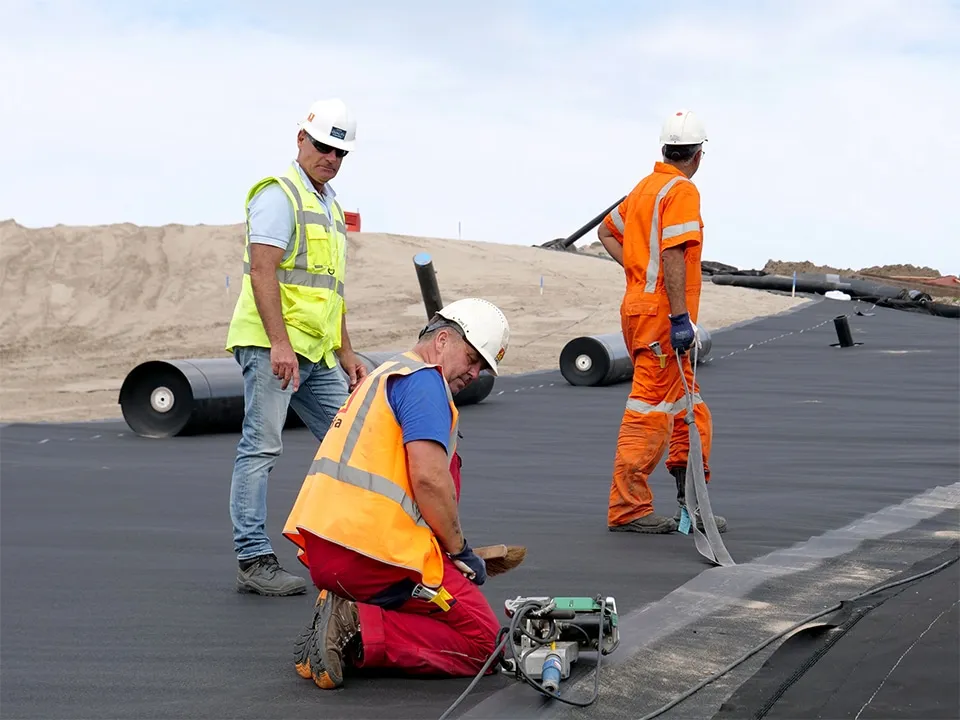
Enviro Quality Control BV (EQC) is an accredited inspection body that inspects plastic lining systems at waste and residue storage facilities. It also holds the required accreditation to inspect road structures and other earthworks incorporating, or previously incorporating, incinerator bottom ash.
EQC also has its own leak detection and location system. For 15 years, it has championed 100% quality in welded joints. We speak to Andries Steerenberg, founder and owner of Enviro Quality Control.
Geologger
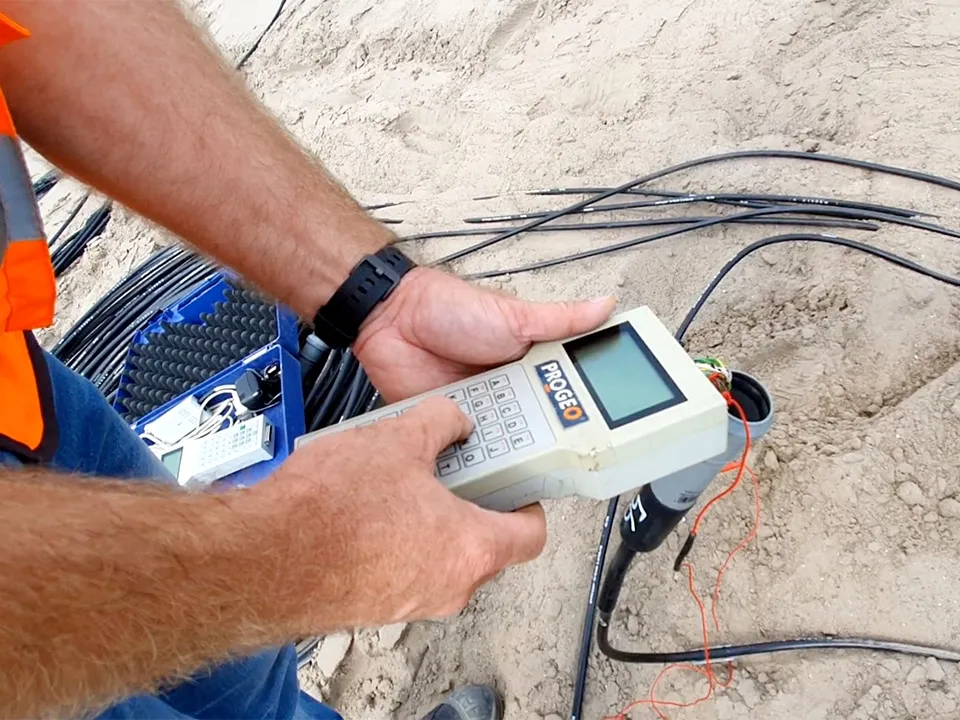
“We have been an accredited inspection body for 15 years and were the first in the market to receive accreditation from the Dutch Accreditation Council for the inspection of plastic liners,” says Steerenberg. “One of our main activities is inspecting lining systems, both above and below ground, at waste and residue storage facilities. Clients are required to have the lining inspected and tested by an independent, accredited inspection body. We have also introduced Geologger, a leak detection and location system that monitors online, 24/7, whether a lining system is watertight and remains so. Recreation facilities, golf courses and solar parks are often built on capped landfill sites. This can pose a risk to the lining system. Geologger makes it easy to establish whether the lining system is still intact.”
IBC construction materials
Over the years, EQC has expanded its remit to include inspections of so-called IBC works. “IBC construction materials are unbound materials that may only be used in conjunction with isolation, management and monitoring (IBC) measures,” explains Steerenberg. “IBC materials are used in practice in the construction of, among other things, road structures. Geosynthetics are used, among other measures, to adequately separate these materials from the soil and groundwater. Inspection protocols have been drawn up to safeguard the quality of the installed soil protection system during construction and operation. During construction, we can issue a declaration of conformity with inspection protocol AS 6901, ‘Inspection of a work using IBC construction materials’, as well as carry out the annual inspection in accordance with AS6902.”
In accordance with NEN
In 2018, the protocols for welding plastic sheeting were updated to assess the quality of welded joints in geosynthetics. Steerenberg says: “The NEN standards in force in the Netherlands allow 20% of a welded joint to peel apart. At EQC, we consider this unacceptable, as do many clients. With today’s technology, it is entirely possible to produce a high-quality welded joint that meets the requirements 100%. That is why we have developed our own quality system, applying the German DVS standards, which are far more stringent than the Dutch requirements. Quality must be delivered. As an independent party, we are therefore present on site from the first sheet roll being unrolled to the final weld being made. If conditions on site prevent a 100% welded joint, for example, if humidity is too high or the temperature too low, we advise waiting. In practice, this causes hardly any loss of time, but does result in higher quality. It is better to take care during the preparation stage than risk a questionable installation and an inferior welded joint.”
Question about this story? Ask your question
Keep following this
Get an email when a new story is published. No account needed.
- SubjectSpecials







