









Inspecting bridge inspection units
Text Roel van Gils Image Aboma
Using drones for optimum efficiency
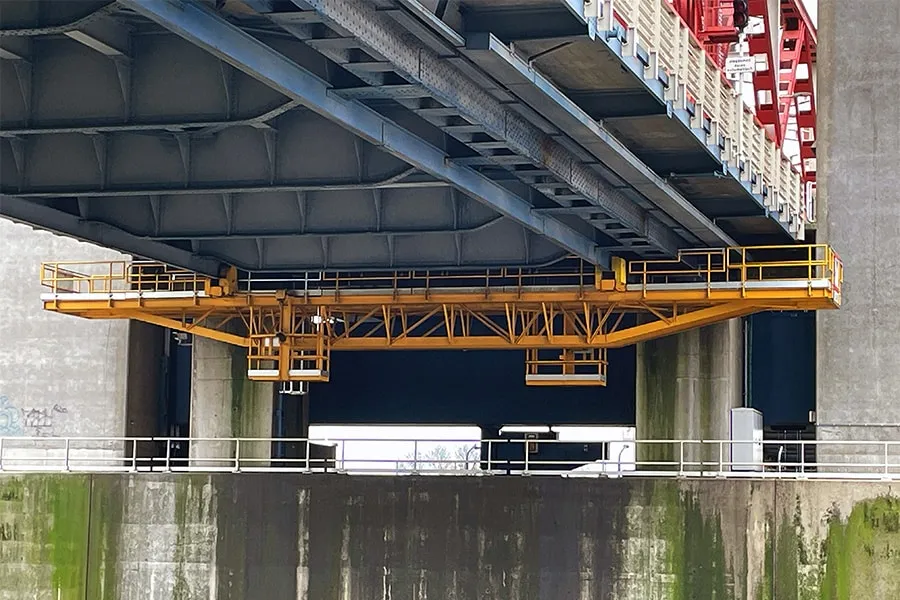
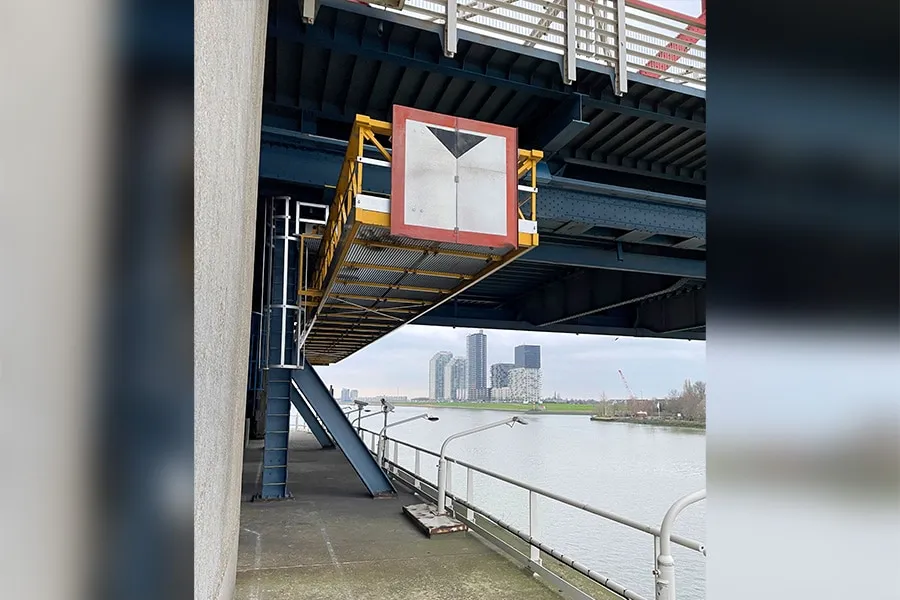
Many of the large bridges in the Netherlands that cross a waterway are fitted with one or more bridge inspection units, enabling the structure to be inspected periodically. As the unit is a work equipment item, it must be inspected at least once a year. Given the complexity of the location, this can sometimes be quite a challenge. Aboma Inspections is therefore increasingly using drones.
“The need to inspect the underside of a bridge has been demonstrated time and again in recent years,” says Bas van Gruijthuijsen, general manager at Aboma Inspections. “A bridge inspection unit is the standard means of doing this. In many cases, it is a fairly complex piece of equipment, uniquely designed and custom-built for each structure. Many bridge inspection units fall under the responsibility of Rijkswaterstaat, which oversees their safe operation. This also includes periodic inspections. In our humble opinion, the inspection process can be made considerably simpler by using a drone. After all, a bridge inspection unit is not always located somewhere easily accessible.”
Shorter turnaround
Inspecting a bridge inspection unit is therefore quite complex. “Work is always carried out close to a waterway, road and/or railway,” Bas rightly points out. “This means coordinating with various parties to ensure the inspection can be carried out safely. Sometimes a closure is unavoidable. Since most of the inspection is visual, a drone equipped with a range of sensors and cameras can, in most cases, carry out a visual inspection much faster while still capturing an exceptional level of detail. This results in a much shorter turnaround and therefore a shorter closure.”
Drone regulations
Regulations governing drone use have become much stricter in recent years. Aboma is certified under the Specific Category and has all the necessary documentation to fly, including at these unusual sites beneath bridges. “An operational plan must be drawn up in consultation with the asset manager, but that is just a formality. At Aboma, we take care of the whole process,” says Jeroen Gerkema, equipment coordinator and drone pilot at Aboma Inspections.
A professional eye
In addition to a visual inspection of the structure and the rails, including their suspension, along which the bridge inspection unit moves, an inspection also checks and examines all aspects to which a user is exposed. Jeroen gives a few examples: “Is access safe? Could you get trapped anywhere? Are the guardrails in good condition? The documentation and user manual are also reviewed by a professional. The inspection also includes travelling the full length of the track, right up to the end stops.”
Using a drone enables Aboma to inspect bridge inspection units with optimum efficiency in many cases. “Inspection is second nature to us, so when we use a drone, we know exactly what to look out for,” Bas concludes. “This means we can use drones to offer our clients a much wider range of services, such as inspecting structures and construction equipment in places that are difficult to access. That brings a new dimension to our field.”
Question about this story? Ask your question
Keep following this
Get an email when a new story is published. No account needed.
- SubjectSpecials







