









Geotechnical consultancy specialising in lightweight fill materials and geosynthetics
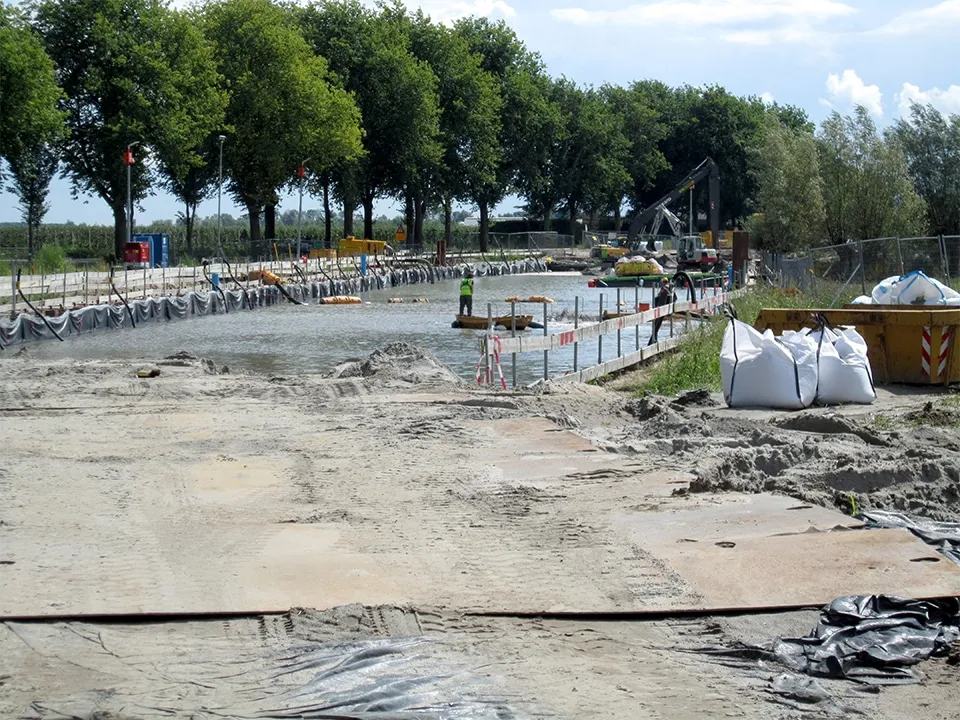
The use of lightweight fill materials and geosynthetics in infrastructure is becoming increasingly popular. However, it requires specialist knowledge.
With almost fifteen years’ experience in this field, Erik Kwast of geotechnical consultancy Kwast Consult is frequently called upon for his expertise. He is also chair of the NGO, the Dutch Geotextile Organisation.
Kwast Consult offers specialist geotechnical expertise in areas including lightweight fill materials for infrastructure, such as Bims, EPS and foamed concrete. The consultancy is also engaged to carry out risk assessments and assess impacts on the surrounding area, for example through vibration analyses and ground deformation modelling using Plaxis. Clients can also turn to Erik Kwast for advice on using geosynthetics in infrastructure (membranes, reinforcement for stability and foundations, reinforced soil and piled embankments) and for the design of railway infrastructure (railway tracks, underpasses and overhead line foundations in accordance with OVS/RLN). Kwast Consult works for public authorities, engineering consultancies, suppliers and contractors.
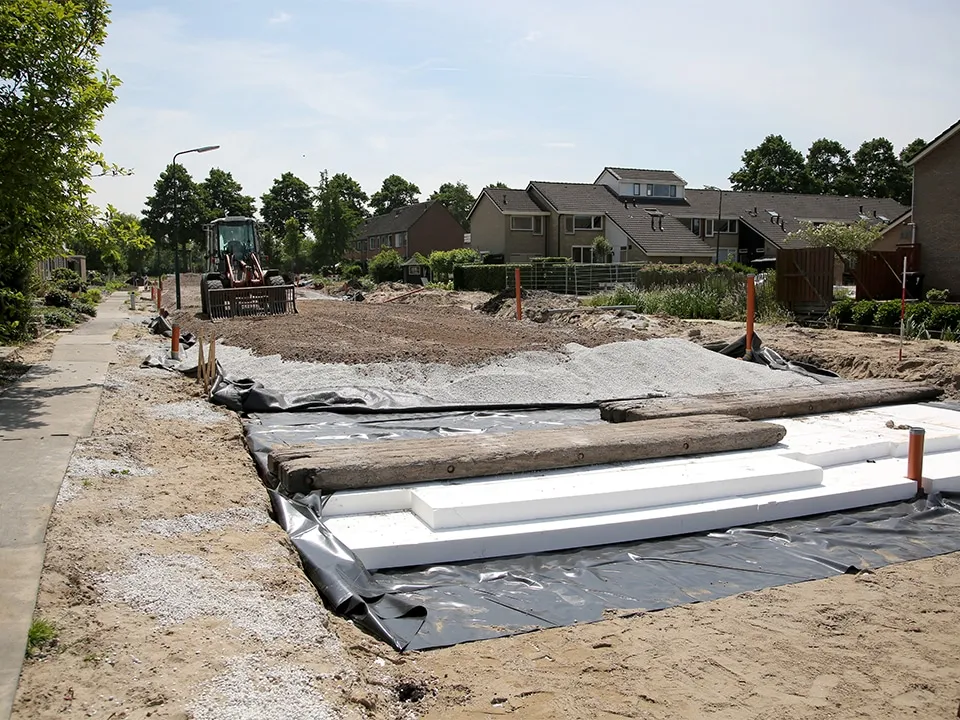
Lightweight fill materials
To prepare areas with soft, low-bearing-capacity soils for construction, the ground must be raised. “Traditionally, sand is placed beneath the area to be paved (infrastructure), but this causes settlement problems during construction and for many years after completion,” says Kwast. “Lightweight fill materials are increasingly being used to build infrastructure with minimal settlement, including Bims, Argex, EPS and foamed concrete. Each type has specific characteristics that affect its suitability for different sites and projects. We provide the right advice based on a study of the options and the project constraints, such as cost, groundwater levels and settlement requirements. If required, we also provide site supervision during the installation of lightweight fill materials. The benefits of using lightweight fill materials include fast construction, minimal settlement and minimal impact on the surrounding area. Our projects include the reconstruction of several neighbourhoods in the municipality of Woerden, the large-scale conversion of Groningen’s southern ring road (Aanpak Ring Zuid) and De Groene Boog A16 in Rotterdam. The latter two projects are being carried out through Joosten Concepts, a partnership between Joosten Kunststoffen and various manufacturers, engineers and contractors. The partnership’s key strength is OLA, or Ontwerpen, Leveren en Aanbrengen (Design, Supply and Installation).”
Geosynthetics in infrastructure
Geosynthetics offer many potential applications that are not widely known. “In many cases, geosynthetics make it possible to design and build better, differently, more efficiently, more sustainably, in a more environmentally friendly way or at lower cost,” Kwast continues. “We have extensive experience designing membrane structures for applications such as tunnel approaches, and foundation and stability reinforcement for roads and railways. Using geosynthetics generally enables significant optimisation. They can also reduce the space required by allowing steeper slopes. Designing with geosynthetics is specialist work, but that does not mean they will not be used increasingly often,” Kwast expects. “The materials are becoming better known, and building traditionally in confined spaces is becoming increasingly difficult. Geosynthetics are also highly attractive in terms of cost.”
Kwast Consult draws on many years of geotechnical expertise and experience gained from dozens of completed projects to develop cost-effective designs.
Question about this story? Ask your question
Companies in this story
Keep following this
Get an email when a new story is published. No account needed.
- ThemeMaterials and techniques for infrastructure
- SubjectSpecials
- CompanyJoosten Groep







