Foundations / Site investigation
Recovering grout anchors completely from the ground
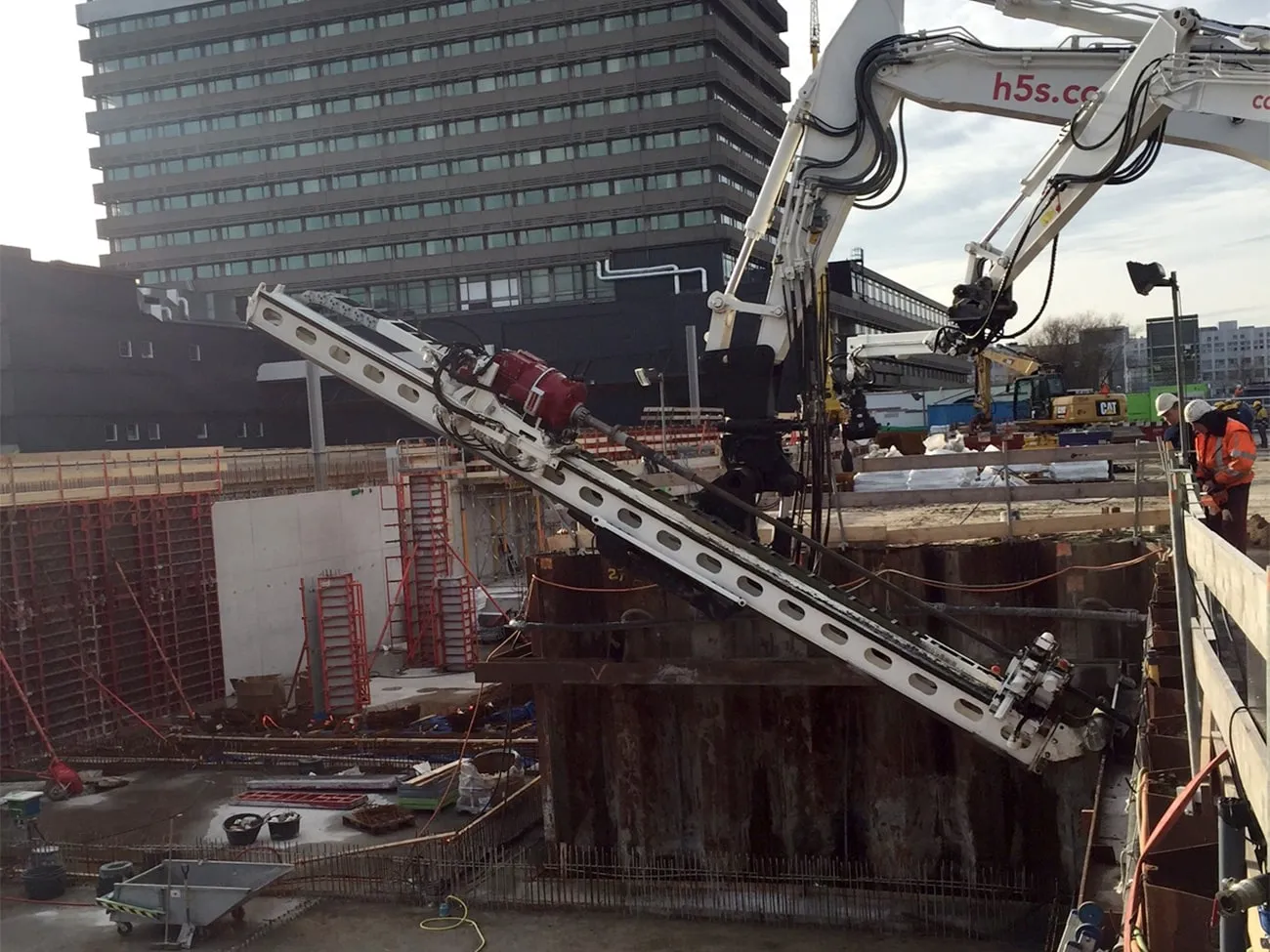
Anchoring systems in the form of grout anchors are widely used in construction pits. Once the pit is complete, these are generally considered sacrificial and left in the ground. Peter Bongers, operations director at High 5 Solutions, believes this is a waste. He has developed a method for recovering the anchors completely from the ground so they can be reused on a future project.
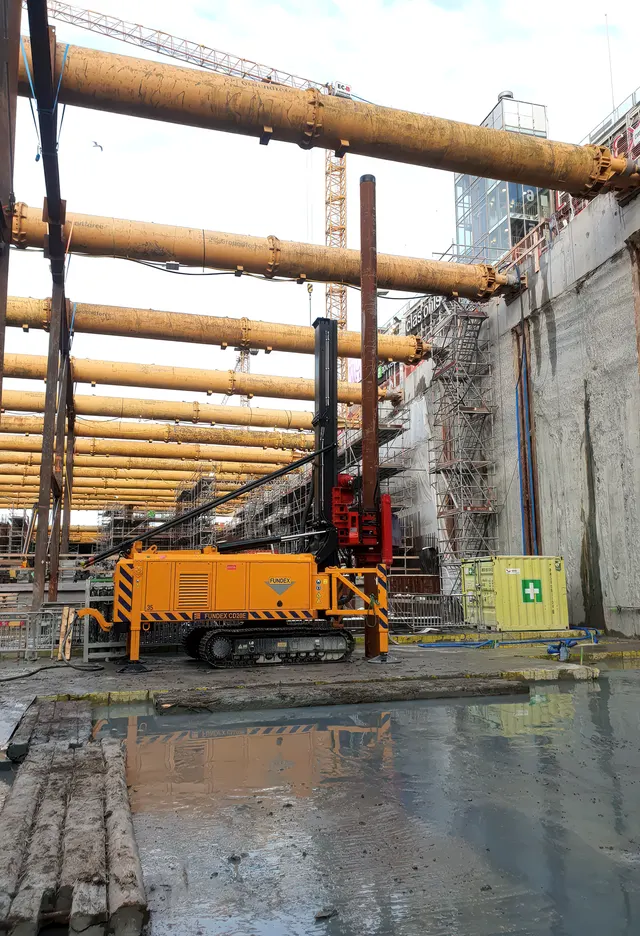
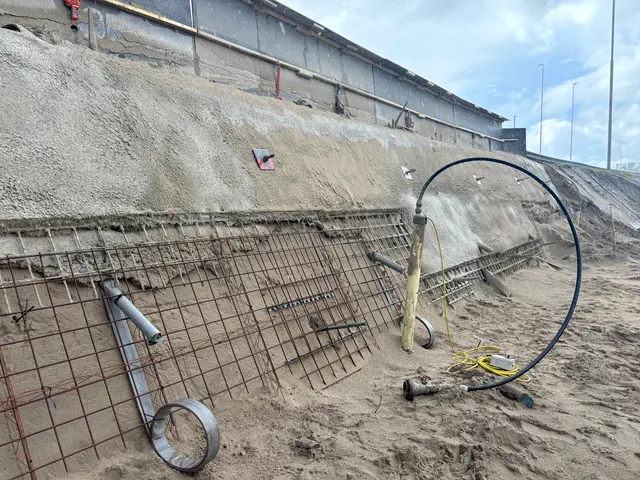
A construction pit is formed by sheet piles and a waling system to which anchors are attached. “These anchors are installed in the ground at an angle. Once the grout body has cured, the anchor is tested and tensioned, allowing excavation of the construction pit to proceed,” Peter explains. “Once the basement has been built and the space between the sheet pile wall and the basement has been backfilled, the anchors are released and no longer serve a purpose.”
No longer of any value
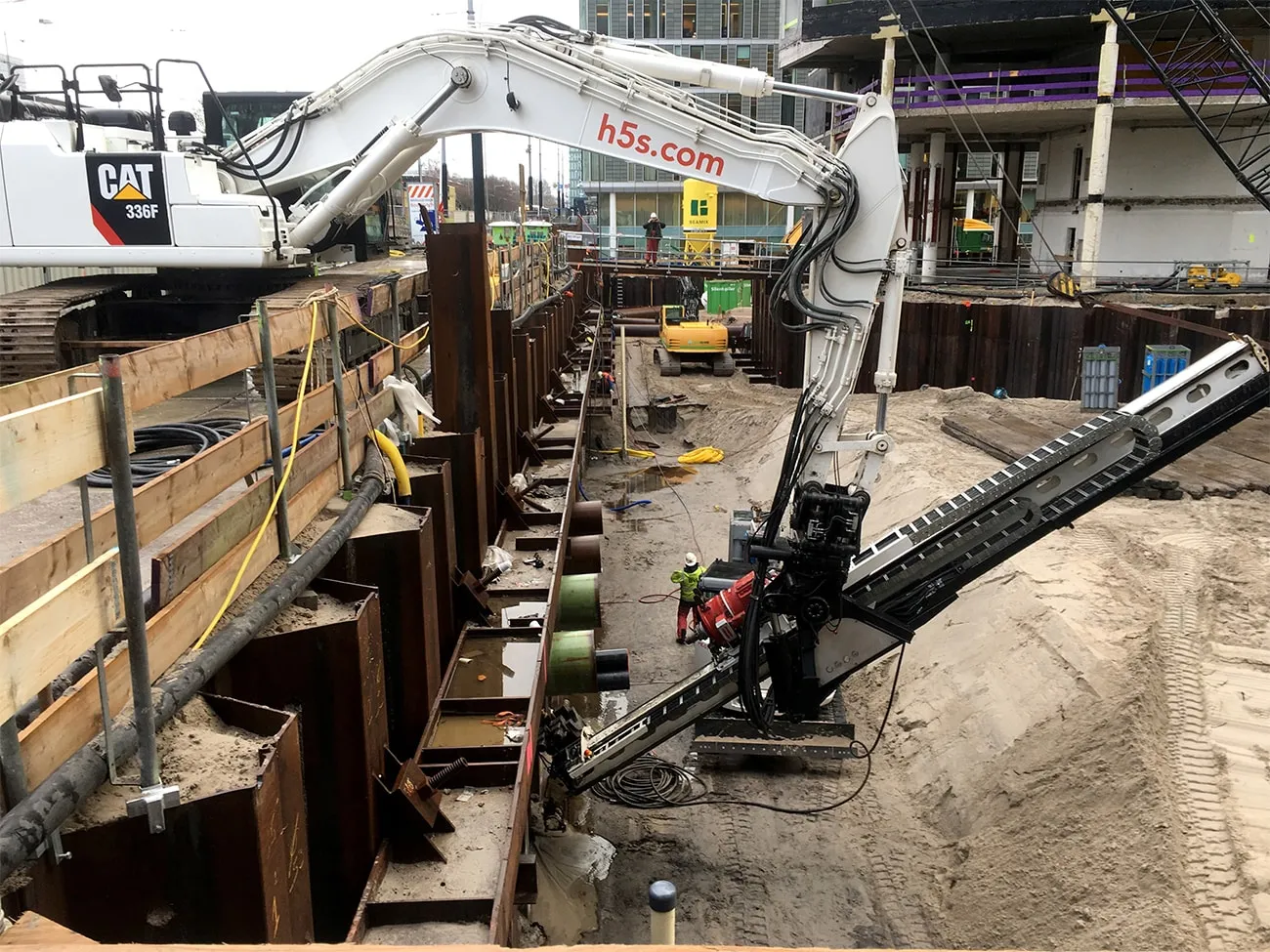
In the past, grout anchors could not be removed and were left in the ground as sacrificial anchors. “Only in special cases, where the anchor bar is detonated using an explosive charge, can the free length of the anchor above the grout body be removed with a hydraulic jack,” Peter continues. “The disadvantage of this removal method is that the section of anchor bar within the grout body remains in place. The grout body remains intact, and the steel extracted from the ground has no value because it is recovered in relatively short lengths.”
Sonic vibrations
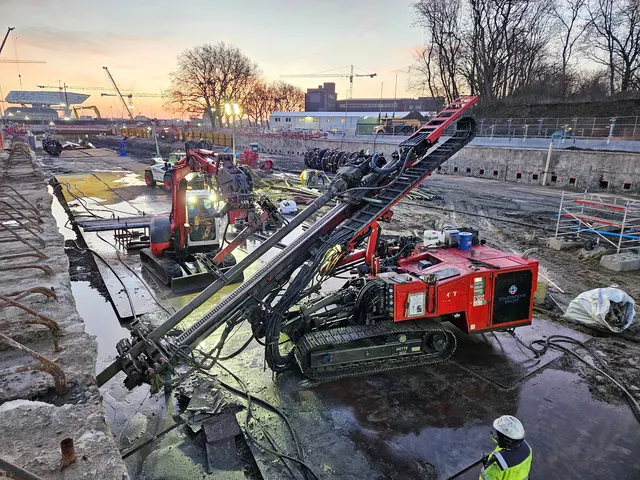
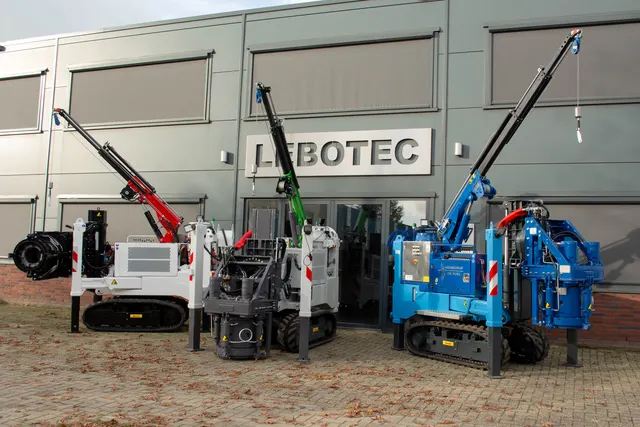
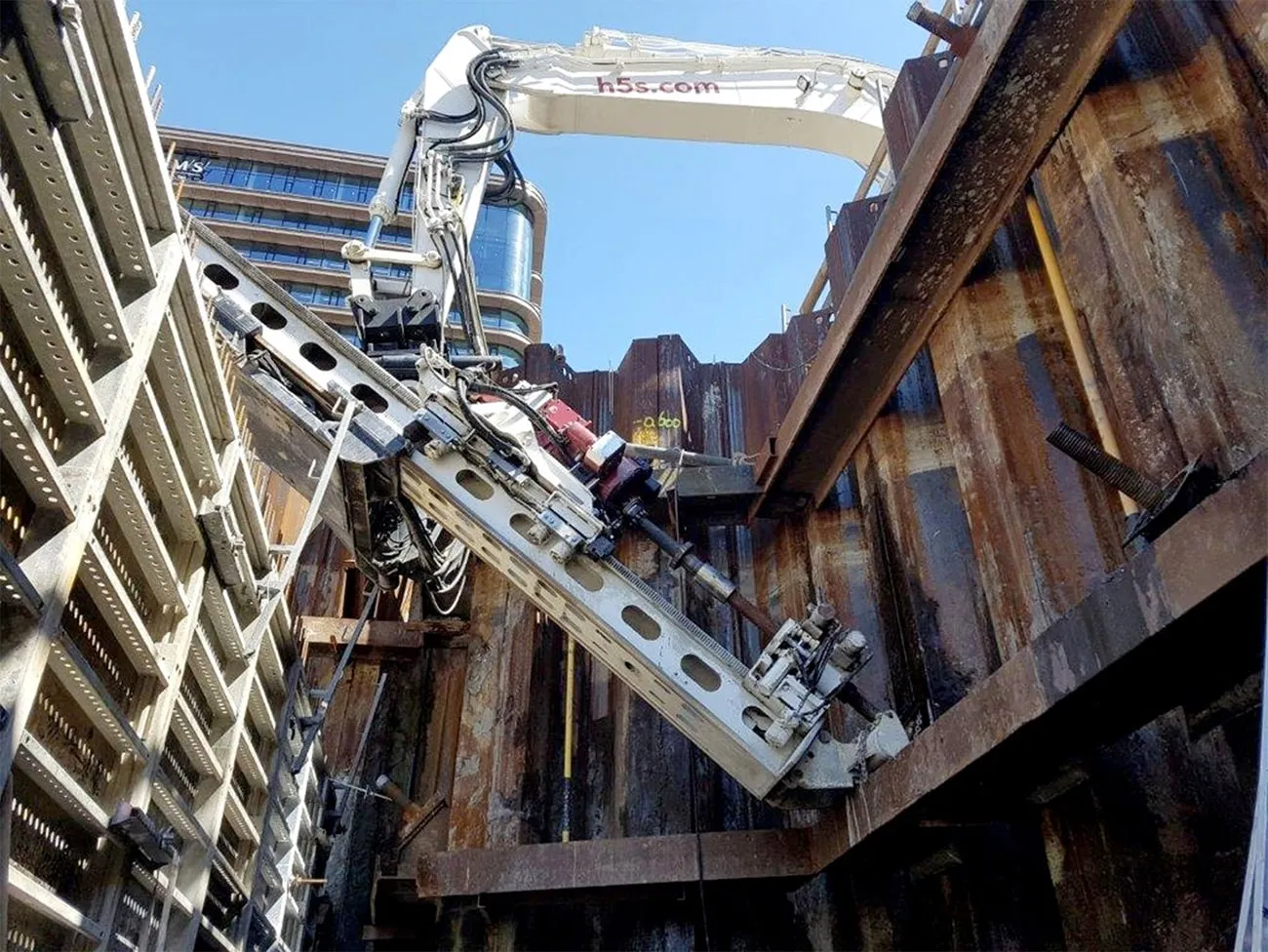
There is another way. High 5 Solutions has developed a different, much more sustainable method for recovering grout anchors completely. Peter explains: “Once the anchors are no longer needed, they are released. This can be done in various ways, either with a hydraulic jack, by flame-cutting the anchor head plate or by other means. We then connect the sonic drilling rig to the anchor. This is the same rig used to install the anchors, and it applies vibrations of around 150 Hz (9,000 rpm) to the anchor. These ultra-high-frequency vibrations bring the anchor tube into resonance, causing it to detach from the grout body formed in the ground. The anchor tube is then extracted from the ground while rotating and under sonic vibration.”
Splitting wedge
Peter describes the method: as the anchor is removed while rotating and under sonic vibration, the drill bit rises with it and acts like a splitting wedge as it passes through the grout body. “This pulverises the entire grout body, leaving only crushed grout. What makes our method unique is that the anchor tube is removed in its entirety, including the drill bit. The recovered anchors can be reused because the removal method allows them to be disconnected into long sections, making them suitable for use on a future project. Since both the bar and the grout body are removed, there is no longer any structural continuity, so there will be no obstruction later, for example, when installing new foundation piles or sheet piles. This is a major advantage when piling work is planned later on the site, and also an important benefit for permitting authorities, because the entire structure is now temporary.”
Since the grout remains in pulverised form, the only volume loss is equal to the volume of the anchor tube and drill bit, Peter summarises. “This volume is negligible and will not cause settlement, because it will be offset by the anchor’s previous prestressing effect and the arching action around the plug. The space left by removing the anchor tube and drill bit can also be filled with a filler during or shortly after extraction, if necessary. Filling any void that may have formed also helps restrict water flow, restoring the water-retaining layers that were penetrated. All in all, this is an extremely sustainable method.”
Question about this story? Ask your question
Keep following this
Get an email when a new story is published. No account needed.
- ThemeUnderground construction
- SubjectFoundations / Site investigation