Foundations / Site investigation
Precision work over 40 kilometres
Text Roel van Gils Image Molhoek Infratechniek
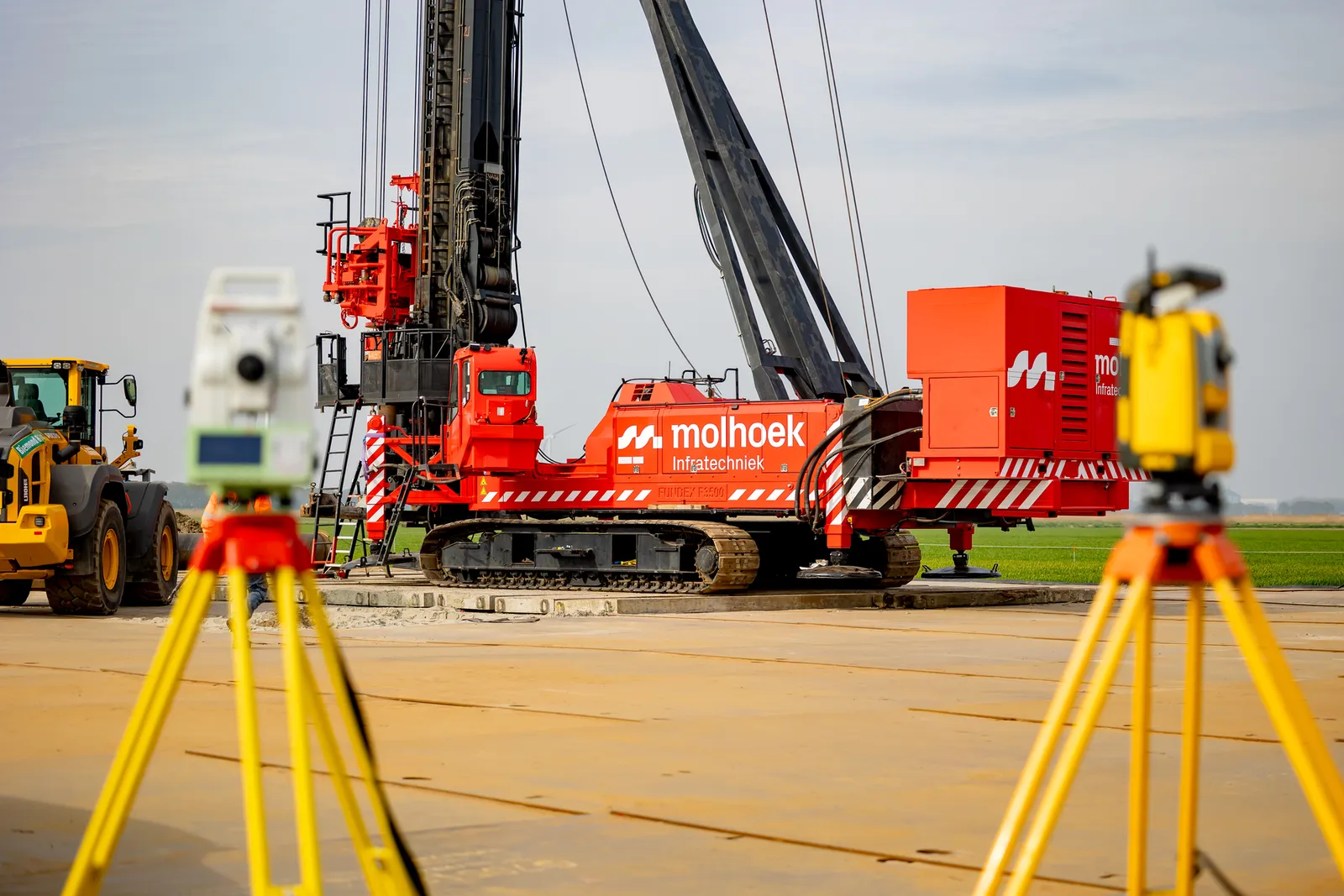
Foundation piles for 95 high-voltage pylons
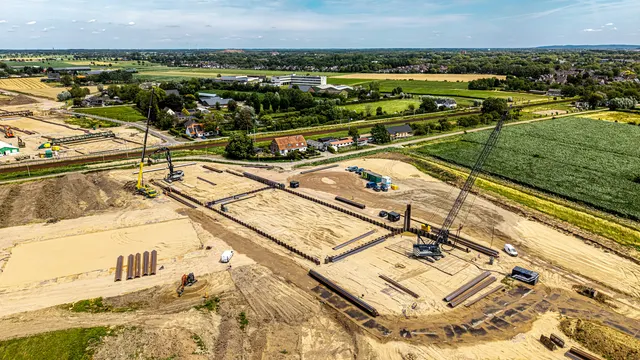
Along a route of more than 40 kilometres between Rilland and Klundert, 95 high-voltage pylons are being built for TenneT’s new connection from Zeeland to Tilburg. On behalf of Strukton Civiel, Molhoek Infratechniek is installing the piled foundations, a task that calls for considerable precision in some locations.
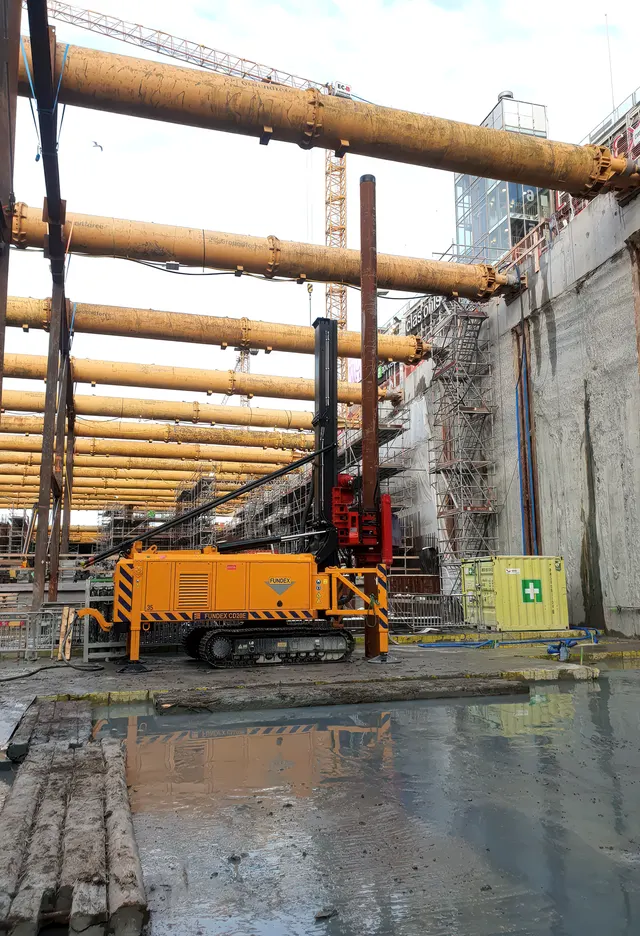
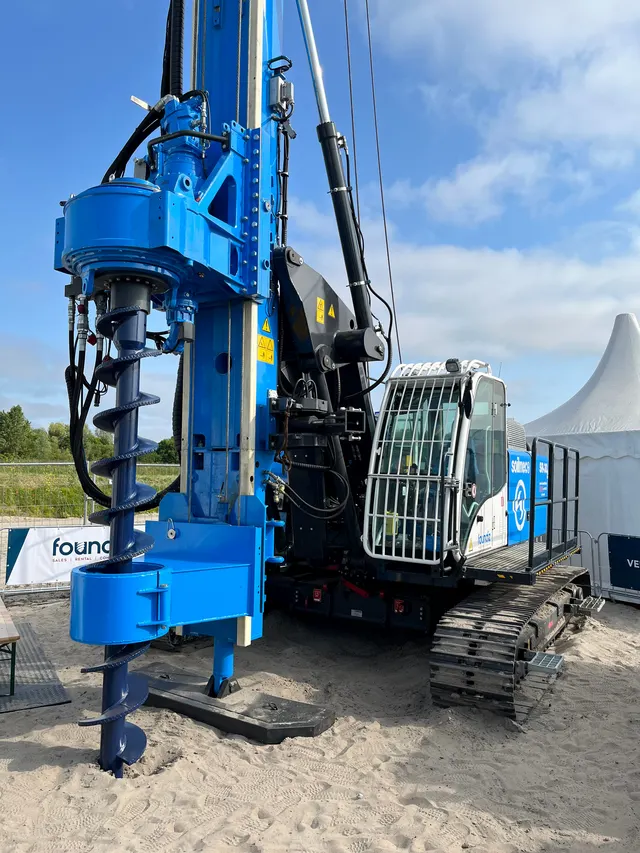
The pylons are spaced an average of 400 metres apart. “We have two types of foundation on this route,” says Leendert van de Graaf of Molhoek Infratechniek. “The most heavily loaded angle and tension pylons rest on twelve Fundex piles, approximately 610 millimetres in diameter and between 20 and 30 metres long. The standard line pylons are founded on four piles, approximately 813 millimetres in diameter and the same length.”
A feat of engineering
According to Leendert, the four-pile pylons demand particularly precise execution. “The pylon structure is placed directly into one of the foundation piles, with no pile cap in between. The permitted deviation is therefore no more than ten centimetres.” This poses no problem for Molhoek Infratechniek. “In practice, we drill the piles to within just 25 millimetres of the required position,” says Leendert proudly. An impressive achievement, especially given that the piles can be installed at an inclination of up to 3.5 to 1.
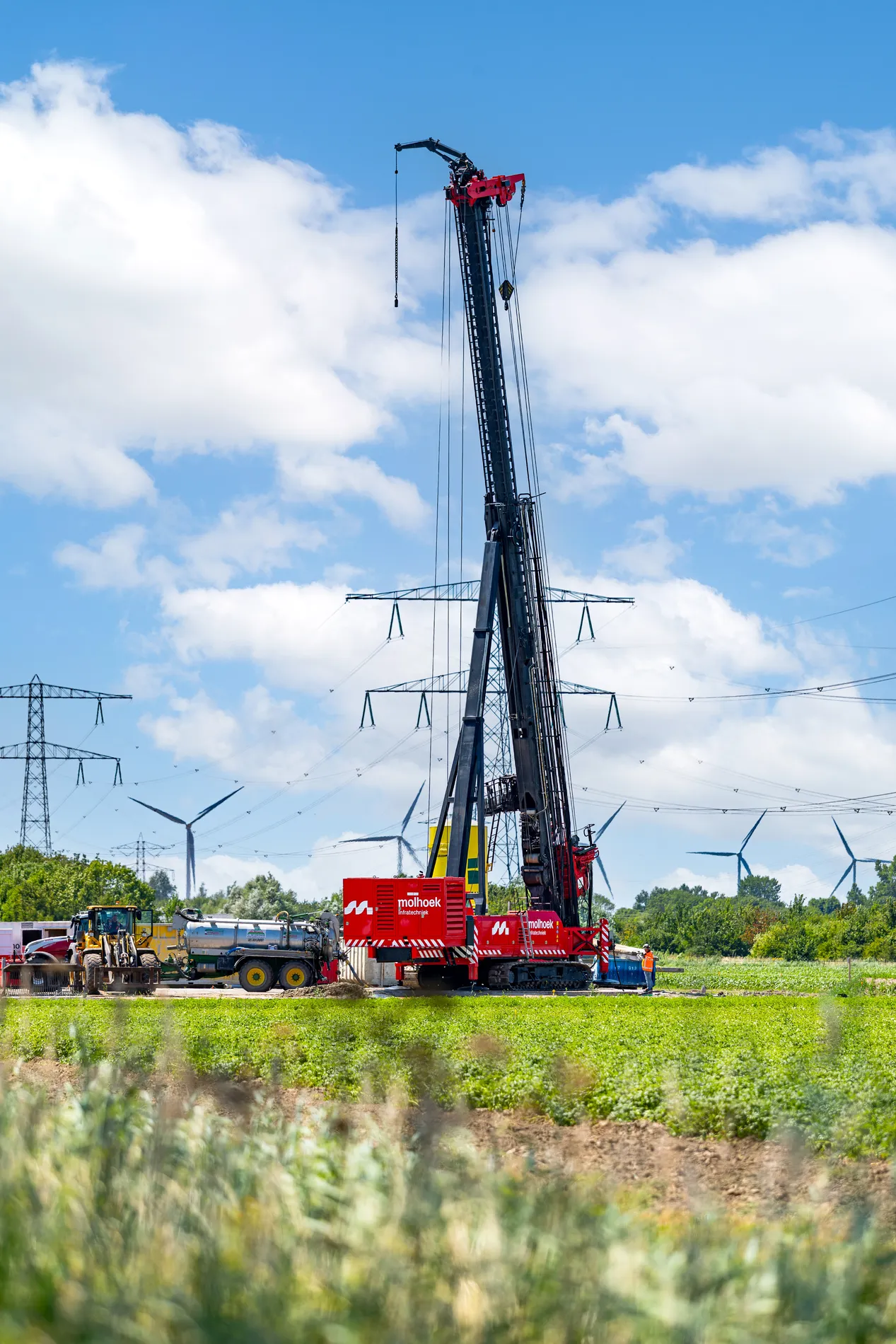
Two drilling rigs
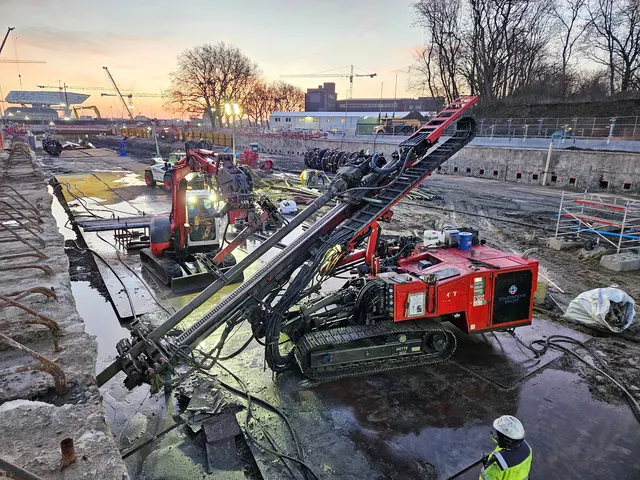
Molhoek Infratechniek started work on the project in March 2026 with its first Fundex 3500 machine, followed by a second machine two weeks later. “Together, they will work along the route until the end of the year,” explains Leendert. Drilling, moving the rig and setting it up again takes around one to one and a half weeks at each pylon location. “Once the concreting is complete, the lattice pylon is erected, followed by the installation of the high-voltage cables.”
Carefully planned logistics
The biggest challenge, however, is not the drilling itself, but the logistics. “Each time, we move the entire drilling rig, grout plant and ancillary equipment from one location to the next. This requires transport permits, escorts and close coordination with the preparatory work along the route,” says Leendert. “Cement and tubular piles are also delivered strictly just in time, because space on site is limited.”
On other sections of the new high-voltage connection, where there are height restrictions, Tubex machines are used and tubular piles are installed in sections. “On the section between Rilland and Klundert, one-piece foundation piles were chosen deliberately. This avoids welding, speeds up construction and helps ensure the efficient delivery of this important expansion of the Dutch electricity grid.”
●
Een zakelijke vraag aan Molhoek Infratechniek? Get in touch
Companies in this story



Keep following this
Get an email when a new story is published. No account needed.
- ThemeUnderground construction
- SubjectFoundations / Site investigation
- CompanyMolhoek Infratechniek
- CompanyFundex Equipment B.V.
- CompanyStrukton Civiel