Foundations / Site investigation
Penetration testing 2.0
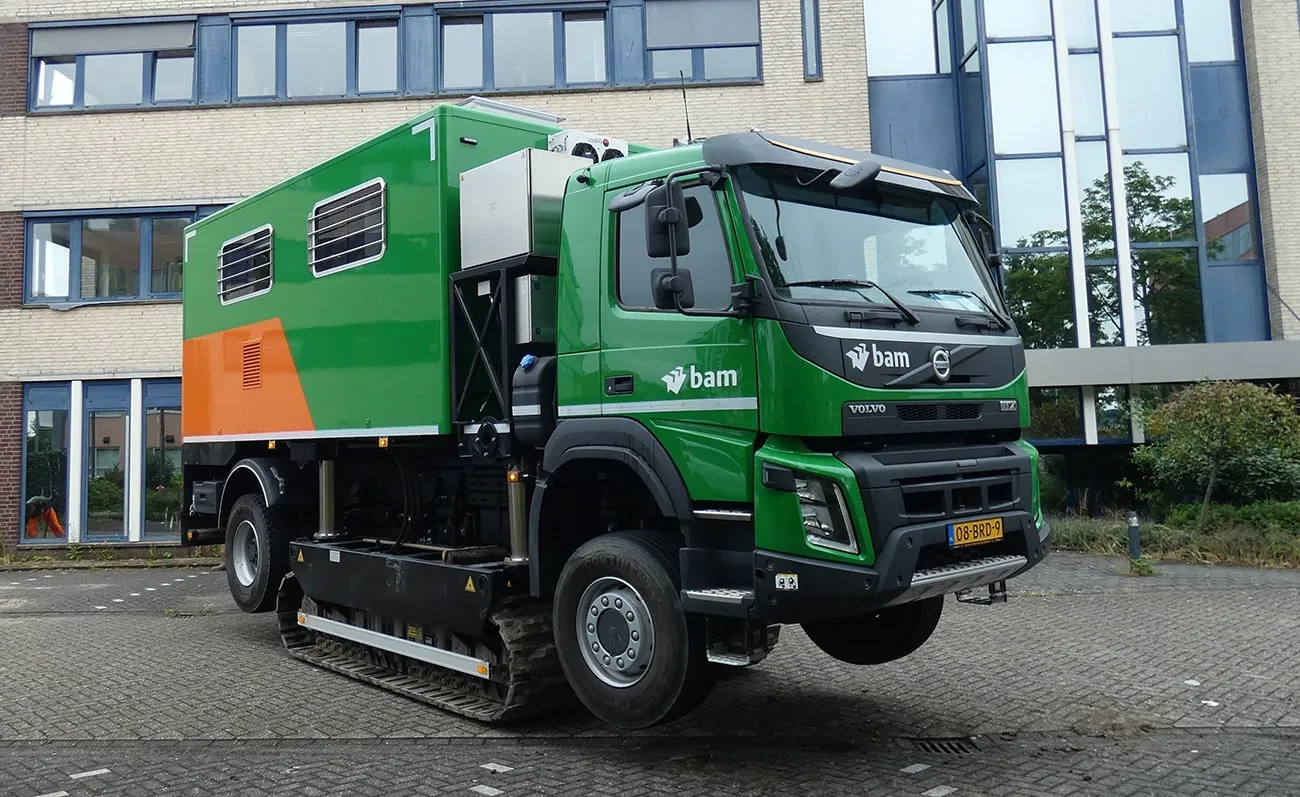
A.P. van den Berg has been a leading name in high-quality cone penetration testing technology for more than fifty years. With a steady stream of new, often revolutionary developments, the Frisian company anticipates changes in the market. We spoke to managing director Mark Woollard about automation, robotics and electrification in the world of cone penetration testing.
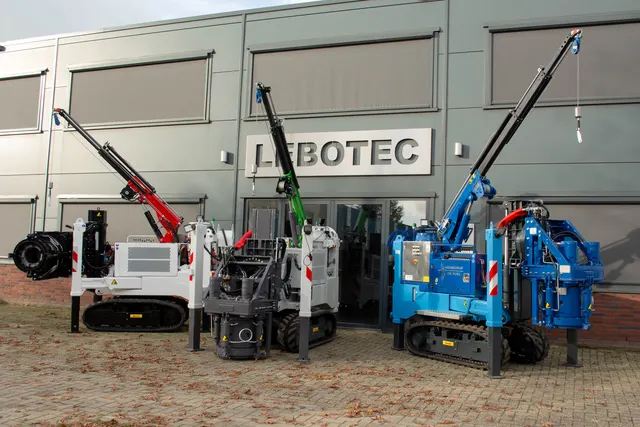
A.P. van den Berg has an impressive portfolio of high-quality cone penetration testing equipment. “The world around us is changing, and we as a manufacturer cannot ignore that. We have to anticipate it,” Woollard acknowledges. “First of all, working with your hands is becoming less popular, particularly among younger generations, while cone penetration testing is inherently hands-on work. At the same time, there is a clear trend towards electrifying construction equipment. We recognised both developments early on, and they form the basis for our latest equipment: a fully automatic, hands-free cone penetration testing system and a plug-in hybrid cone penetration testing vehicle.”
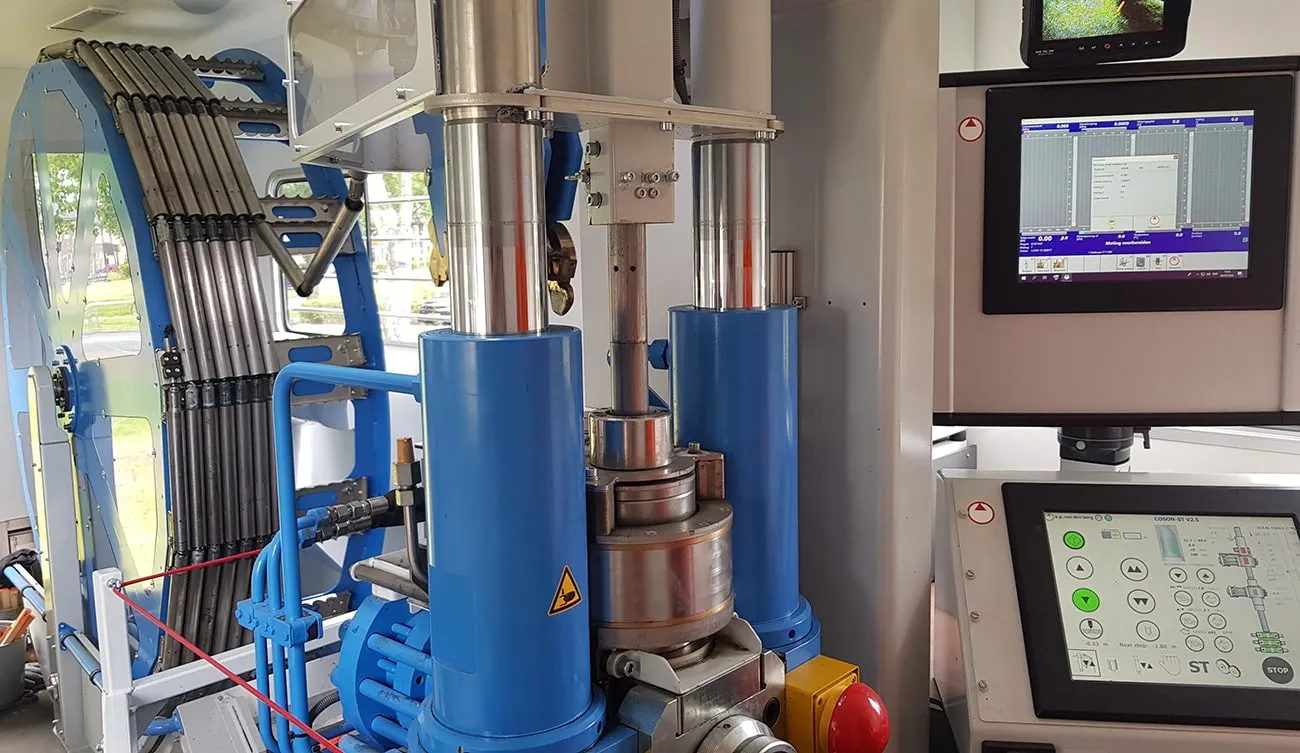
Cone penetration testing robot
A.P. van den Berg is no stranger to automation and robotics. As a first step, it has further developed its ROSON seabed system, which is suitable for water depths of up to 4,000 metres. Integrating ST technology into the ROSON has improved safety and increased productivity. “That knowledge came in handy when developing our COSON-ST, a fully automatic system for onshore cone penetration testing. It is essentially a continuous push system fed by a magazine of cone penetration rods, which are unrolled and joined together to form a stable string of rods. And all this at the touch of a button from the cab,” Woollard explains. “The cone penetration testing operator’s workplace is transformed into something like an office environment.” And that is only the beginning. Woollard expects that, in the distant future, a cone penetration testing vehicle will travel fully autonomously from its base to the site, carry out the tests and return.
Electrification
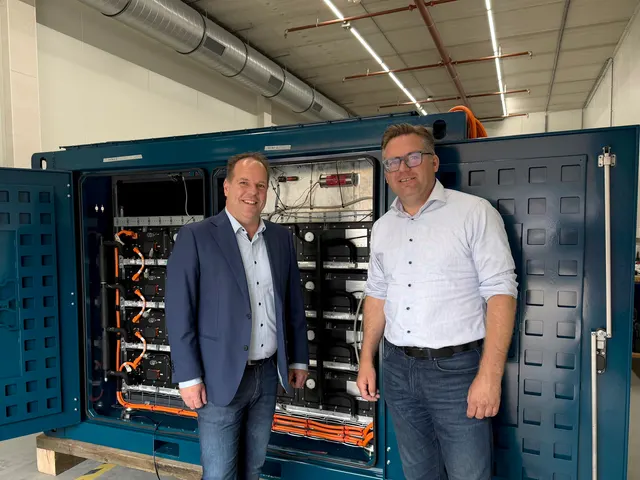
On electrification, A.P. van den Berg has partnered with Wierda Hybrid Technologies in Drachten. “Together, we have electrified the entire cone penetration testing cycle, as well as driving the tracks on our cone penetration testing vehicle,” says Woollard. “The vehicle has undergone extensive testing and is already being used successfully. Experience shows that one battery charge lasts for about a day and a half of work. Mobilisation distances in the Netherlands are short enough for overnight charging to provide a full day of electric operation. The journey to and from the test site is still diesel-powered, however. Truck manufacturers do not yet offer a suitable hybrid or electric vehicle for the cone penetration testing industry.”
With both the COSON-ST and its electrified cone penetration testing vehicle, A.P. van den Berg is responding to changes in the market. Woollard concludes: “Customers’ initial experiences have been extremely positive. There is strong interest from abroad as well as in the Netherlands. The same is true of our ROSON-ST offshore cone penetration testing system.”
Question about this story? Ask your question
Keep following this
Get an email when a new story is published. No account needed.
- ThemeUnderground construction
- SubjectFoundations / Site investigation