Foundations / Site investigation
Gravel columns: a proven, sustainable foundation
Text Roel van Gils Beeld Keller Funderingstechnieken
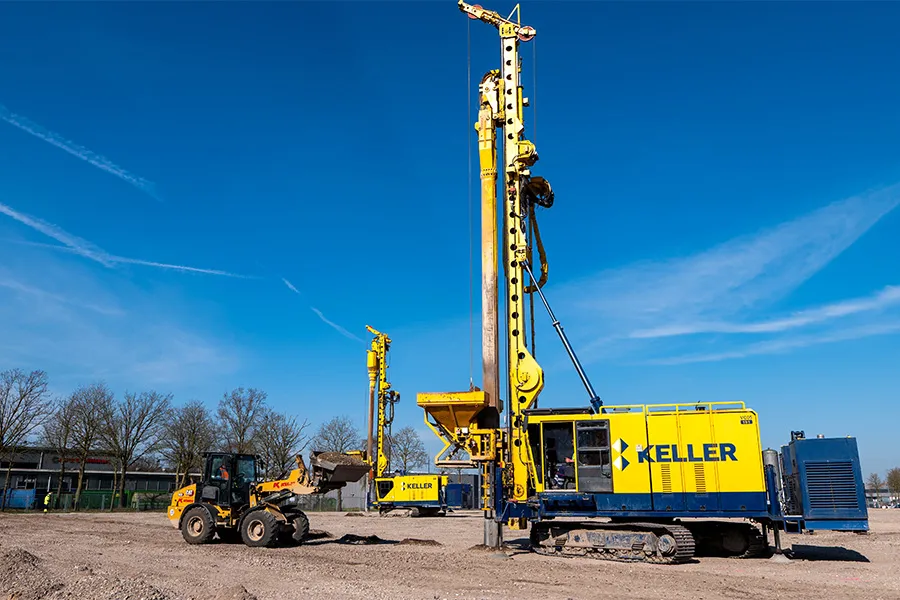
Pile foundations are the norm in the Netherlands, but gravel columns offer a more sustainable alternative. They are widely used around the world and are becoming increasingly familiar here too, for good reason. Keller Funderingstechnieken specialises in this foundation technique and recently built the foundation for a 74,000 m² warehouse at EVO-park in Weert. The CO2 emissions saved as a result were truly enormous.
The new warehouse is being developed by German company Goldbeck, which has had a presence in the Netherlands since 2017. “We have worked together in Germany for years, where gravel columns are an established method,” says Marcel Mertens of Keller Funderingstechnieken. “Our first joint project in the Netherlands was a distribution centre in Emmen. As the local authority was not yet familiar with gravel columns, we carried out extensive testing and load tests. This convinced them of the technique.”
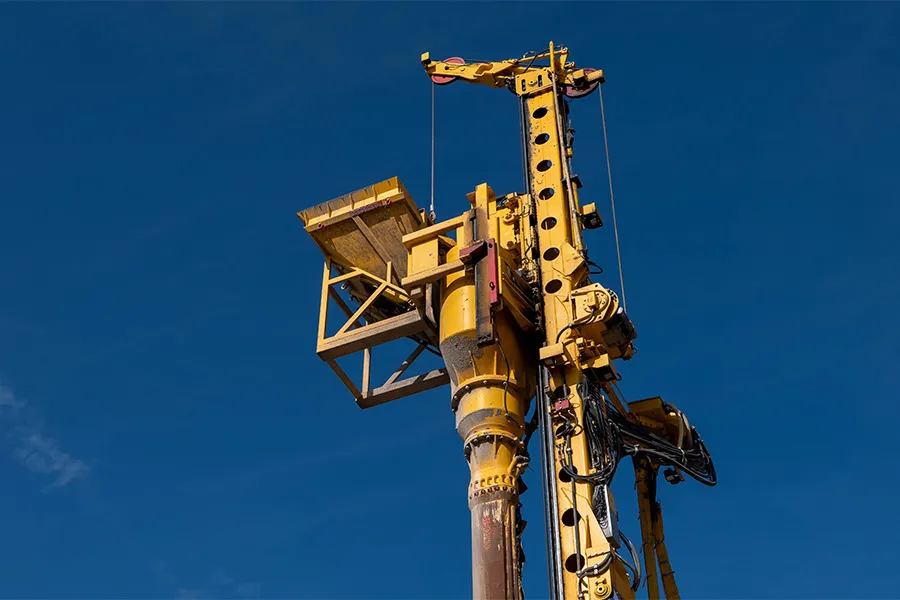
10,000 gravel columns
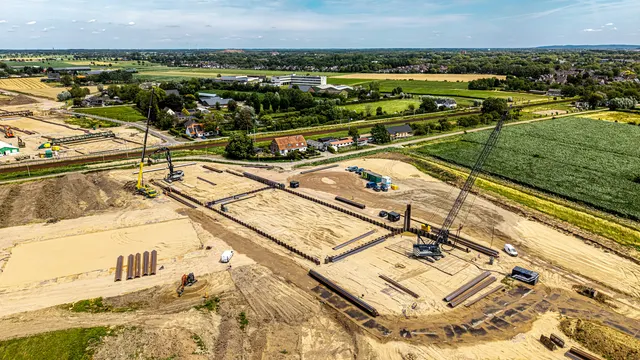
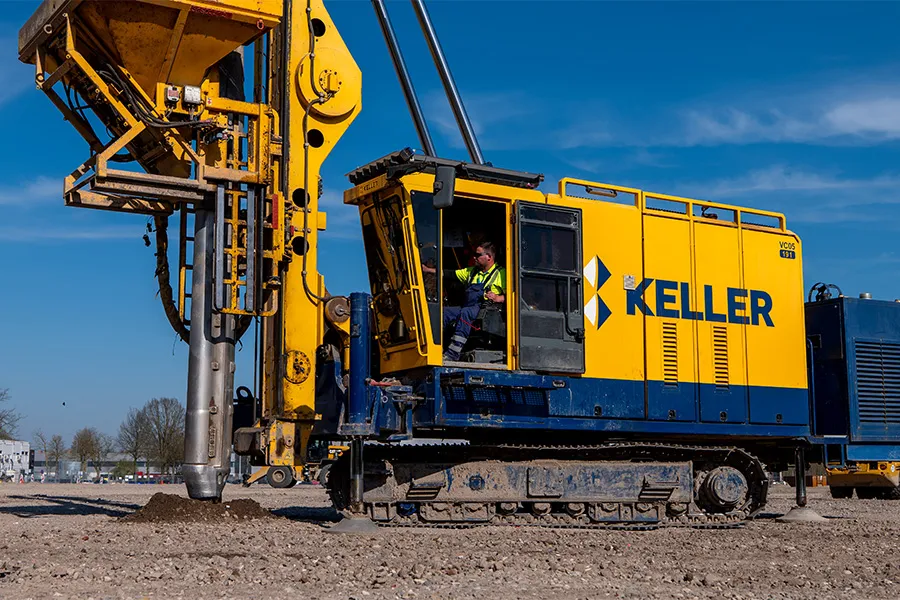
The ground conditions in Weert also proved very suitable for gravel columns. “Ground improvement was needed, but traditional soil replacement uses a lot of material and transport, causes CO2 emissions and disruption, and requires a substantial investment,” explains Mertens. “Gravel columns are a more attractive option.” Goldbeck chose to found both the building and the floor on gravel columns. Keller installed a total of 10,000 columns, at 3 m centres, with an average diameter of 65 cm and a depth of around 2.5 m. All the gravel columns were installed in just over two months. Favourable weather and good site conditions helped the work progress smoothly. “One major advantage is that the site can be driven on immediately after installation, with no obstacles or protruding parts. Goldbeck was therefore able to start building with prefabricated elements straight away.”
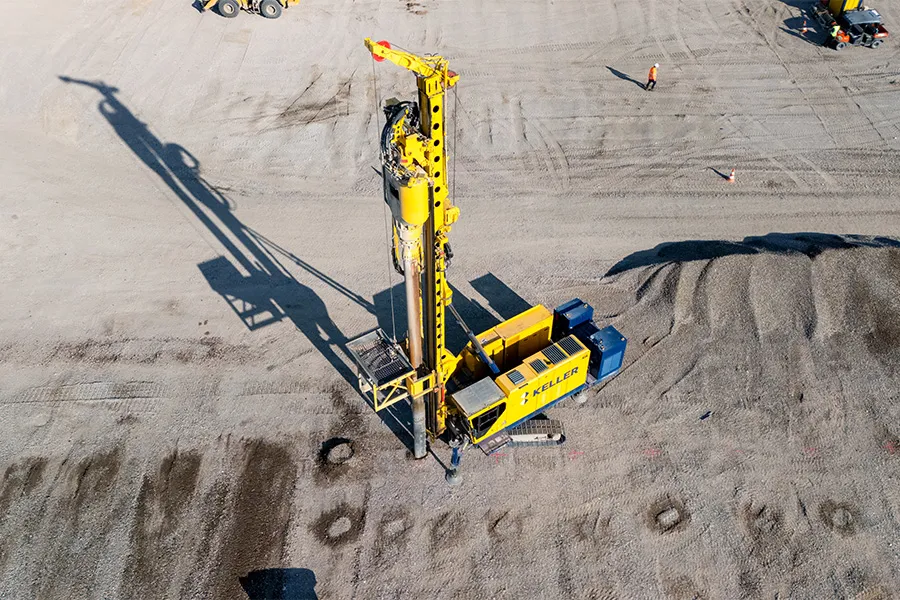
CO2 savings on several fronts
The gravel was sourced locally to limit transport distances. “It is a natural product from extraction sites,” says Mertens. “Unlike pile foundations, which use a lot of concrete and cement, our emissions are minimal. Apart from transport, emissions come only from the machines installing the gravel, which run on HVO100 biofuel. Choosing gravel columns instead of pile foundations already delivers substantial CO2 savings, and running on HVO 100 adds a great deal more. The savings are truly enormous.”
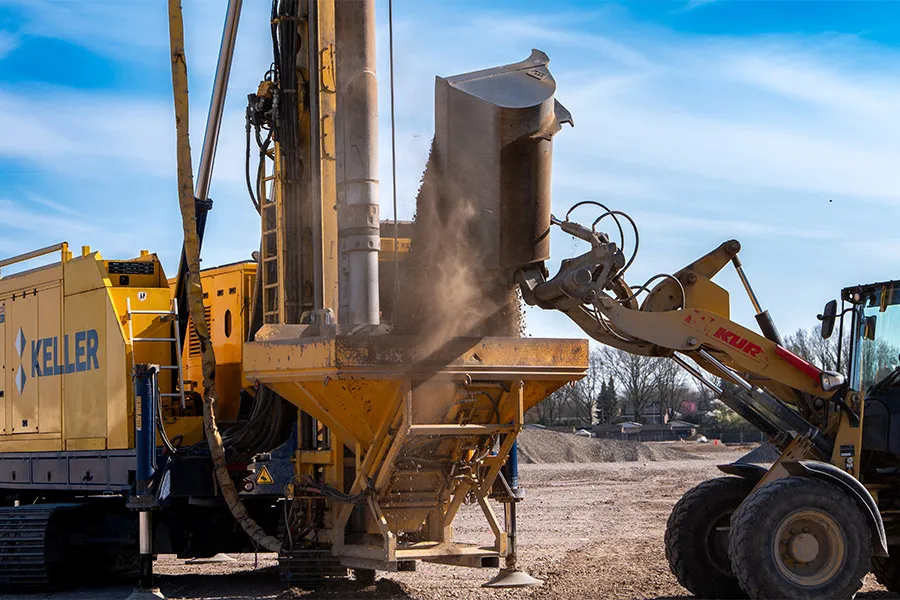
Zero-emission machinery
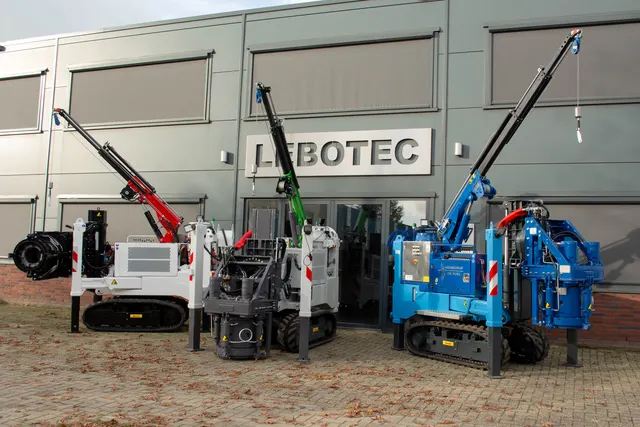
Keller builds its own machines in-house and is also developing zero-emission machinery. “Funnily enough, we started out with electric machines, but people found the power cables inconvenient, so we switched to diesel. Now we are going back to electric, because the technology is ready,” Mertens assures us. With lower material use, less transport and minimal emissions, gravel columns provide an efficient and sustainable foundation. Mertens believes they are an excellent alternative to traditional foundation methods.
Een zakelijke vraag aan Keller Funderingstechnieken B.V.? Get in touch
Companies in this story

Keep following this
Get an email when a new story is published. No account needed.
- ThemeUnderground construction
- SubjectFoundations / Site investigation
- CompanyKeller Funderingstechnieken B.V.