Foundations / Site investigation
Foundation remediation with expanding resin
Text Roel van Gils Image URETEK
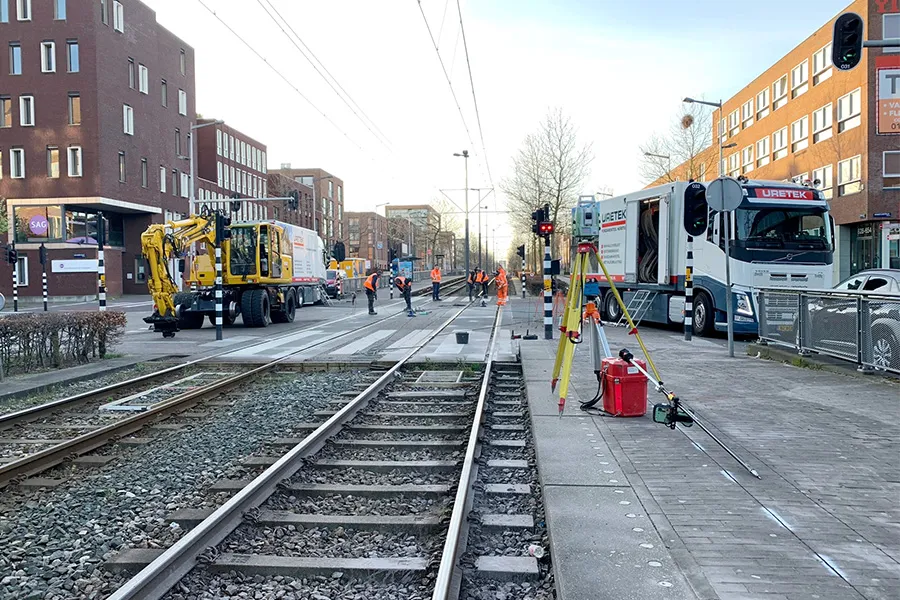
URETEK is something of an outlier in the world of foundation engineering. It injects a highly expansive material into the ground, enabling it to lift structures with extreme precision. URETEK has been pioneering this technique in the Netherlands since 1992 and is rightly an expert in the field. The method is also widely used in infrastructure as a proven and effective way to lift approach slabs beneath structures, for example, or to level concrete slabs on bus lanes and at railway level crossings. But expanding resin has many more applications…
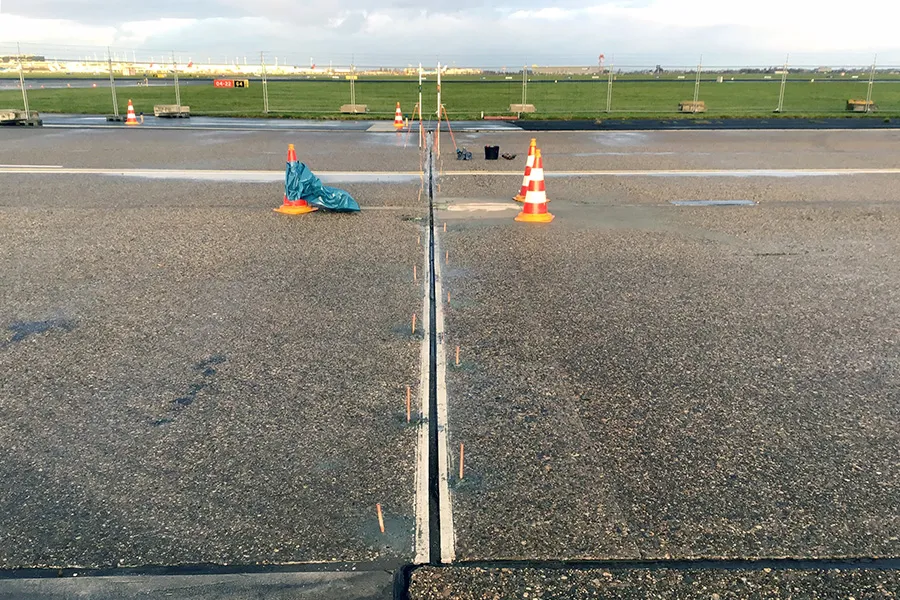
URETEK is a global organisation. “The method originally comes from Finland, but over the years we have further developed the injection technique and adapted it to local ground conditions,” says Robbert Melis, sales manager and technical adviser at URETEK Benelux. “The process is based on a two-component injection resin with a substantial expansion coefficient. We use it to put the ground under stress and compact the soil. We continue injecting until the ground has sufficient bearing capacity to prevent any further settlement, or until a structure has been lifted to the required level. This can be done to millimetre precision in sandy, silty or clay soils.”
Wide range of applications
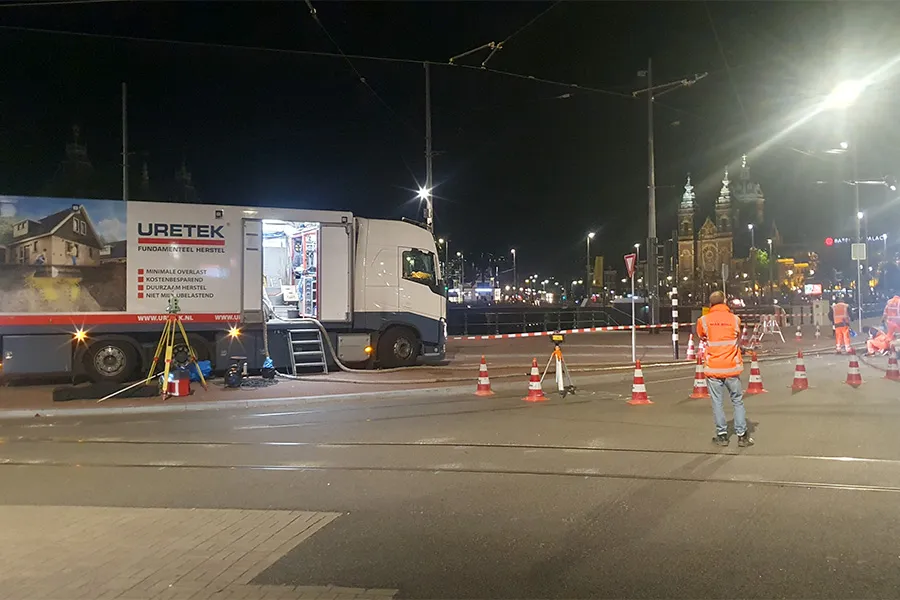
Although we are definitely a niche player in the foundation sector, the injection technique has a very wide range of applications, says Robbert. “We carry out around 350 projects a year on average, ranging from lifting a sunken floor in a house to underpinning floor sections at Schiphol that are driven over by aircraft. Rijkswaterstaat and ProRail also call on us when they encounter problems with sunken approach slabs at structures or with railway level crossings that have become uneven. Most recently, for example, we underpinned and lifted the approach slabs at the flyover at Knooppunt De Hogt. They had been undermined by washout caused by a leaking sewer. We got a call in the morning and were already on site that afternoon, filling the huge void beneath the approach slabs with our expanding resin. That is how quickly we can respond. A similar washout problem occurred recently on the A2 near Boxtel, forcing the closure of one carriageway. We then put the soil under stress, allowing the carriageway to be reopened immediately. That is another advantage of our technique.”
Reducing disruption
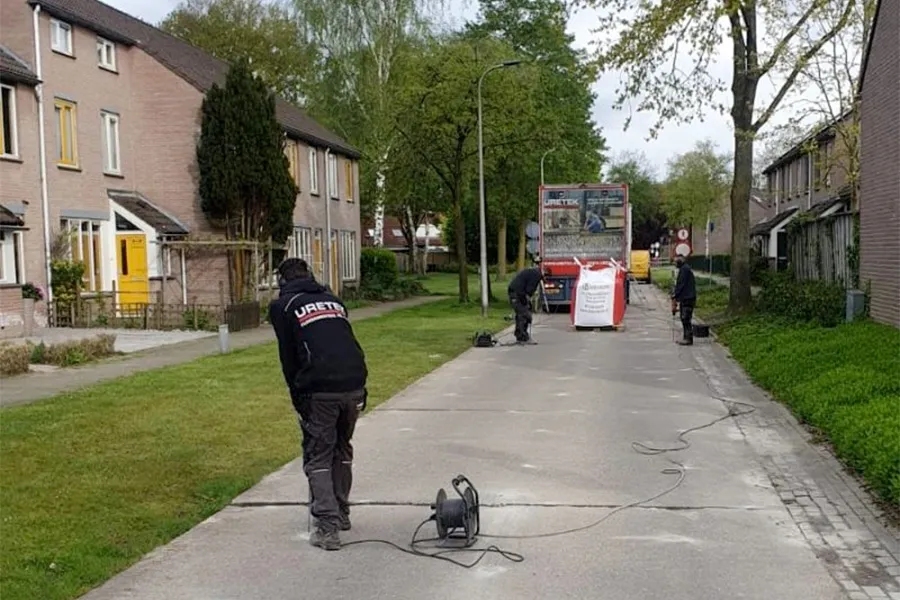
For that reason, URETEK is often the right choice for lifting concrete or Harmelen slabs at railway level crossings. “It is almost a daily task,” says Robbert. “Recently, we lifted the tram track support slabs in front of Amsterdam Central Station, and levelled the bus lane for the municipality of Enschede. Uneven expansion joints between the slabs were causing noise nuisance for the surrounding area. Since our injection work, the vibrations have also been perceived as less disruptive, although we may return to inject an additional vibration barrier. More and more electric buses are on the roads, and they are heavier and cause more vibrations. As you can see, our injection techniques have a wide range of applications.” Robbert also reveals that the R&D department is working hard on a new development for the rail sector. URETEK’s expansion technique is also ideally suited to the replacement and renovation challenge, as well as the wider challenge of land subsidence in the Netherlands.
Question about this story? Ask your question
Keep following this
Get an email when a new story is published. No account needed.
- ThemeUnderground construction
- SubjectFoundations / Site investigation