









Ecological corridors enhance nature
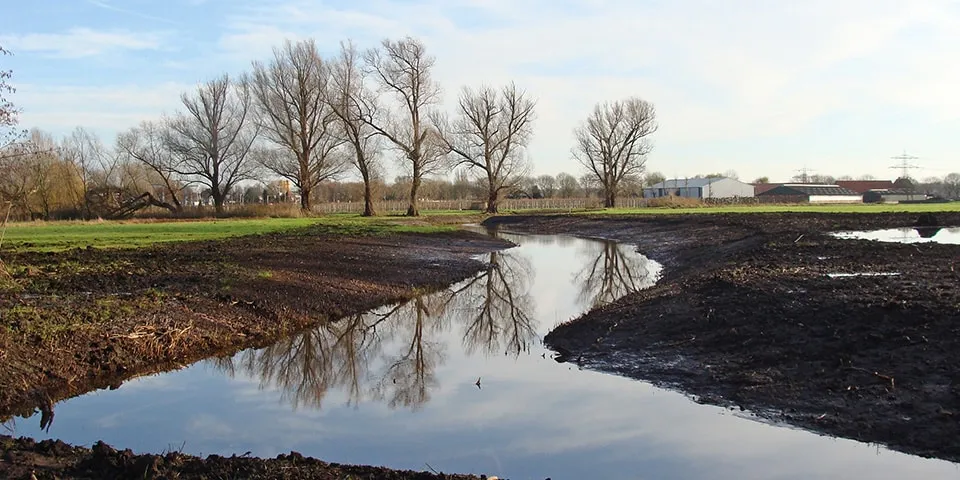
Work has been under way for many years in the Netherlands to create a coherent network of nature areas: Natuurnetwerk Nederland (NN), comprising nature areas and areas for nature development. Ecological corridors (EVZs) connect these areas, expanding the habitat available to plants and animals and enabling species to migrate. Three new EVZs have been established in the municipality of Helmond.
Ecological corridors are created by establishing new nature areas or strengthening existing landscape features. Commissioned by the municipality of Helmond and Waterschap Aa en Maas, Staro Natuur en Buitengebied prepared the designs and specifications for three EVZs in 2015: the Schootense loop, Goorloop-Noord and Goorloop-Zuid. “The aim was to improve the ecological appeal of the existing streams and enhance their nature value,” says Karel Küsters of Staro. “Where possible, the municipality purchased additional land alongside the streams, up to a maximum of 50 metres from the banks. In other locations, we had to make efficient use of the limited space to make it as ecologically valuable as possible.”
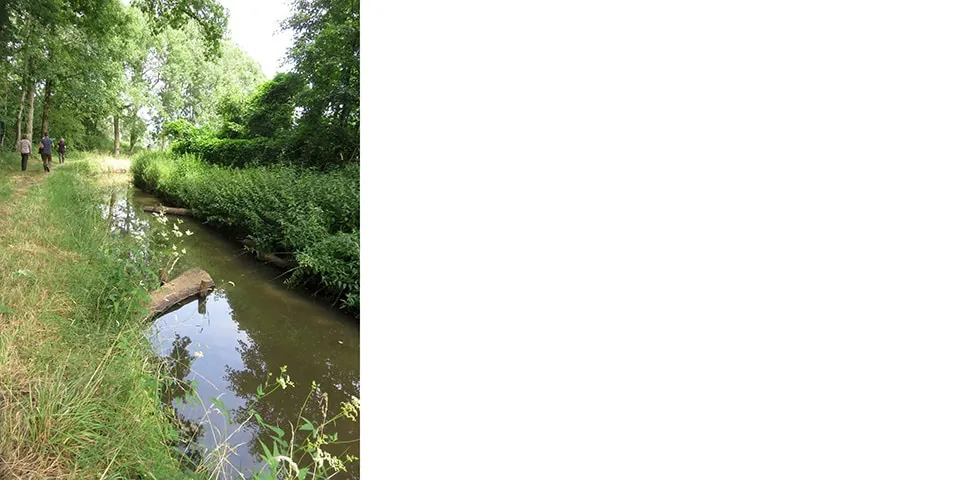
Tree trunks and stumps increase the variation in flow and improve conditions for the target species.
Stream restoration works
Work was carried out along around 2 kilometres of the Schootense loop, 1.5 kilometres of Goorloop-Zuid and approximately 3.4 kilometres of Goorloop-Noord.
Staro translated the vision of the municipality and water authority into a detailed landscape plan and specifications, including a work description for the contractor. “We incorporated stream restoration measures into the designs for all three streams,” Küsters continues. “The aim was to slow the flow at certain times of year and, in some cases, even hold the water back. We carried out all the necessary calculations and achieved this in part by creating meanders and placing obstacles in the streams in the form of tree trunks and stumps sourced from elsewhere in the project. These measures increase the variation in flow and improve conditions for the target species.”
Pool on the inside of a bend.
European weatherfish
The existing bank protection was removed from all three streams and, where possible, the banks were made more wildlife-friendly, in other words, less steep, creating so-called wet and dry zones. Küsters says: “Steep banks were deliberately created in a few places for kingfishers. Pools were also created along the Goorloop at various locations to provide ‘shelter’ for the European weatherfish, a rare fish. In addition, some existing ponds were enlarged, bypass channels were dug, sections of the streams were dredged, and trees and shrubs were planted. This will make it easier for all the plants and animals associated with the watercourses to thrive. The EVZs also benefit larger animals, such as badgers, by making it easier for them to move from A to B.”
After the tender process, the contractor began the major works in early 2016, following Staro’s work description. The work was carried out in phases, in chronological order, on the Schootense loop, Goorloop-Zuid and Goorloop-Noord. “The work description also included an ecological working protocol to prevent damage to existing nature values. All the work has now been completed, and it is up to nature to continue developing,” Küsters concludes.
Question about this story? Ask your question
Keep following this
Get an email when a new story is published. No account needed.
- SubjectSpecials







