









Doka Nederland on formwork, scaffolding and engineering: building smarter, more safely and more efficiently
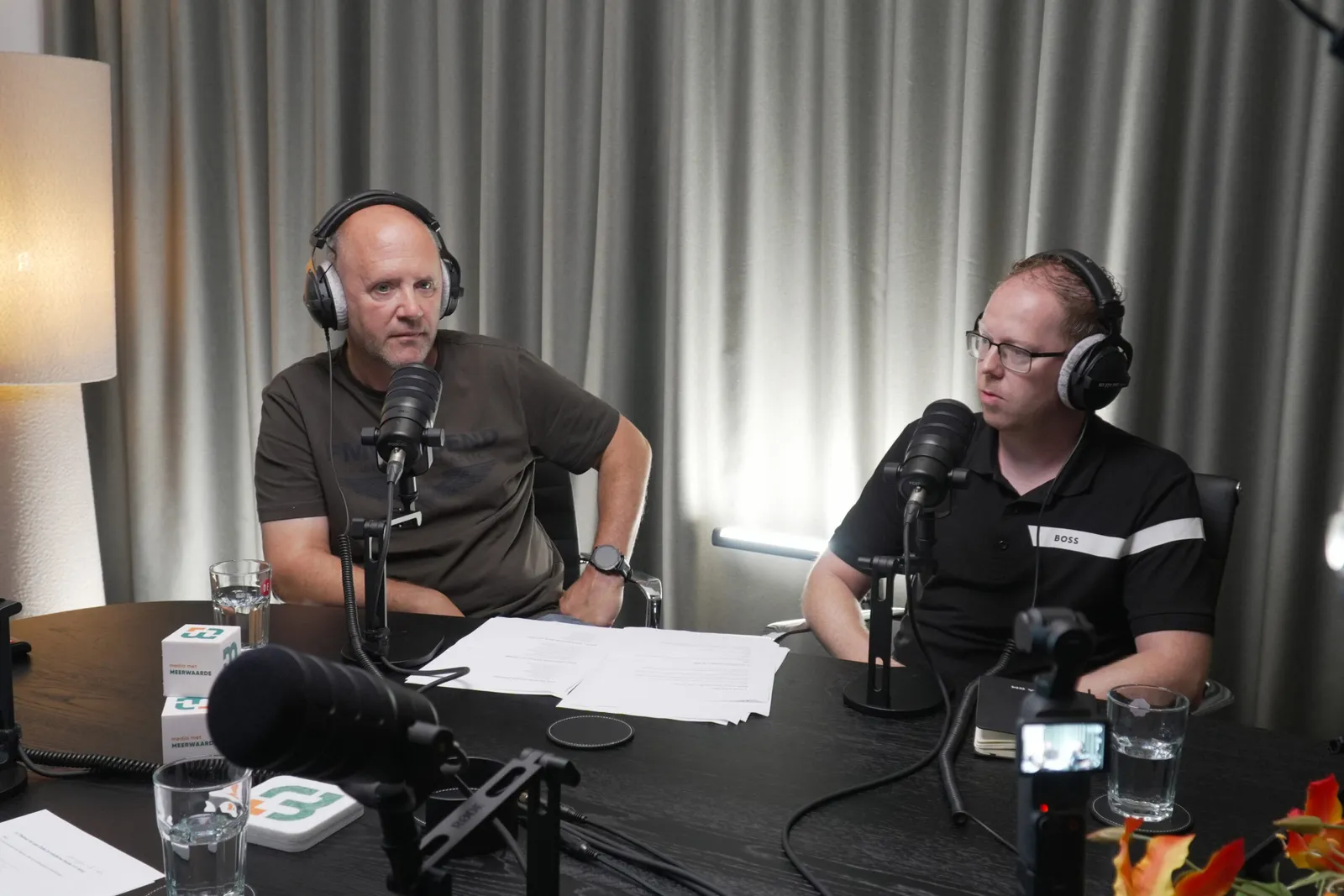
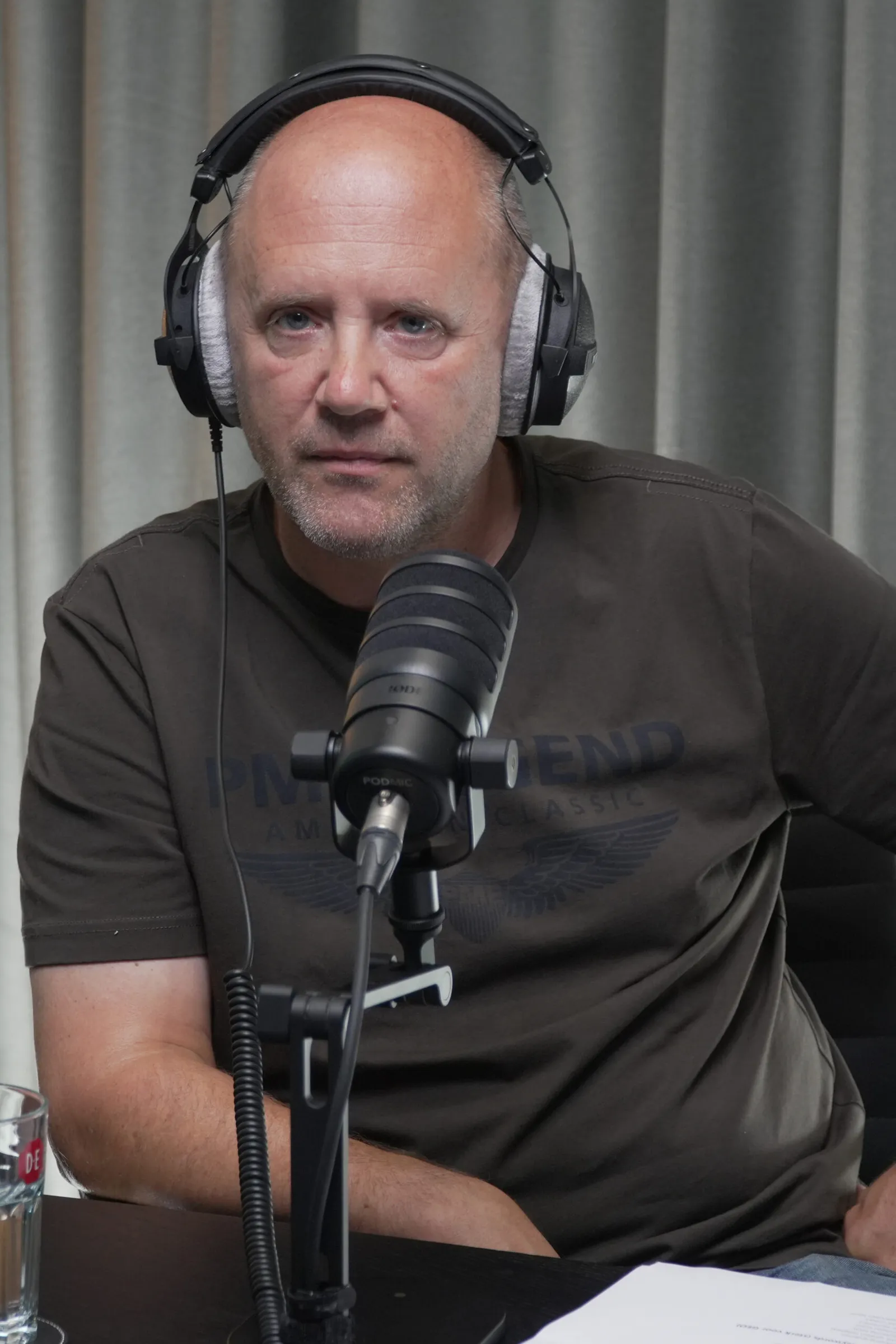
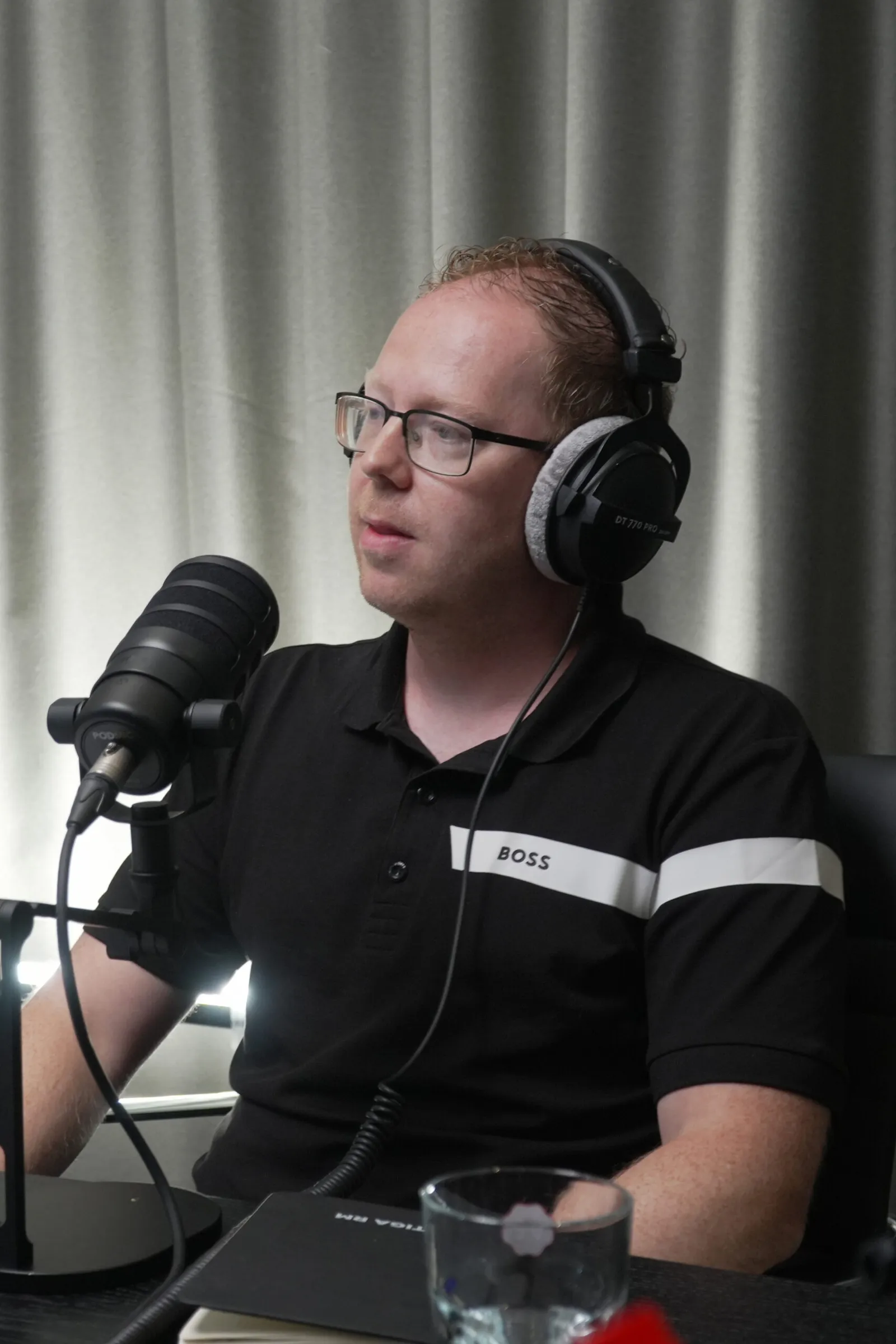
How can complex concrete structures be built faster, more safely and more efficiently? In this episode of GWW Bouwmat, the podcast, Roel van Gils talks to Erik Caris and Denick van Gemert of Doka Nederland about formwork systems, scaffolding, engineering and digital innovations. They discuss the challenges of high-rise construction and infrastructure, the role of safety on site, and how smart systems and international expertise help make construction more predictable.
Have a business enquiry for Doka Nederland B.V.? Get in touch
Full transcript
Alle hoofdstukken (19)
- Introduction
- Introductions
- Doka Nederland
- Developments in housebuilding
- Taking care of everything for the customer
- Sectors and projects
- Complex projects and international expertise
- Doka’s added value
- What makes a good formwork system?
- Safety as a starting point
- Xsafe 60 system
- Designing and supporting safe work
- Best-selling products in the range
- Infrastructure and scaffolding
- Digitalisation and AI
- Doka as an organisation
- Working at Doka
- When should you involve Doka?
- Closing remarks
Introduction
Roel van Gils Welcome to GWW Bouwmat, the podcast. If you work on concrete structures, high-rise buildings or infrastructure projects, you know that efficiency, safety and planning make all the difference. In this episode, we talk to Doka Nederland, specialists in formwork, scaffolding and smart construction solutions.
Roel van Gils What makes Doka a strong partner on site? And how does its expertise help projects run more smoothly, safely and predictably? Joining me are Erik Caris and Denick van Gemert of Doka Nederland. Gentlemen, welcome.
Erik Caris Thank you.
Introductions
Erik Caris I’m Erik Caris. I’ve been with Doka for 18 years, the last two as sales manager.
Roel van Gils Thank you.
Denick van Gemert I’m Denick van Gemert, a formwork and scaffolding adviser at Doka Nederland. I’ve been here for about six years now.
Roel van Gils Okay, great. Welcome again. Let’s start at the beginning. Could you briefly explain what Doka Nederland does?
Doka Nederland
Erik Caris Doka Nederland is part of the Umdasch Group. Doka is a very large international company, operating worldwide. In the Netherlands, we have one branch, in Oss. We help the Dutch construction industry, especially contractors, deliver major projects.
Roel van Gils Yes, with formwork systems, support structures and what you even call digital engineering?
Erik Caris Yes, engineering, 3D, 2D and the various products we supply.
Roel van Gils Engineering and everything else.
Denick van Gemert Yes, we develop the complete solution for the customer, so everything is covered.
Developments in housebuilding
Roel van Gils The construction industry is changing quickly, of course, including housebuilding. What do you see as the main developments?
Denick van Gemert In housebuilding, we’ve developed a new housing formwork system. It has been designed specifically for the taller walls used in the Netherlands.
Roel van Gils What is characteristic of the Netherlands in that respect?
Denick van Gemert Homes are getting taller.
Roel van Gils The homes themselves, or the floor-to-floor heights?
Denick van Gemert The floor-to-floor heights.
Roel van Gils Oh, I see. Is that really specific to the Netherlands?
Erik Caris The height itself isn’t particularly unusual. It’s more about the way of building. It simply needs to be very fast, with as few operations on site as possible. We’re working on bringing a new product to market for that.
Roel van Gils And what’s the product called?
Erik Caris The housing formwork system. It’s quite straightforward. We haven’t come up with a catchy name yet.
Roel van Gils You don’t have to, of course.
Erik Caris We still need to come up with one, but the first pilot projects will start after the summer construction holiday. The formwork itself is 2.90 metres high, which isn’t particularly remarkable. What sets it apart is its simplicity. It takes very few operations to reposition it. More broadly, the construction industry is increasingly focused on taking care of everything for the customer. I think we’re responding well to that.
Read the full transcriptCollapse transcript15 more chapters
Taking care of everything for the customer
Roel van Gils Can you give an example?
Erik Caris Doka has around 100,000 products worldwide.
Roel van Gils 100,000?
Erik Caris Yes. Obviously, we don’t supply every product in the Netherlands. We select from our own range and use those products on our projects. Advice is the most important part. Customers can come to us for the entire process, from foundations to roof slabs.
Sectors and projects
Roel van Gils Which sectors do you work in in the Netherlands?
Erik Caris Traditionally, we’re very strong in high-rise construction, particularly towers in the Netherlands, especially in the Randstad. Rotterdam, Amsterdam and Utrecht. That’s going very well.
Roel van Gils Are they all residential, or do you also work on offices?
Erik Caris The building’s eventual purpose doesn’t make much difference. What matters most is the concrete frame, and that’s what we supply systems for. We also do a lot of infrastructure work, including bridges and tunnels. We’re mainly involved in more complex structures and larger buildings. We wouldn’t be asked to work on a single house, but an apartment block is a possibility. We weren’t particularly strong in that area, but a few years ago we decided to change that.
Roel van Gils And that’s where the housing formwork system comes in?
Erik Caris Yes.
Complex projects and international expertise
Roel van Gils With projects becoming increasingly complex and the pressure on schedules and costs intensifying, how do you deal with that?
Erik Caris Doka is a relatively large company, of course. We have many colleagues in different countries. We can respond to varying workloads and fluctuations in the number of projects. We also have GECs, Global Expertise Centers, with specialists who focus entirely on a single discipline. One group handles high-rise construction, one infrastructure and one architectural concrete. That means we can call on specialists and work with teams across all our countries to develop a project.
Roel van Gils So if specialist knowledge is needed, you can always draw on it?
Erik Caris Yes. Take a bridge built using a free cantilever system, for example. That’s a specialist system. A bridge like that might be built in the Netherlands only once every ten years. We’re not going to train people for it here. Instead, we bring specialists to the Netherlands or work together digitally. That’s how we tackle a project like that.
Roel van Gils What’s special about that type of bridge?
Erik Caris It’s built using a free cantilever system. It’s hard to explain without drawings. The formwork moves itself forwards a little at a time, then another section of the bridge is cast. The system moves forwards again and the next section is cast, until the two halves of the bridge meet in the middle.
Roel van Gils So they build towards each other from the two abutments?
Erik Caris That’s right. Eventually, the two sections meet and you have a new bridge.
Roel van Gils And what are the advantages of that system?
Erik Caris The main advantage is that the passage beneath the bridge can remain open, for example when the bridge is built over a river.
Roel van Gils Can it also be used over a road?
Erik Caris Yes, it can. On some projects, though, they opt for precast beams instead.
Doka’s added value
Roel van Gils Where exactly does your added value lie?
Erik Caris Mainly in the overall concept and the engineering. I think we have a very strong engineering department, backed by high-quality products from our own manufacturing facilities.
Roel van Gils In the Netherlands too?
Erik Caris No, our head office is in Austria.
Roel van Gils Is everything made there?
Erik Caris Quite a lot of it.
Denick van Gemert Yes.
What makes a good formwork system?
Roel van Gils What makes a good formwork system? How do you stand out?
Erik Caris Reliability is what sets us apart. Various companies can make formwork, but the biggest difference lies in quality and service life. We have formwork storage locations across Europe, and indeed around the world. We manage them through distribution centres, which enables us to deploy equipment wherever it’s needed.
Roel van Gils So logistics are part of it too. You’ve mentioned quality. Fast assembly and dismantling are also important.
Denick van Gemert Yes, we make sure the products are easy to handle on site. Most can be assembled with a hammer.
Roel van Gils So they’re easy to assemble and often reusable.
Erik Caris That’s right. When a contractor returns the equipment, we clean and inspect it. Then we see whether we need it ourselves. If not, it may be sent to another country. That way, Doka teams in different countries help each other, and we can support as many projects as possible with as little equipment as possible.
Safety as a starting point
Roel van Gils Safety is obviously important too.
Denick van Gemert We supply safe products. As an organisation, we’re also currently working towards the Safety Culture Ladder.
Roel van Gils To get certified?
Denick van Gemert Yes. We’re due to be audited for step 3 within the next few weeks.
Roel van Gils So by the time this podcast goes live, you’ll be certified. Congratulations in advance.
Erik Caris Thank you.
Denick van Gemert Thank you.
Roel van Gils Of course, safety is about more than certification.
Denick van Gemert We have some great systems. The pouring platforms are assembled flat on the ground. They have a ladder, so you can climb up safely and stand safely on top of the formwork. They’re excellent products.
Erik Caris On high-rise projects, you’re also seeing safety screens increasingly used to reduce the risk of falling objects.
Roel van Gils Weren’t those integrated in the past?
Erik Caris People used to take a different approach. These days, local authorities place a lot of emphasis on safety. Contractors do too, and fortunately, so do we.
Roel van Gils So the requirements are getting stricter.
Erik Caris Yes.
Denick van Gemert When you’re building high up and something falls, the distance it can travel gets greater. So it’s not just about protecting people on site.
Roel van Gils It’s about protecting the surrounding area too.
Denick van Gemert Yes. When you’re building a high-rise in the middle of a city centre, people are walking around it.
Erik Caris If you drop something, it can land quite a long way away.
Xsafe 60 system
Roel van Gils Is that part of your Xsafe system, or is it something else?
Erik Caris We call it a safety screen or a wind screen, depending on who you’re talking to. It’s part of the Xsafe 60 system.
Roel van Gils What else does the system include?
Erik Caris It’s a comprehensive system. You can use it to create conventional climbing formwork. The system can climb hydraulically or be lifted by crane. You can also use it to provide the safety system. All three applications can be delivered with one system.
Designing and supporting safe work
Roel van Gils Safety isn’t just about the product. It also depends on the design and how the system is assembled. So you factor that into your engineering too.
Denick van Gemert Yes. Safety starts at the design stage, so that the system can be used safely on site.
Roel van Gils So you also contribute to the design and execution.
Denick van Gemert We also help develop solutions. When you come across certain concrete structures, we make sure everything can be carried out safely.
Roel van Gils And do you provide support during construction as well?
Erik Caris Yes. We have an instructor who goes to site, especially at the start of a project, to explain the products and how to use them safely and correctly.
Roel van Gils So you don’t install the equipment yourselves, but you do supervise the start-up. What about dismantling?
Erik Caris Dismantling is often even more difficult than installing. We explain how to do that properly too. I think most accidents actually happen during dismantling.
Roel van Gils Really?
Erik Caris Yes. People often think, “We’ll just take it apart.” But that’s exactly when things go wrong.
Roel van Gils So the instructor comes back again as well?
Erik Caris Sometimes, especially on larger projects. Our products are also designed so that it’s actually quite difficult to install them incorrectly. They can only be assembled one way. That may be an indirect form of safety, but it’s a very important aspect.
Best-selling products in the range
Roel van Gils Which products in your range are currently the most popular?
Erik Caris Traditionally, our wall systems. The Framax formwork system is very popular. For foundations, it’s mainly the Framie system. Those are smaller panels used to form walls.
Roel van Gils So mainly for housebuilding?
Erik Caris Actually, for all types of walls. Framie and Framax are used across the construction industry. At the moment, we’re seeing particularly strong growth in Xdek. It’s a new system for forming floors. Everything can be assembled safely from ground level.
Roel van Gils Can you explain how it works?
Denick van Gemert When you’re casting a concrete floor and the walls have been poured, you position the panels from a corner. Everything is pushed upwards from below. Once the whole floor area is in place, it’s all safe and you can carry on working on top of the floor.
Roel van Gils Then you continue floor by floor.
Denick van Gemert Yes, that’s the complete process.
Erik Caris We’ve had very positive feedback. The system has been available in the Netherlands for about a year and a half now, and so far everyone has been enthusiastic.
Denick van Gemert It’s a very simple system with few components.
Infrastructure and scaffolding
Roel van Gils Are there any other products that are in high demand, for example in infrastructure?
Erik Caris Traditionally, in the Netherlands we’ve mainly worked in high-rise construction. In recent years, we’ve introduced new products for infrastructure. Much heavier systems, with larger beams for longer spans. They’ve gone down well. We weren’t a major player in infrastructure before, but over the past five years we’ve really become involved in major infrastructure projects. We’ve also launched a new scaffolding system. We didn’t offer scaffolding in the past, but we’ve since acquired a scaffolding company, AT-PAC. That too has been well received.
Roel van Gils Is that scaffolding mainly intended for housebuilding?
Denick van Gemert No, it can be used for all sorts of things. Offices, floor propping, scaffolding, you name it.
Roel van Gils Are your solutions always bespoke?
Erik Caris They don’t have to be, but they can be. Sometimes formwork is designed and assembled specifically for a single project. In other cases, we use modular systems.
Digitalisation and AI
Roel van Gils Looking to the future, what other developments do you see? Do you have any news to share?
Erik Caris There’s a lot happening, particularly in digitalisation. AI is, of course, cropping up everywhere. It sounds very exciting, but construction is still a fairly traditional sector. Even so, a large company like Doka is certainly responding to these changes.
Roel van Gils Can you give us an example?
Erik Caris You can see it particularly in engineering. A large proportion of the drawing work is now done automatically. That used to be hardly the case at all, but now the software is also learning as it goes. Doka employs around 8,000 people, including some 2,000 engineers. When all those engineers use and train a programme like this, development happens very quickly.
Roel van Gils Do you develop the software yourselves?
Erik Caris Yes, that’s done at head office. I couldn’t say exactly who’s responsible for it.
Roel van Gils And is that software based entirely on your own products?
Erik Caris Yes. It’s still in its early stages, but I think this is the direction it will continue to develop in.
Doka as an organisation
Roel van Gils We’ve talked about AI, software and digitalisation, but ultimately it’s also about people. What characterises Doka as an organisation?
Erik Caris Doka is a very large international company. At the same time, Doka Nederland is a relatively small organisation, with around 35 to 40 employees. That gives it a very friendly, informal atmosphere.
Roel van Gils A family business?
Erik Caris Yes. The Doka Group is a family business anyway. Doka Nederland really feels like a family of its own too. I personally find that very appealing. You get the benefits of a small organisation where everyone knows each other and you can walk up to anyone. At the same time, you have the expertise of a large international company. If you have a complicated question or an unusual project, there’s always someone somewhere with relevant experience. We make full use of that.
Roel van Gils What feedback do you get from customers?
Denick van Gemert Much the same, really. They appreciate the personal attention. The engineer often has direct contact with the customer too.
Roel van Gils So, direct communication, a collaborative approach and a quick response.
Denick van Gemert Yes.
Working at Doka
Roel van Gils What do you personally find interesting about working at Doka?
Denick van Gemert I’ve known Doka for as long as I’ve worked at other companies. Joining Doka felt like a very logical step for me. It’s a great company, with great products and a pleasant working environment.
Roel van Gils And what about you, Erik?
Erik Caris You’ve taken the words right out of my mouth. What I particularly like is the variety. You might spend the morning working on a small basement under a house, then be involved in a major project later in the day. Doka contributes to major projects, and it’s great to be at the table as a specialist.
Roel van Gils You’ll be driving around the Netherlands and see buildings everywhere that you’ve worked on.
Denick van Gemert You do indeed see the buildings you’ve worked on.
When should you involve Doka?
Roel van Gils Let’s say a contractor or engineer is listening and wondering, “When should I involve Doka?” What would you say?
Denick van Gemert Early. We can contribute from the very start. We can support, advise and help think things through during the preparation stage too, before major projects are awarded.
Roel van Gils So, right from the outset. Perhaps even during the design stage.
Erik Caris For particularly unusual projects, such as a special bridge, we are indeed involved early on. With other major projects, we sometimes find that we’re brought in relatively late. We might have been able to suggest solutions earlier that would have been more cost-effective for the customer. Ultimately, that’s our aim too: to do it together.
Closing remarks
Roel van Gils Gentlemen, thank you. Doka Nederland helps make construction projects more efficient, safer and more predictable through a combination of systems, engineering and collaboration. I think that sums it up. Thanks again for joining us.
Denick van Gemert You’re welcome.
Roel van Gils And thank you for watching.
Erik Caris Thank you.
Companies in this story
Keep following this
Get an email when a new story is published. No account needed.
- ThemeMaterials and techniques for infrastructure
- SubjectSpecials
- CompanyDoka Nederland B.V.







