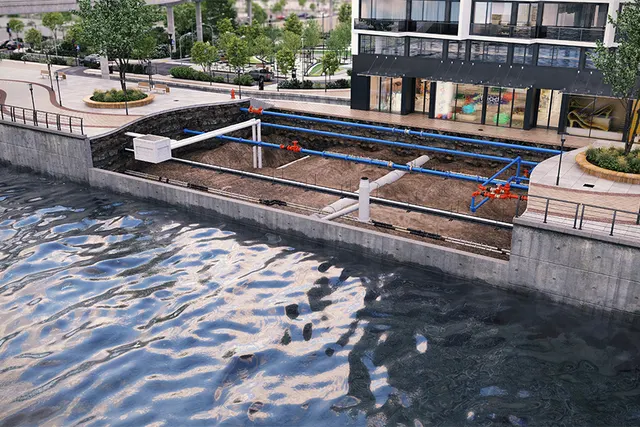
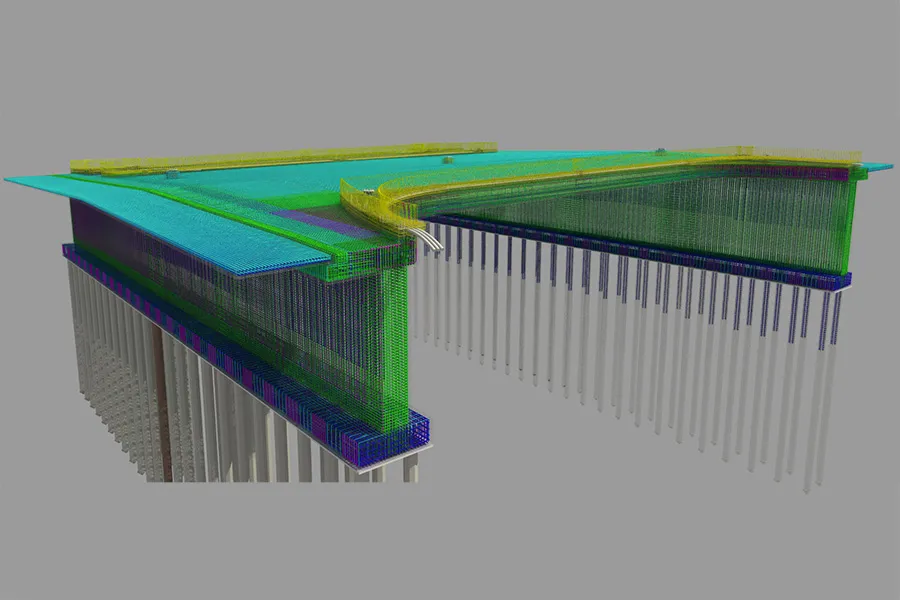
3D reinforcement model for Prinses Alexiaviaduct
Text Roel van Gils Image Spanberg
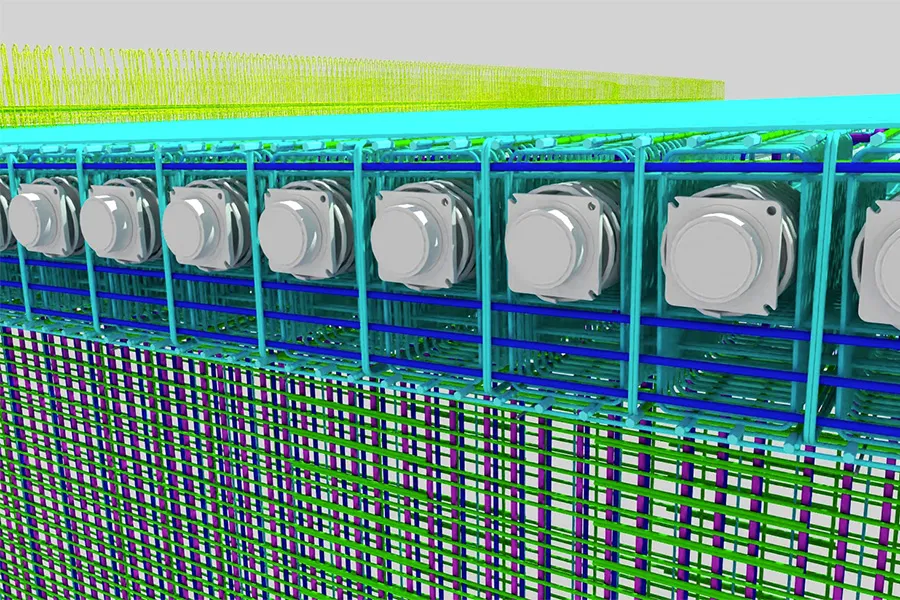
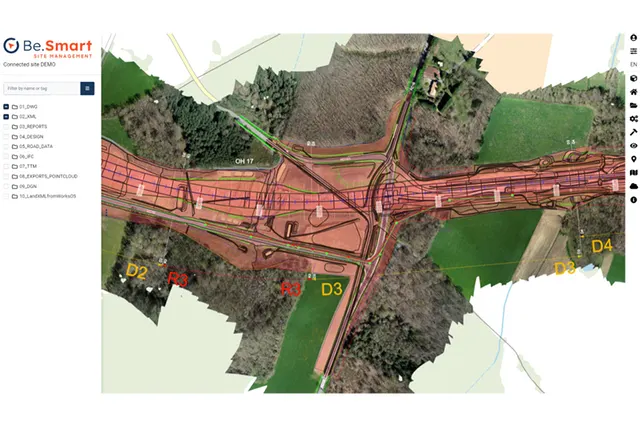
Following its work on Prinses Amaliaviaduct several years ago, Spanberg is now also detailing the reinforcement for the future Prinses Alexiaviaduct on Maasvlakte 2. The 3D reinforcement model also provides the input for Spanberg’s bending machines. Spanberg is also responsible for installing the reinforcement.
Prinses Alexiaviaduct will replace the at-grade junction on Maasvlakteweg, which currently provides access to the area around Prinses Alexiahaven, and the at-grade crossing with the railway, a utilities corridor and the Container Exchange Route. The new viaduct is intended to ensure safe and smooth traffic flow to and from Alexiahaven. “We were awarded the contract on the strength of a good, long-standing working relationship with main contractor BAM, and partly because of our experience with Amaliaviaduct,” says Dennis Knaap of Spanberg. “Spanberg is responsible for producing the construction design and detailing the reinforcement in both 3D and 2D.”
Eurocode
Prinses Amaliaviaduct has two decks, which will also be replicated in Prinses Alexiaviaduct with the same dimensions, Knaap continues. “There is, however, a fundamental difference: the new viaduct has one additional deck, making two axes. Prinses Alexiaviaduct will also have part of its deck built using precast beams, because it crosses the railway.” According to Knaap, there is little scope for synergy with the earlier viaduct, owing to changes in the Eurocode’s design assumptions. “Over the years, reinforcement has often become more closely spaced, and staggered laps are generally required. This makes prefabricating the reinforcement more difficult, including through the use of welding and spin mats (roll mats), or even impossible.”
Extensive prestressing
The 3D reinforcement model is imported automatically into Spanberg’s bending machine. “Because the machine controls production itself, human error is minimised. Creating a 3D model takes time and effort, but the overall lead time is shorter and the risk of errors during construction is reduced,” Knaap stresses. “And that is just as well, because the lead time is relatively short. Another challenge is the large amount of prestressing in the decks. When the cables are tensioned, enormous forces act on the end of the deck, requiring additional reinforcement in certain areas. These are also the critical locations where the model must be 100% clash-free.” Design and construction of Prinses Alexiaviaduct began in the third quarter of 2024, with completion scheduled for the end of 2026.
Question about this story? Ask your question
Who worked on Prinses Alexiaviaduct
- main contractorBAMIn this story
- contractorBAM Infra NederlandMentioned in New viaduct supports sustainable development at Alexiahaven
- reinforced earth structures
 VoetsMentioned in Reinforced soil structures and sustainable construction
- jointless transitions
 StruktonMentioned in Jointless transitions for maximum availability and durability

Keep following this
Get an email when a new story is published. No account needed.
- ProjectPrinses Alexiaviaduct
- SubjectDigitalisation & software
- CompanyBAM