









Low-emission construction in practice
Early anticipation makes all the difference
Low-emission construction starts not on site, but months, sometimes even years earlier. “For major civil engineering projects, anticipating early is crucial: gaining timely insight into power requirements, water capacity and planning, and above all involving utility companies in good time,” says Theo Hartman, owner of Bouwtech BPI BV, which specialises in installing large-scale temporary infrastructure for civil engineering projects. It was precisely this proactive approach by the Port of Rotterdam that determined the success of the low-emission construction site at the Prinses Alexiaviaduct.
Bouwtech BPI has been providing complete connections for low- and medium-voltage electricity, water supply and pressurised sewers over long distances for many years. “With more than 35 years of experience, including many years at BAM Infra Nederland, we are familiar with the technical and logistical requirements of major construction projects,” Hartman emphasises. “It was partly thanks to this proven expertise that BAM approached us in early 2024 to take part in the tender for the Prinses Alexiaviaduct, which was entirely focused on low-emission construction.”
Long lead times
The tender process began in July 2024. Hartman: “The first question is: where do you start when a construction site has to run largely on electricity? The key is to investigate existing infrastructure, distances to networks and the power required as early as possible. By requesting quotes from utility companies at an early stage, which often have lead times of one to one and a half years, we were able to plan the project precisely. Our experience from previous projects on the Maasvlakte, where infrastructure and planning are closely linked, proved a valuable asset.”
Power requirements calculation
For this project, we were asked to calculate the power requirements based on charging electric equipment and providing 15 charging bays for cars. “We used this to calculate the power requirements, which resulted in a connection capacity of 1,000 kVA. The application could go straight to the network operator, as there was no grid congestion at the location in question,” Hartman explains. “Arrangements were also made in good time for process water: 60 m3 per hour of greywater, drawn from the Port of Rotterdam’s utility corridor.”
Modular charging hubs
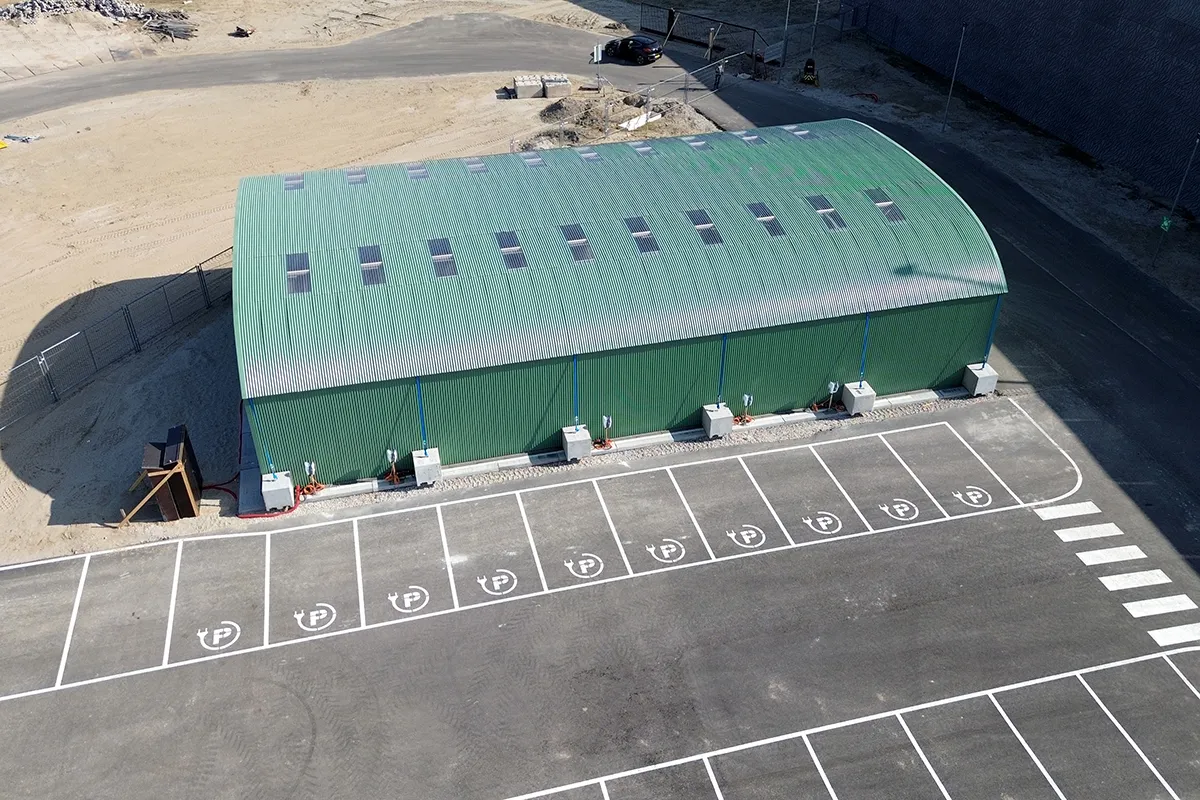
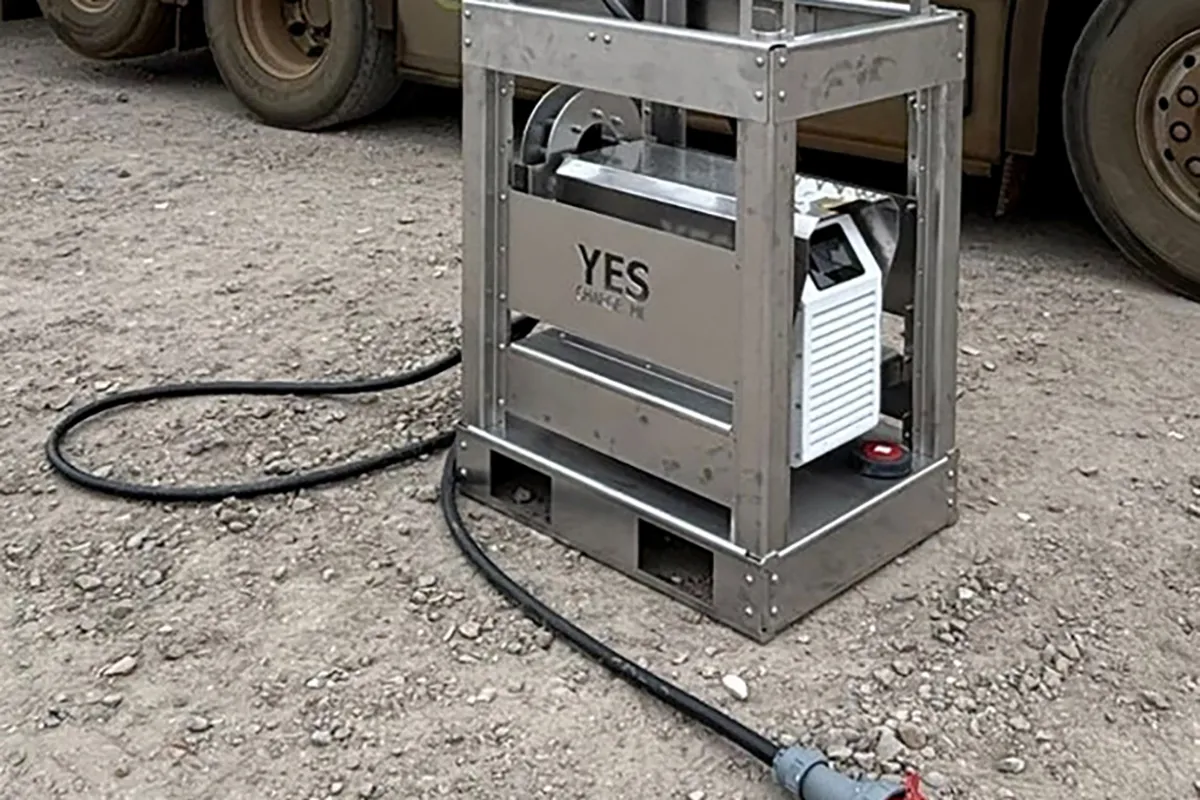
After determining the equipment and power requirements, Bouwtech BPI designed the complete site layout. “The charging hub was split across two locations, each with its own transformer station. Making the charging stations plug-in units means they can easily be moved to wherever electric equipment is in use at the time. This proved a major advantage during the award phase,” Hartman says. The infrastructure as a whole includes 1,200 metres of 23 kV medium-voltage cable, 800 metres of low-voltage cable, 400 metres of pressurised sewer, a 1,200-metre water main and various charging stations ranging from 11 to 150 kW.
From design and engineering through to construction and installation, and ultimately the careful removal and reuse of materials, Bouwtech BPI handles the entire process. “Thanks to timely applications, a well-considered design and extensive experience with complex projects on the Maasvlakte, BAM can build with low emissions and without delays.”
Question about this story? Ask your question
Wie aan Prinses Alexiaviaduct werkte
- contractorBAM Infra NederlandMentioned in New viaduct supports sustainable development at Alexiahaven
- reinforced earth structures
 VoetsMentioned in Reinforced soil structures and sustainable construction
- complete construction site setupBouwtech BPI BVIn this story
- jointless transitions
 StruktonMentioned in Jointless transitions for maximum availability and durability

Keep following this
Get an email when a new story is published. No account needed.
- ProjectPrinses Alexiaviaduct
- SubjectNews
- CompanyBouwtech BPI BV







