









Two piling systems, one efficient foundation solution
Text Roel van Gils Beeld Franki Grondtechnieken
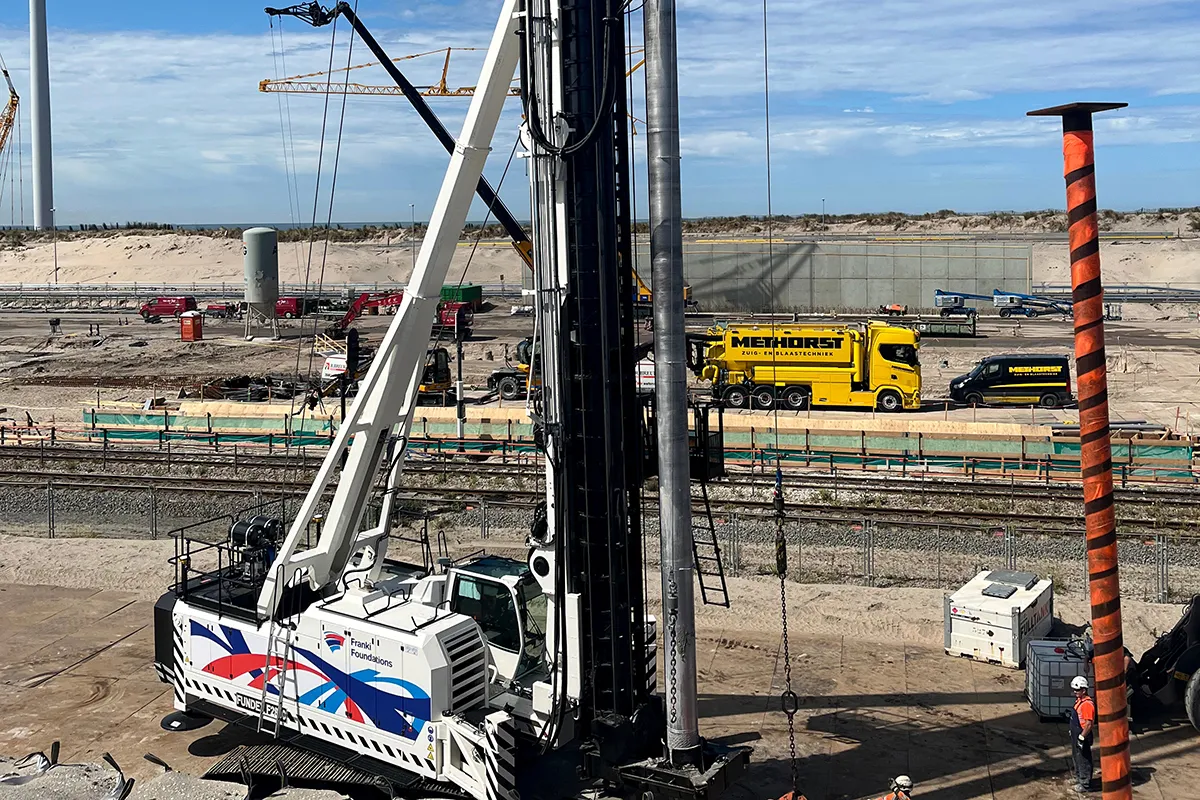
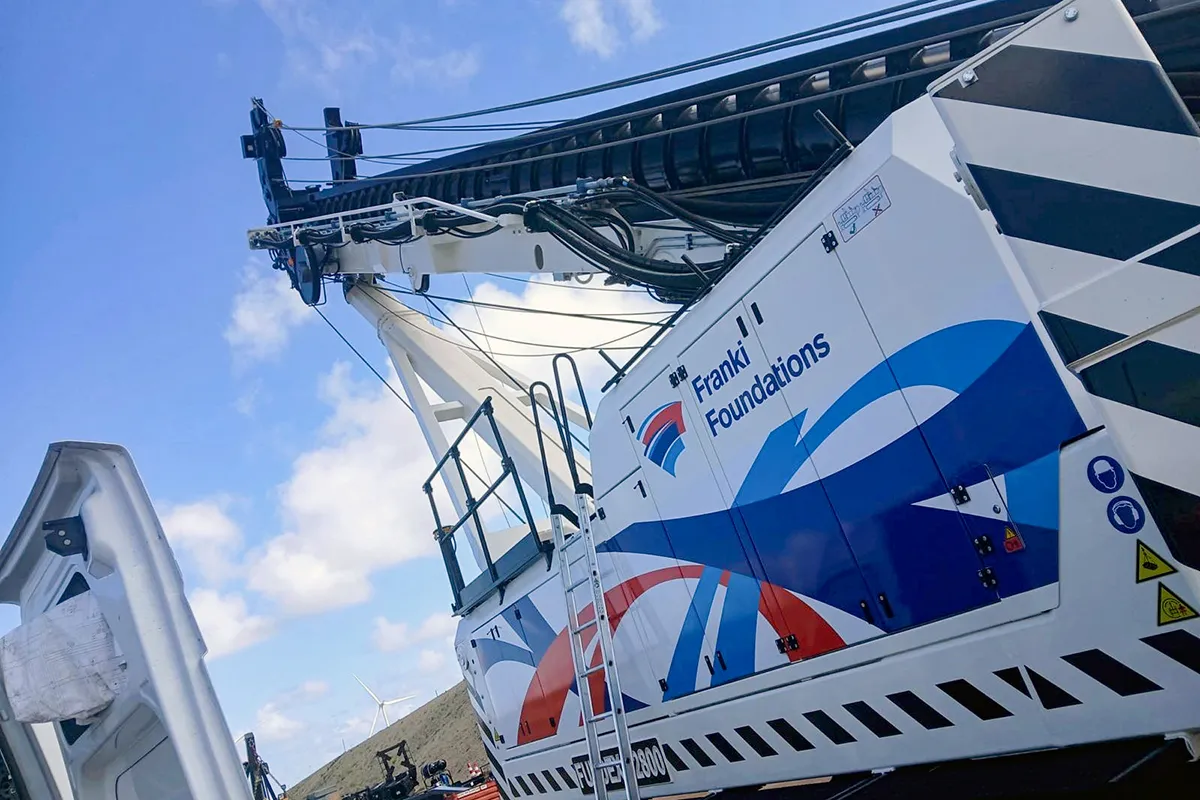
The foundation of the Prinses Alexiaviaduct comprises two types of piling systems: displacement screw piles and screwed steel tubular piles for the section alongside the railway. With years of experience in both systems and in this region, Franki Grondtechnieken was well placed to anticipate the foundation challenges posed by this project.
The ground conditions were a bit of a challenge…
Our scope comprised the installation of a total of 249 displacement screw piles and 40 screwed steel tubular piles, says Jan-Wim Verhoeff, director of Franki Grondtechnieken. “The project was divided into a large number of different phases. As a result, our teams had to keep moving between locations, making the project particularly challenging from a logistical point of view. The main contractor’s programme left little room for delays. Meeting production targets on time was essential, but by no means a given.”
Ground conditions
As we were also working on the major Neste project just a few kilometres away at the time, we thought we had a good idea of the production rates to expect, says Verhoeff. “Nevertheless, the ground conditions here at the Prinses Alexiaviaduct turned out to be significantly different. Fortunately, we are used to that. It is typical of our line of work: despite thorough ground investigations beforehand, actual conditions can turn out differently. Ground conditions determine not only the technical approach, but also the pricing and estimates for concrete and reinforcement quantities. On this project, production rates on site proved lower than anticipated. Extra effort was needed to keep to the programme.”
One piling rig
Work was carried out using one piling rig at a time in each phase. “As it was not possible to cross the road everywhere, our teams regularly had to dismantle the rig completely, move it on a low-loader or over temporary road plates, and assemble it again.” Franki Grondtechnieken installed the 40 screwed steel tubular piles near the railway in a single weekend, during a major rail possession. “We worked around the clock for 24 hours that weekend, with several teams taking over from one another in shifts.” Despite all the activity, Verhoeff says the work was relatively straightforward for Franki from a technical point of view, with little design complexity. “We have extensive experience installing these systems.”
In the end, price was the main differentiating factor on this project, Verhoeff acknowledges. “In a competitive market where a lot of work is put out to tender, a keen price remains essential. Our extensive experience with these pile types worked in our favour.” In this case, all the grout was removed from site. “Although recycling was not yet used at this location, we are already working in The Hague with an innovative solution that reuses grout. This development saves both raw materials and costs, and we plan to build on it in the future.”
Question about this story? Ask your question
Wie aan Prinses Alexiaviaduct werkte
- contractorBAM Infra NederlandMentioned in New viaduct supports sustainable development at Alexiahaven
- elementenverhardingenWD InfraMentioned in Mechanised craftsmanship for a cycle link and block paving
- gewapende grondconstructies
 VoetsMentioned in Reinforced soil structures and sustainable construction
- voegloze overgangen
 StruktonMentioned in Jointless transitions for maximum availability and durability
Keep following this
Get an email when a new story is published. No account needed.
- ProjectPrinses Alexiaviaduct
- ThemeUnderground construction
- SubjectRoad construction







