









Aqua Nederland shows the water chain must make choices
Text Easyfairs NederlandImage Seijbel Photography
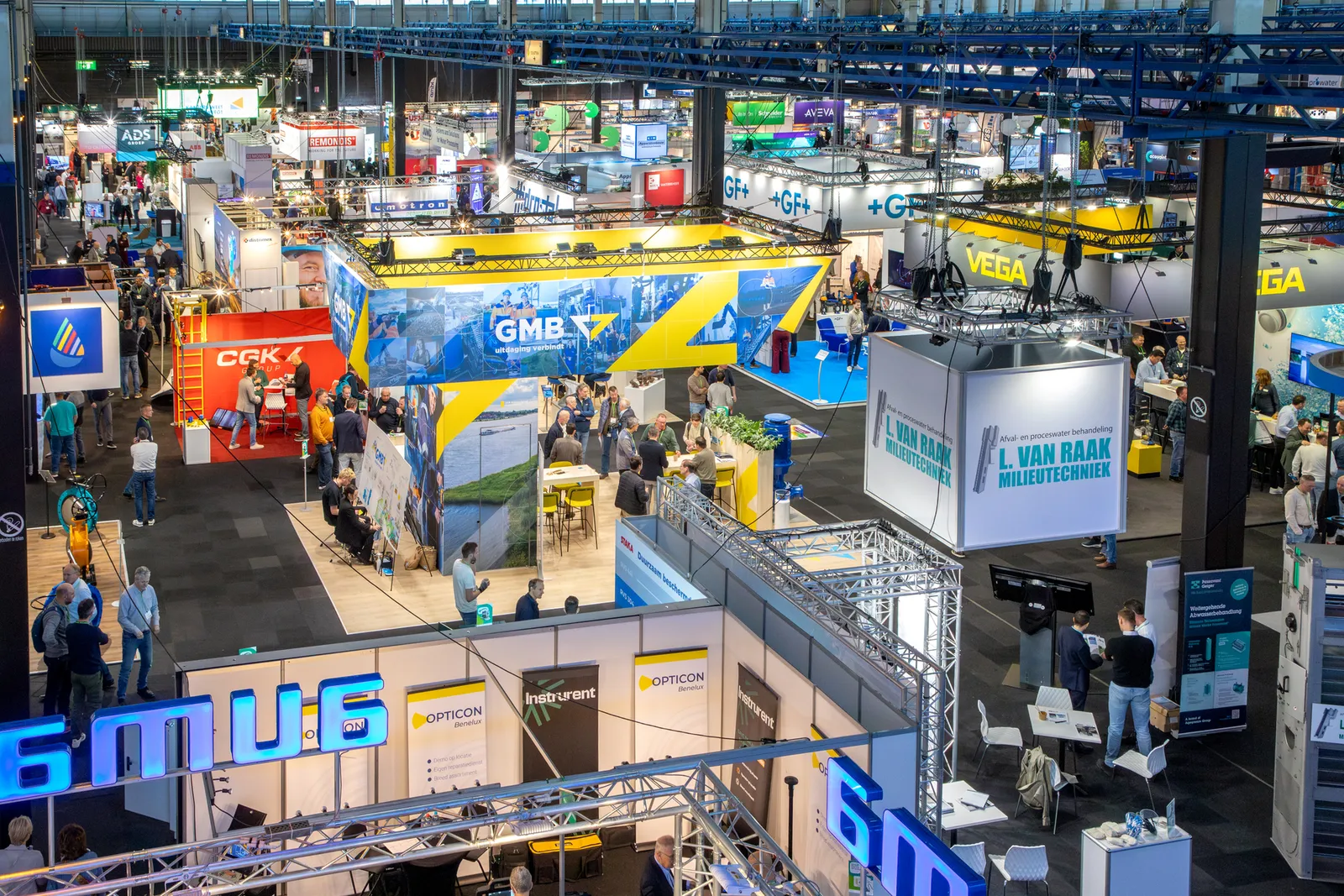
From nitrous oxide to PFAS
The water sector faces difficult choices. Tighter water quality requirements, ageing installations, grid constraints caused by congestion and new risks from emerging substances are all converging. We can no longer ‘optimise them away’.
Aqua Nederland’s knowledge programme on 17, 18 and 19 March 2026 brings this new reality into focus. Two Aqua Theatres will host clear thematic strands that repeatedly intersect: smart treatment plants, process optimisation, circularity and reuse (Aqua Theater 1), and smart urban water management, future-proof sewerage, drinking water and water quality in relation to emerging substances (Aqua Theater 2).
What stands out is what you do not see: a parade of innovations for innovation’s sake. The common thread is measuring, managing, choosing and learning faster, as the scope for spending, energy use and permits narrows.
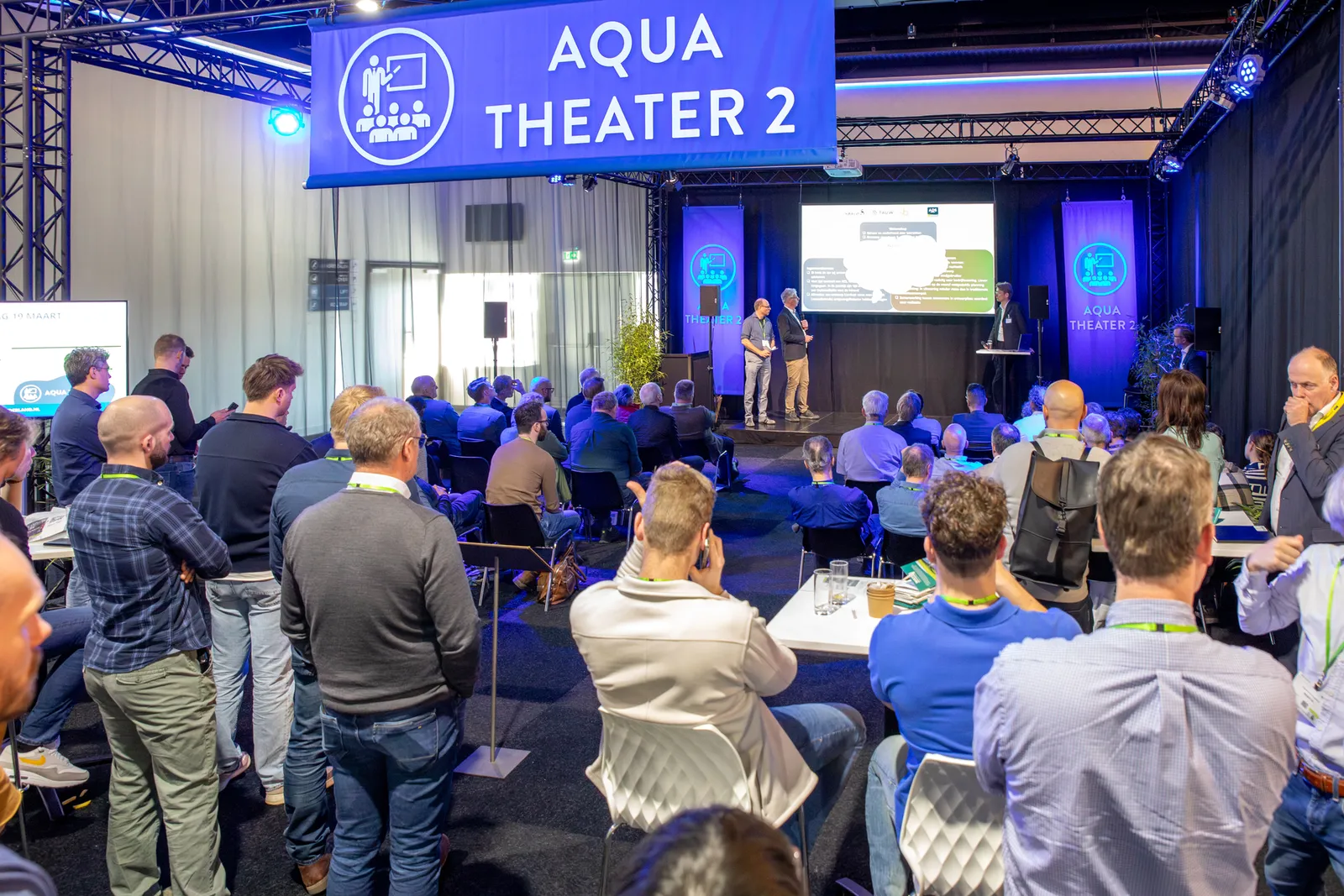
WASTEWATER: from treatment to managing emissions, assets and energy
Aqua Theater 1 immediately puts a topic that was long treated as a side issue on the agenda: nitrous oxide (N2O). KWR researcher Siddharth Seshan will show how advanced monitoring and modelling can bring N2O emissions at wastewater treatment plants under control. Nitrous oxide is no longer a ‘nice to have’, but a clear performance requirement.
This is followed by a series of sessions on digital twins and data-driven control (by TAUW & Kruger Veolia). Digitalisation is presented not as an extra dashboard, but as a control tool for day-to-day operations. A practical example is the standardised processing of nitrous oxide data in Z-info (Croonwolter&dros & Waterschap Limburg). Recording data consistently makes it possible to make meaningful comparisons, learn and scale up.
A second strand in the programme focuses on making the most of existing assets. Examples include dynamic simulation to optimise the operation of wastewater treatment plants (Sweco & HHNK) and extending the service life of RWZI Tiel to 2040 (TAUW, Sweco & Waterschap Rivierenland). The message is clear: building new is not always the best or quickest solution, especially when permits, costs, capacity and energy are constraints.
On Wednesday, grid congestion comes firmly into focus. The session on RWZI Zwolle (TAUW & Waterschap Drents Overijsselse Delta) shows how electricity grid constraints directly affect choices about process operation and investment. Flexibility is therefore a hard requirement.
Circularity: from ambition to practical implementation
Circularity is given a realistic interpretation within the same strand. KWR researcher Emile Cornelissen focuses on concentrate management and the choice between discharge and recovery. This is precisely where many circular ambitions run up against practical feasibility and residual streams. The WiCE programme strand (KWR, Joep van den Broeke) and a deeper look at resource recovery (KWR, Kees Roest) provide context, while a practical example such as Biocos at RWZI Hattem (Sweco & Waterschap Vallei en Veluwe) shows how it works in the real world.
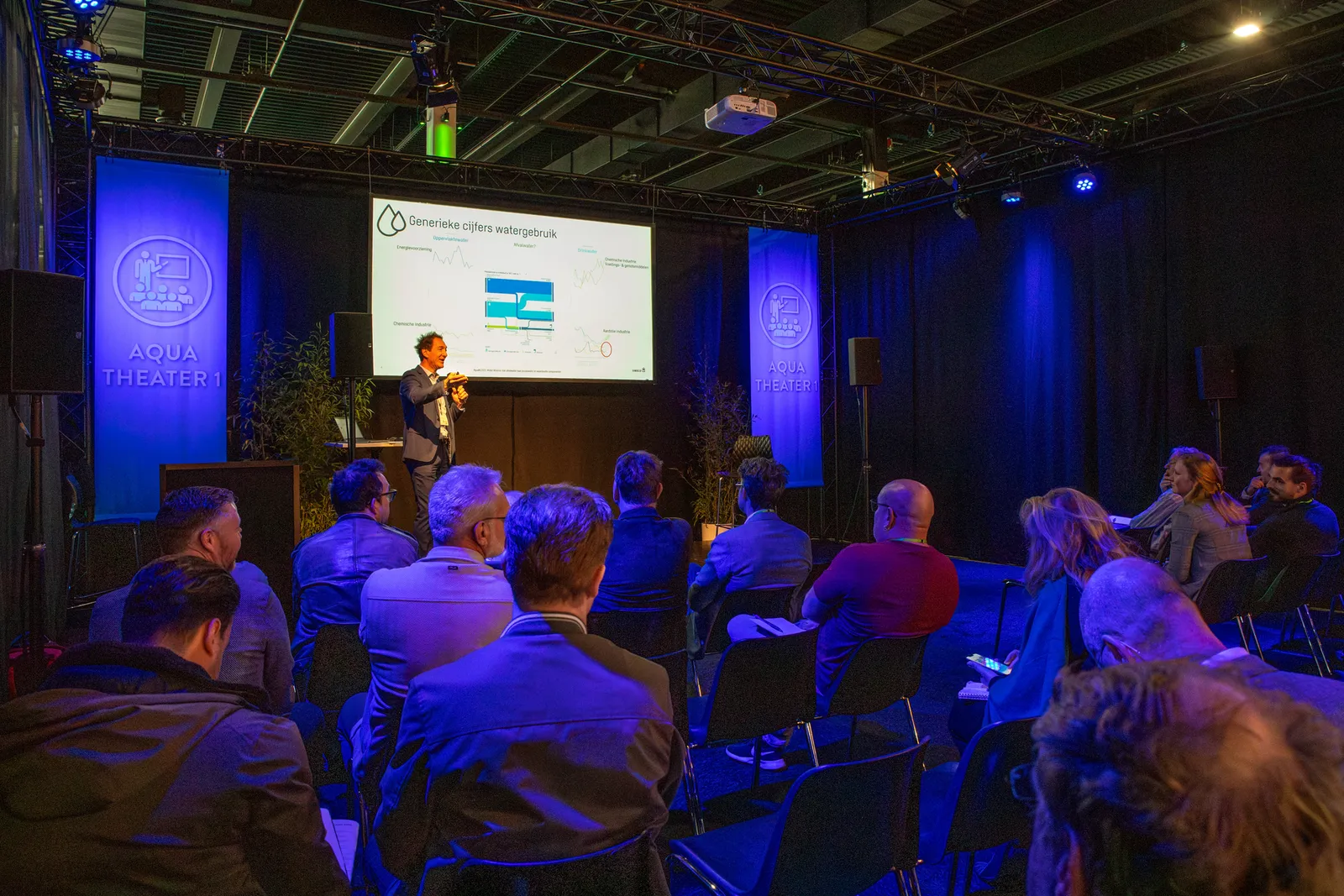
URBAN WATER: putting the entire water system centre stage
At Aqua Theater 2, the focus shifts from ‘sewerage alone’ to the entire urban water system: its impact on receiving waters and the practical feasibility of measures in public spaces. A striking example is ‘Rivier De Dommel aan de beademing’ (TAUW & Waterschap De Dommel). Innovative aeration improves the treatment of combined sewer overflows as part of the WFD. This is systems thinking in practice: not only managing overflows at source, but also supporting the receiving water system where the load ends up.
The realities of urban assets are also on the agenda. The session on renovating the elevated West Vlaardingen sewer pumping station (1958) (Gemeente Vlaardingen, Strukton, TAUW) is about more than engineering. It addresses how to make unique, critical infrastructure fit for the future, with acceptable risks and minimal disruption to the surrounding area. It is relevant to every asset manager with ‘challenging structures’ on the schedule in the years ahead.
DRINKING WATER: quality, operations and energy
The programme’s drinking water strand puts the focus firmly on long-term risks. On Tuesday, KWR sets the tone with sessions on Legionella (Frank Oesterholt) and the reliable detection and control of Legionella pneumophila in wastewater (KWR/TKI, Nikki Bel). This interface is of particular interest because quality, public health and impacts across the chain increasingly feature in the same discussion, especially as water flows and reuse concepts become more closely connected.
On Wednesday, attention turns to energy and operations. Electricity demand response in the drinking water sector (WiCE, KWR together with Vitens) shows how demand response and security of supply affect one another. Warming in the drinking water network (KWR, Bram Hillebrand) brings a less widely discussed topic onto the agenda, with potential implications for asset management, quality and risk.
Practical implementation features in the project to build Vitens’ drinking water reservoir, pumping and control building in Beuningen (Mobilis), including electric piling and new construction. This session is for professionals looking to translate research and policy into practical design, construction and management.
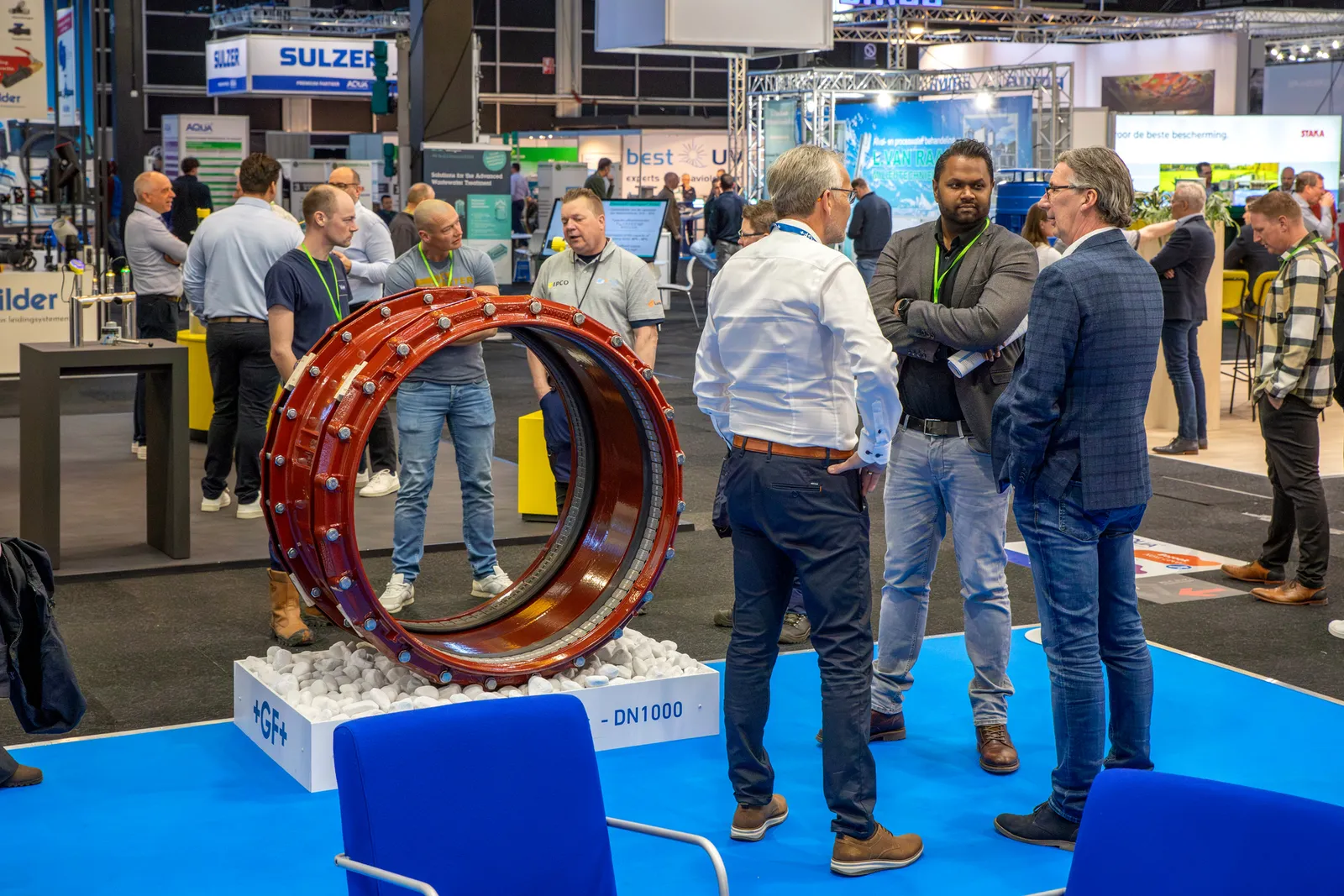
PROCESS WATER AND INDUSTRY: reuse under the WFD and in practice
On Thursday, process water, water availability and reuse take centre stage at Aqua Theater 1. KWR researcher Roberta Hofman-Caris (KWR) addresses the question: water reuse and the Water Framework Directive, a match or a mismatch? This is about more than engineering: it also concerns ecology, regulation and decision-making. When is reuse genuinely advisable and feasible in terms of permitting? Kees Roest shows what water conservation and reuse look like in industry in practice. The underlying message is that process water is becoming a strategic issue, driven by availability, quality and discharge requirements.
PFAS: from headline to engineering
At Aqua Theater 2, the programme concludes with PFAS, with the focus on substance and design. The session by KWR, Martijn van Veggel and Roberta Hofman-Caris on PFAS concentration and removal shows that there is no one-size-fits-all solution. Decisions about concentrating and removing PFAS, and handling residual streams, have direct consequences for reliability, costs, maintenance and public acceptance. Market players will also share their experience of PFAS removal, showing how these issues are already being addressed in projects. This is an opportunity to explore the subject in depth, rather than focusing only on alarming headlines.
Question about this story? Ask your question
Companies in this story

Keep following this
Get an email when a new story is published. No account needed.
- SubjectSpecials
- CompanyCroonwolter&dros
- CompanyMobilis







