









A project of considerable scale for a versatile crane company
Text Roel van Gils Image Wagenborg Nedlift
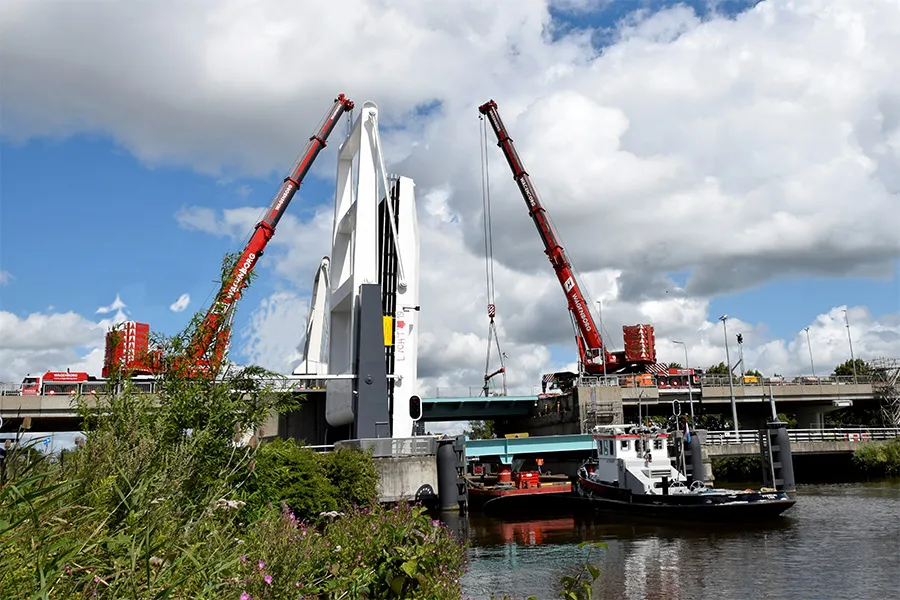
Wagenborg Nedlift has more than demonstrated its versatility on the Aanpak Ring Zuid project. Its work ranged from relatively straightforward lifting operations to highly complex assignments, such as replacing the operating mechanism of the Euvelgunnerbrug, which required a full year of preparation. A project of considerable scale for a company specialising in horizontal, vertical and heavy transport.
Wagenborg Nedlift has been involved in Combinatie Herepoort’s Aanpak Ring Zuid project since the start. “We started here seven years ago, and if you start something, you have to see it through,” says Rick Kleiverda with a laugh. At the time, he was still a crane operator; these days, he works as a works planner. “One of the first tasks on the project was unloading the sheet piles that would be used to build the large excavation pit for the sunken section. They were brought in by ship and transferred to the quay in Sappemeer. We were on hand with our 400-tonne mobile telescopic crane to unload the sheet piles. Together with several other transport companies, we also arranged their transport to the construction site.”
Safe lifting
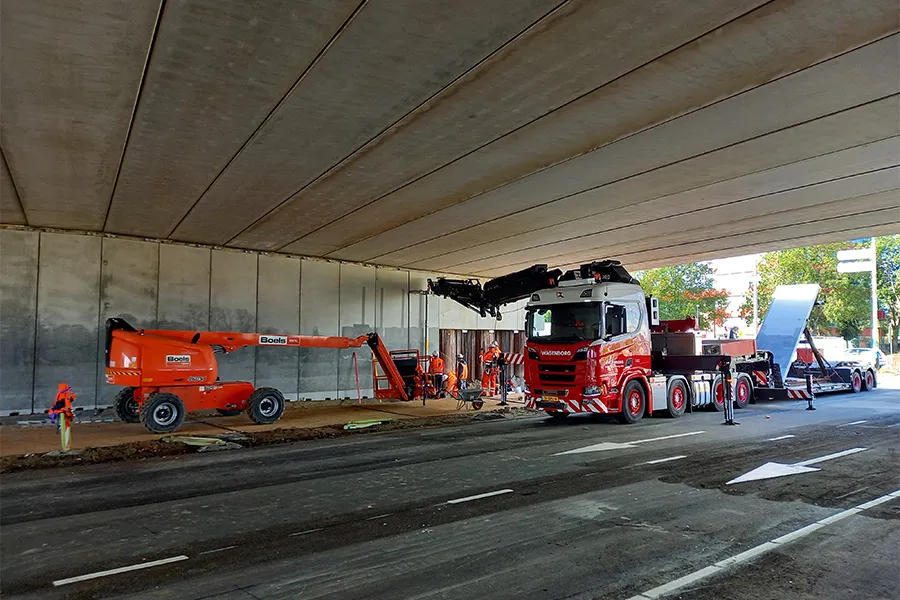
Wagenborg Nedlift was then called in again to lift the struts used to stabilise the excavation pit. “We positioned the strut tubes, and later helped remove them. They were very heavy components, weighing between 30 and 40 tonnes each. Heavy cranes were positioned on the edge of the excavation pit, but of course everything was fully calculated. We carry out all the engineering in-house, so that we can perform our work safely,” Rick assures us. Later, the large cranes were replaced with smaller ones to lift, among other things, reinforcing steel and formwork materials into position. “We also provided crane assistance when the scaffolding was erected and dismantled.”
Replacing the operating mechanism
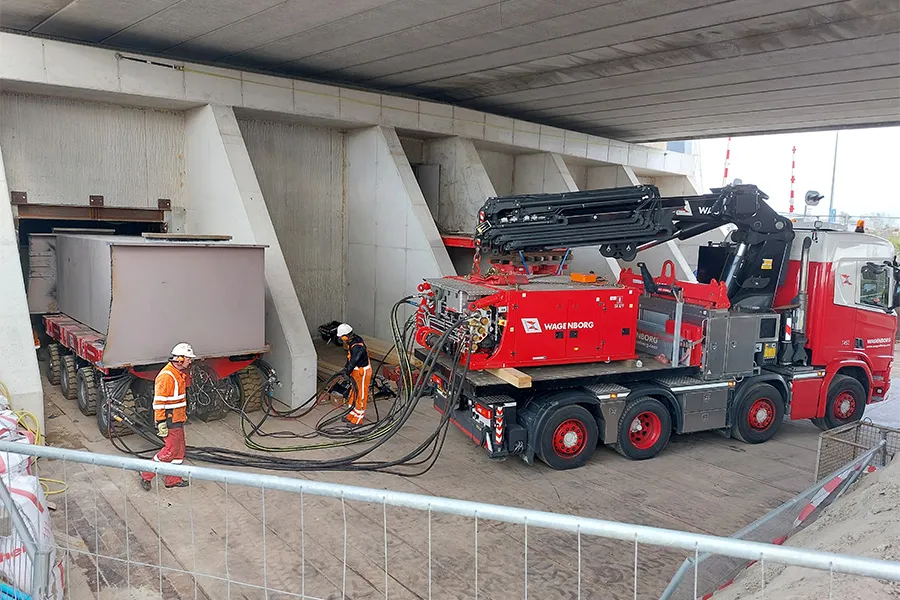
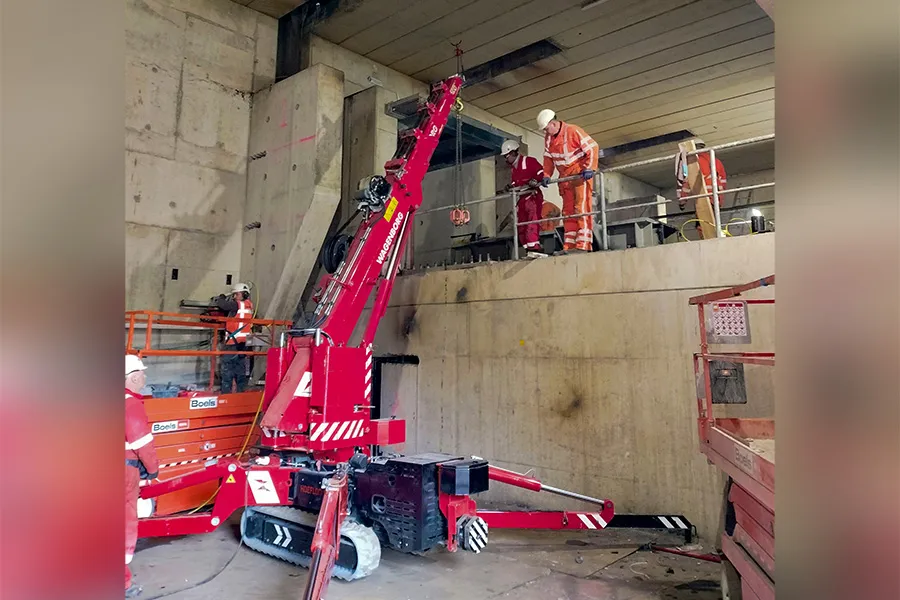
One of the highlights for Wagenborg Nedlift on the project was undoubtedly replacing the operating mechanism of the Euvelgunnerbrug. “We replaced the bridge leaves, the drive mechanism and the ballast box,” says works planner Jan Dinkla. “It was an extremely complex puzzle. The working space in the two concrete chambers was just a few dozen square metres, with no room for cranes or other customary equipment. Some components were several metres long and weighed tens of thousands of kilos, including the ballast boxes, each weighing 140 tonnes. It took a long time to prepare so that we would be ready when the crucial moment came. We also brought in several divisions of our parent company for the operation, giving us access to tugboats and pontoons as well as our cranes.”
Extensive range of equipment
Wagenborg Nedlift was regularly brought in by subcontractors as well as by the consortium. “For example, we installed and later removed all the temporary bridges at Julianaplein,” says Rick. “The variety of equipment used made the project special for us, from a loader crane to our 700-tonne mobile telescopic crane, fully equipped with all the bells and whistles. It was really varied, and we’ll miss that. We’ll also miss the project being so close, less than a kilometre from our Groningen branch. That doesn’t happen often.” Rick and Jan look back on a good working relationship with Combinatie Herepoort and all the other partners they assisted on behalf of Wagenborg Nedlift.
Question about this story? Ask your question
Keep following this
Get an email when a new story is published. No account needed.
- SubjectSpecials







