









A nature paradise at Marker Wadden
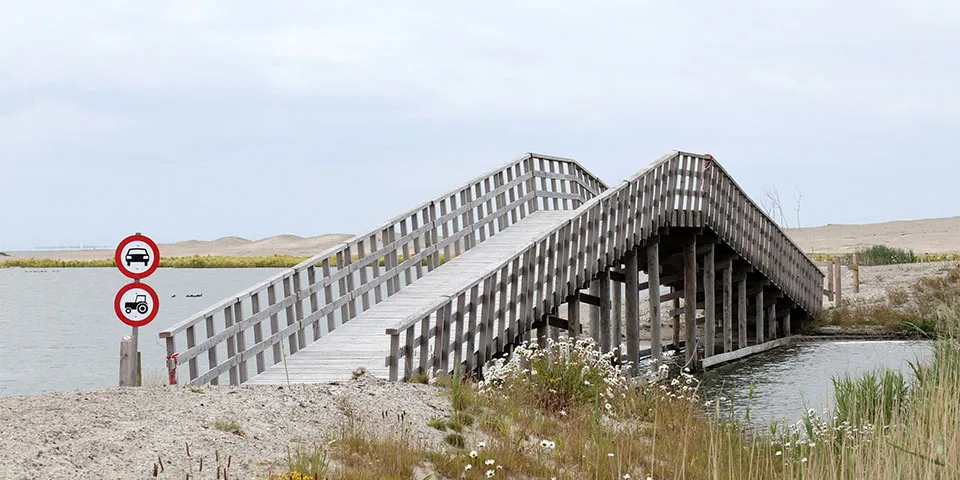
Marker Wadden is the newest addition to the Netherlands: a group of nature islands bringing new life to the Markermeer. Visitors can enjoy this new nature paradise for plants, insects, fish and birds along beautiful walking trails and at unique birdwatching sites. Hupkes Houthandel supplied much of the timber for the jetties and boardwalks through sandy and marshy terrain.
Marker Wadden is a unique nature reserve still under development. The nature islands were created using sand, clay and silt from the Markermeer and contribute to the ecological restoration of the lake, both underwater and above the surface. It is not only a nature paradise for fish and birds, but also a wonderful destination for recreation. And it is all right here in the Netherlands, off the coast of Flevoland. Since September 2018, Haveneiland has been open to the public. The main island of Marker Wadden has a total of 12 kilometres of walking trails and three remarkable bird hides.
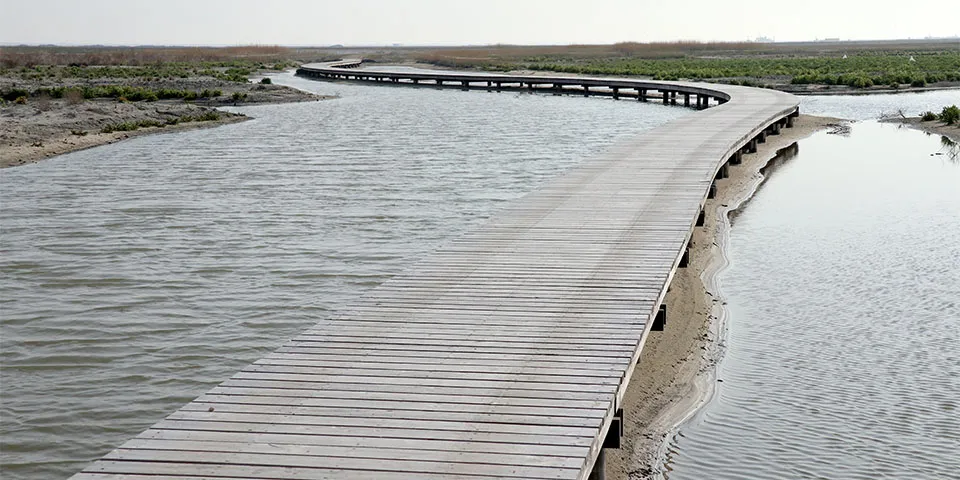
Hupkes Houthandel supplied much of the timber for the jetties and boardwalks through sandy and marshy terrain.
Huge stocks of timber for civil engineering
Almost all the timber on the main island was installed by Flora Nova Constructiewerken. “We had barely six months to build the jetties, boardwalks and bird hides,” says Adri Timmerman. “We were working to a strict deadline of 8 September 2018, when the official opening was scheduled. The drawings were not finalised until March that year. It is certainly helpful to be able to rely on suppliers who can deliver large quantities of timber for civil engineering projects from stock. Hupkes Houthandel is one such supplier, with huge stocks of Azobé and Demerara Greenheart and Basralocus piles. It may even have the largest stock in Western Europe. Another advantage is that Hupkes still cuts and processes Azobé round timber to size in the Netherlands itself, one of the few companies to do so.”
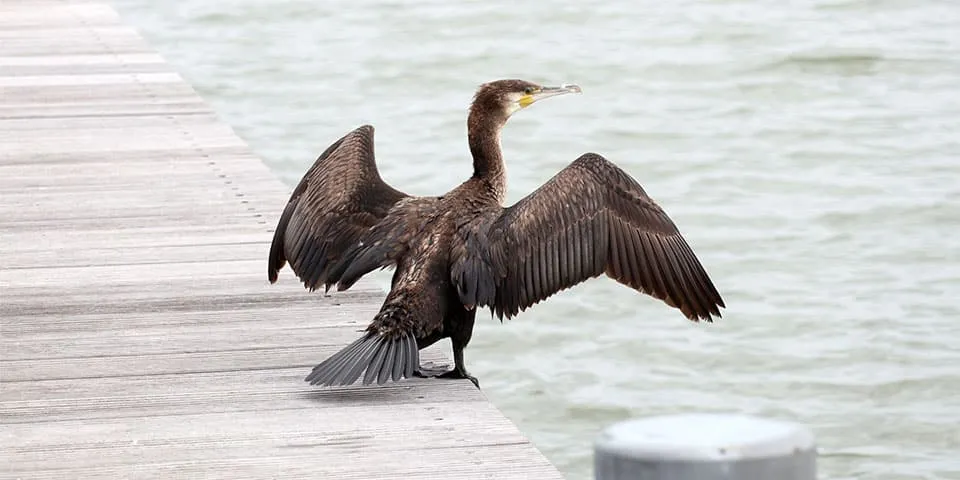
Visitors can enjoy this new nature paradise for plants, insects, fish and birds along beautiful walking trails and at unique birdwatching sites.
The very best
With durability class 1 and strength class D70, Demerara Greenheart is unbeatable for piles and is the very best, according to Timmerman. “It is an ideal product for use in this environment. By far the largest quantity we used was this timber species, for the substructure of the jetties, supplemented by Basralocus and Cloeziana roundwood piles.” In total, around 95 m3 of Demerara Greenheart and Basralocus was used, along with 76 m3 of Cloeziana roundwood piles and 109 m3 of Azobé, also cut to length and supplied with half-lap joints and bevelled edges. “Azobé was used, among other things, for the crossbeams, joists, fender rails and decking of the jetties. The largest jetty, used by boats from the traditional Dutch brown fleet to arrive and depart, is the only one built on a steel structure, but it is ‘wrapped’ in Azobé, so it too appears to be made entirely of timber.”
For the Flora Nova employees, conditions on Marker Wadden were unusual and sometimes even tropical. Timmerman says: “With the warm spring and scorching summer, it sometimes felt like a desert. Our employees’ transport was well suited to the conditions. We chartered a former ‘Dakar jeep’ to get them around. All in all, it was a wonderful and above all unique project for us.” Hupkes Houthandel is also proud of the end result. Director Stefan Meinhardt looks back in particular on the good working relationship with Flora Nova.
Question about this story? Ask your question
Keep following this
Get an email when a new story is published. No account needed.
- SubjectSpecials







