









A look ahead with Andrea Vollebregt: Water engineering, now and in the future
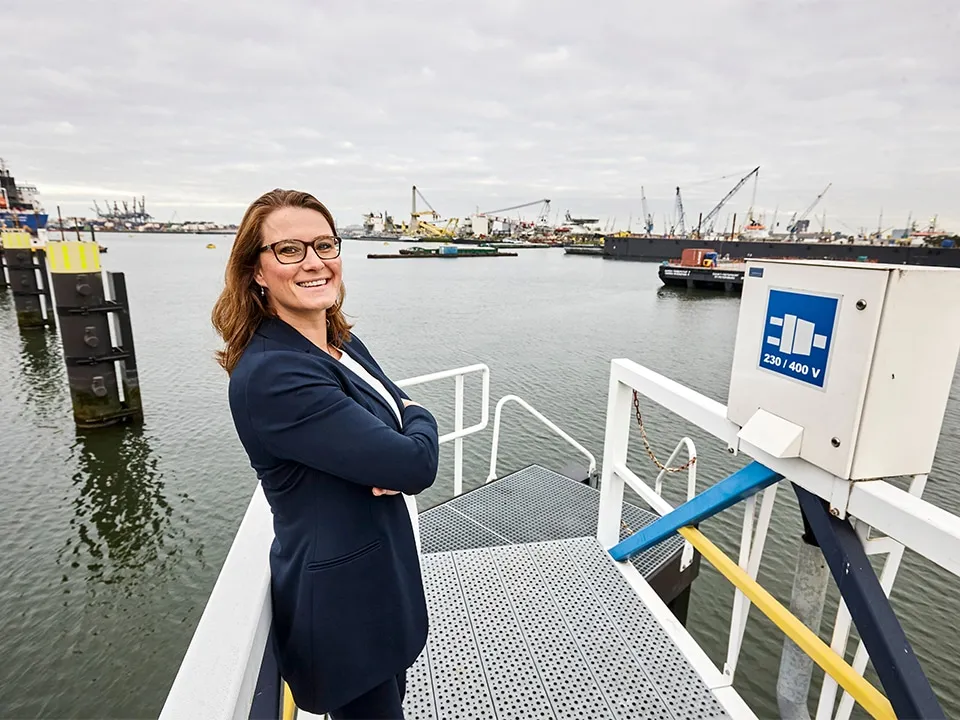
“Our companies innovate every day. Sustainability is high on everyone’s agenda, and every company in water engineering will play its part.” Andrea Vollebregt, director of the Vereniging van Waterbouwers, explains.
“I think we will see a few step changes in sustainability over the coming years. In my view, this will depend mainly on how sustainability objectives are specified in tenders.”
Andrea notes that, compared with a few years ago, everyone now recognises the climate problem and wants to make a positive contribution. “We live in a delta in the Netherlands, and water engineering has the knowledge and expertise to help develop and implement climate adaptation measures and make the delta resilient for the future.”
Centuries of experience working at the land-water interface
“We have built up our expertise through centuries of working at the land-water interface, which is at the heart of what we do. We maintain that added value by continuing to innovate. We see new tools becoming available all the time, leading to new insights and innovations, such as data that enables us to work smartly,” says Andrea.
Collaboration is one of our greatest strengths
No one in the civil engineering sector can work alone. We need each other. Andrea says: “Collaboration is in our DNA. It is one of our greatest strengths, as is good communication. It is also important to have the right people in the right place at the right time. That means being willing to understand each other, knowing each other’s interests and giving others a fair chance.”
Contractors should be involved in projects as early as possible. “Clients need to have a clear idea of the project’s purpose. Many projects that have been in the news in recent years have shown how important collaboration is. Trusting each other means give and take, knowing and understanding each other, and being able to reach each other when things get tense. Forms of collaboration are also changing in water engineering. This can be seen in new contract models, where the way parties work together, trust each other and share sufficient information forms the basis. Not every contract is right for every project, but they all have one thing in common: increasingly, clients and contractors work together at the outset to decide how best to approach a project. This allows contractors’ construction expertise and/or innovation capacity to be incorporated into the designs at an early stage. Examples include two-phase contracts, Bouwteam agreements, Alliantie contracts and Innovatie partnerships.”
Fair work for a fair price
“We need to share project risks and allocate them to the parties best placed to manage them. We need to move further towards doing fair work for a fair price,” Andrea suggests.
Andrea says local authorities are investing differently as a result of the coronavirus pandemic: “They have major other challenges, and the associated expenditure, so infrastructure projects are sometimes being postponed. This has consequences. We need to realise that investment in infrastructure is a prerequisite for economic growth. Not only does our sector benefit, it also creates a positive knock-on effect. I am convinced that postponing investment costs more.”
Do not aim for 100% sustainability all at once
Greening and sustainability will gain even more momentum in the coming years. “More is already possible in terms of sustainability than clients are asking for. But I doubt whether the intention to be completely emissions-free in 10 years is realistic. I think it is wiser to take smaller, realistic steps; otherwise, we risk destroying capital. Objectives need to be ambitious enough to bring about change, but realistic enough to be achievable. That way, most of the market will follow and the level playing field will be maintained. We also need to pay sufficient attention to the international competitive environment in which part of our sector operates.”
Andrea notes that companies need time to earn the money required to invest in greening. “Water engineering is a capital-intensive sector, where vessels have a service life of around 25 years. Decarbonising the fleet requires major investment. The sector is exploring various options, from electrification to hydrogen fuel cells. This is because the water engineering fleet is atypical and cannot be compared with, for example, the merchant fleet. Electrification, for instance, is not feasible everywhere,” Andrea concludes.
Question about this story? Ask your question
Keep following this
Get an email when a new story is published. No account needed.
- SubjectSpecials







