









A conversation with Joost van Dijk, Managing Director of Abilitec
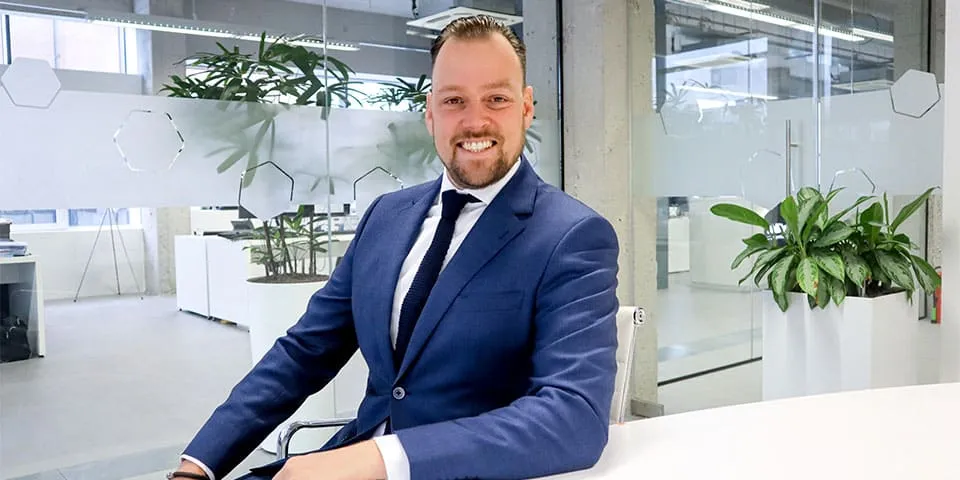
Demand for technical staff has long outstripped supply. With its ‘Stay in demand’ motto, Abilitec is seeking to turn the traditional recruitment and contracting landscape on its head. A conversation with Joost van Dijk, Managing Director of Abilitec, about the unique way the company attracts and retains (young) talent, and how it places the right people in the right roles.
‘Stay in demand’
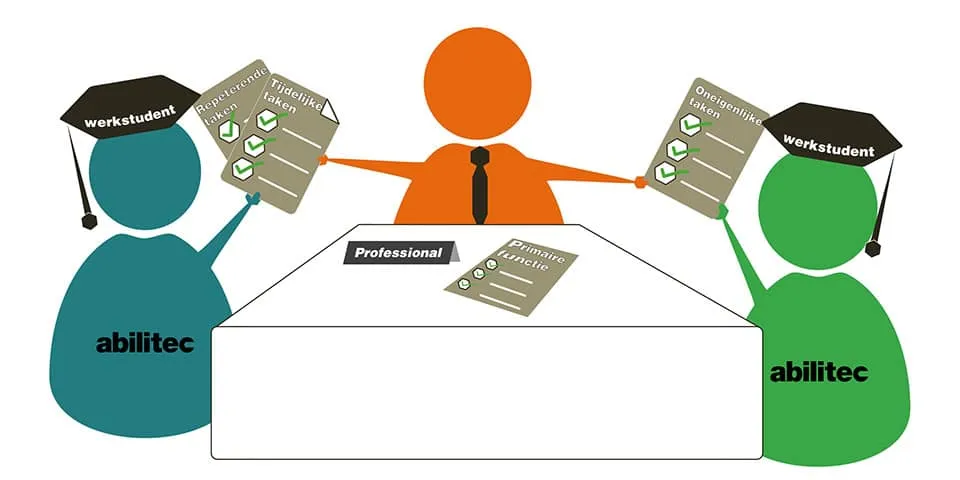
By offering young talent a part-time job related to their studies, they can gain valuable experience while still studying. .
Abilitec specialises in recruiting and placing technical professionals, focusing on the disciplines of Building Engineering, Civil Engineering, Electrical Engineering and Mechanical Engineering. “From our office in Dordrecht, we primarily serve the ‘Greater Rijnmond’ region, extending as far as Amsterdam, Utrecht and Den Bosch,” says Van Dijk. “We currently have around 90 employees, including 15 full-time equivalents working in the office and 75 full-time equivalents placed externally. Given the challenges facing the market, we expect to grow to around 120 full-time equivalents this year, 200 employees in 2021 and 250 employees by the end of 2022.” An ambitious target. Its growth strategy is therefore based on both organic growth and acquisitions.
A strong talent pool
According to Van Dijk, the labour market is definitely changing. “More and more engineers are considering doing something different,” he says. “You need to reach them early and often. That is why we have moved away from the original, rather conservative model of temporary staffing and contracting. Thanks to a range of innovative techniques, we can make very targeted contact with these professionals, with the first steps in the process fully automated. This approach is now beginning to bear fruit and is building a pool of available candidates. Engineers are not keen on phone calls, but they are happy to chat. If you give them the right answers and access to a strong pool of vacancies, they are more likely to take the step towards a new challenge. Research shows they need around thirty points of contact before changing jobs. As a company, we are making a deliberate effort to appear earlier, more often and more relevantly in technical professionals’ physical and digital worlds, through social media, but also at universities of applied sciences and universities.”
A part-time job related to their studies
“There is also an incredible amount of talent at universities of applied sciences and universities,” says Van Dijk. “I am impressed by how far they have already come with digitalisation in construction, for example. And they are genuinely interested in issues such as sustainability. In their free time and evenings, talented students often pick up extra work in a pub or supermarket. It is worthwhile work, but wouldn’t it be fantastic if they could swap that part-time job for one related to their studies, with the technical employers they may one day work for? We see enormous opportunities here. The Netherlands has 130,000 technical students who, apart from internships, have hardly any practical experience. Vacancies all ask for experienced people. By offering young talent a part-time job related to their studies, they can gain valuable experience while still studying. It is also much more relevant than the few weeks of work experience they do each year.”

Abilitec specialises in recruiting and placing technical professionals, focusing on the disciplines of Building Engineering, Civil Engineering, Electrical Engineering and Mechanical Engineering.
Job carving
“We support our clients through job carving,” Van Dijk continues. “We carve repetitive, administrative and non-core tasks away from experienced professionals employed by our clients. This allows them to focus on their core responsibilities, reduces their workload, and increases both the depth of their work and their job satisfaction. Projects get completed again. It is a win-win, with benefits for both sides. We have already helped around ten students find a part-time job related to their studies. For example, as junior draughtspeople, junior estimators or staff carrying out as-built drawing revisions. Add them to an optimisation programme or improvement project and see what happens to the team and project when you bring in fresh energy.”
“We are also in discussions with universities of applied sciences in the Drechtsteden region to see whether we can modernise the curriculum. Dare to rethink practical placements and internships, and treat them as genuine part-time jobs, starting in year 1 at around 12-16 hours a week. You then graduate a much better-equipped young professional and add more than 48,000 FTE of capacity for innovation. We are also working together to consider soft skills, so that technical professionals are better equipped for a changing workplace.”
“In more and more places, we are succeeding in convincing our clients, because the pool of ‘seniors’ and ‘mid-level professionals’ is relatively thin. We are investing in a guaranteed inflow and progression of talent. Our clients can try it out with us at almost no cost.”
According to Van Dijk, ‘Stay in demand’ applies to both clients and candidates. “We invest a great deal of money, time and effort in reaching technical professionals and placing them with the best employers and the most enjoyable companies to work for. And we help those employers modernise their employment practices and plan their workforce strategically, so that additions to their permanent workforce remain flexible while becoming more predictable.” For more information, visit the Abilitec website.
Question about this story? Ask your question
Keep following this
Get an email when a new story is published. No account needed.
- SubjectSpecials







