









110 trees transplanted in Waddinxveen
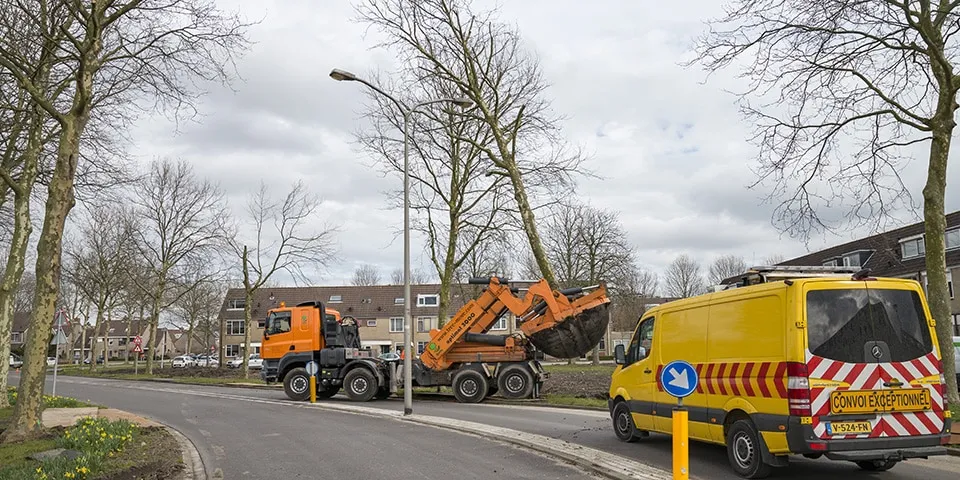
In Waddinxveen, 110 trees are being moved from Zuidplaslaan to the nearby new-build neighbourhood of ‘de Triangel’. The approximately 30-year-old plane trees had grown too close together in their original location. In their new location, they will immediately add value to the neighbourhood.
Just outside ‘de Triangel’ stands a row of lime trees along Tuinbouwweg. These mature trees were transplanted several years ago and are now firmly established in their new location. “With the arrival of the transplanted trees, the main road immediately gains a substantial green structure, which the residents are very pleased about,” says André Mies, project manager at Park Triangel. “People like living in a green environment. I have already heard from residents who are extremely pleased that there are mature trees here.”
Transplanting is often cost-effective too: planting a new tree and tending it until it reaches maturity generally costs much more than transplanting one.
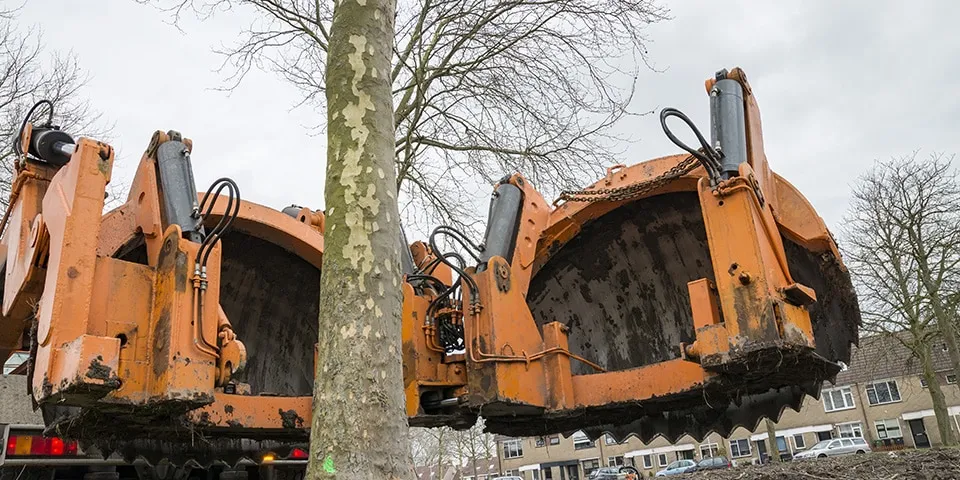
The tree is lifted from the ground in one piece, complete with its roots and root ball.
Transplanting and aftercare
The trees in Waddinxveen are being transplanted in several phases. The first 60 trees were moved in spring 2018. The second phase is due to start in 2019, when the remaining trees will be moved to their new locations. Different transplanting methods are used, depending on the size of the tree and its location. The Optimal 3000, Europe’s largest tree-transplanting machine, is used for most of the trees. The crowns were reduced to ensure safe transport. At their new planting sites, the trees were anchored using stakes, tree ties and a crossbar. This is necessary because the trees will grow new roots. During this process, they need to stabilise themselves so that they can remain upright in future without tree ties or a crossbar.
To ensure that the trees continue to grow well after transplanting, BTL Bomendienst begins aftercare immediately. As well as watering, aftercare involves regularly monitoring the trees and keeping an eye on the soil’s oxygen levels and moisture balance. This intensive aftercare helps the trees establish themselves in their new locations and add value to the public realm of the new-build neighbourhood.
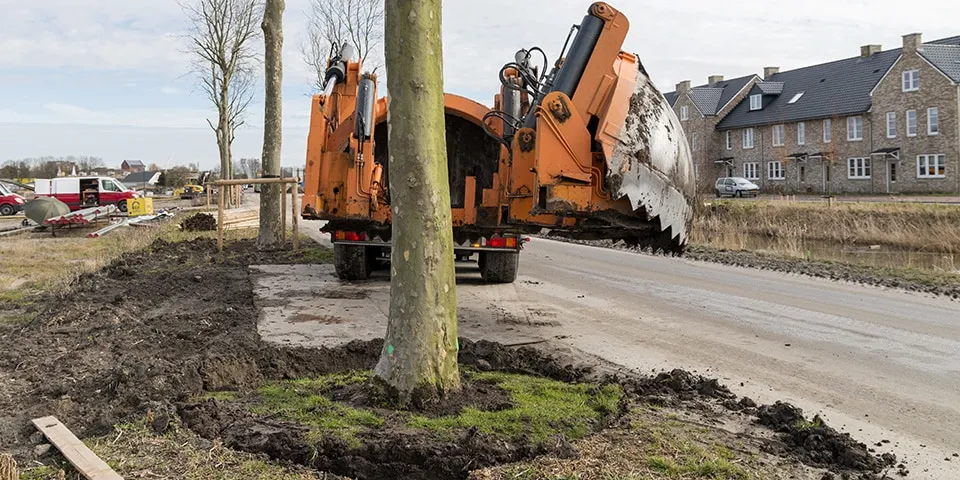
Successful transplant!
Question about this story? Ask your question
Keep following this
Get an email when a new story is published. No account needed.
- SubjectSpecials







