









Will the signal ever turn green for a rail link between Nijmegen and Düsseldorf?
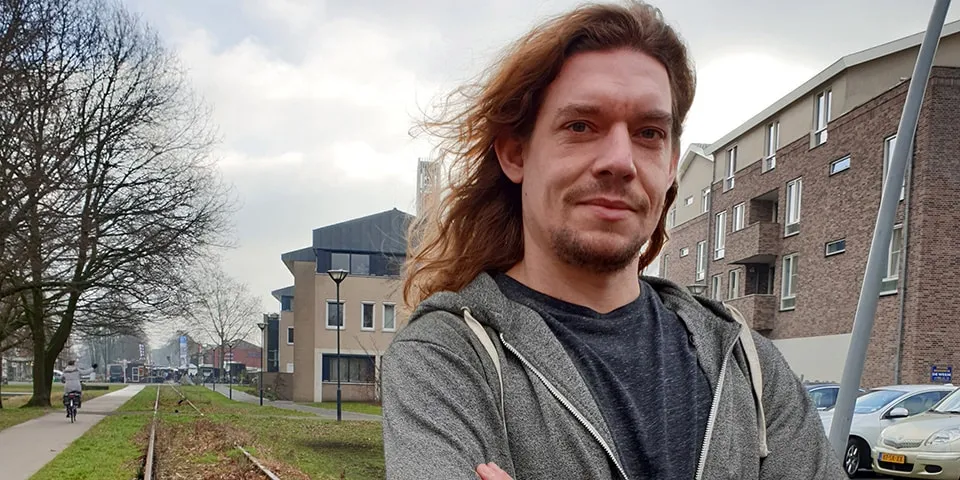
Maarten Bakker hopes it will. Bakker, 30, is a VVD councillor on Nijmegen City Council, with responsibility for accessibility and sustainability. A direct rail link from Nijmegen into Germany’s North Rhine-Westphalia is high on his wish list. According to Bakker, there are both economic and sustainability reasons for it.
In principle, the railway route is already in place, but the line was taken out of service in 1991. The village of Groesbeek, in the Municipality of Berg & Dal, was particularly keen to see it go. “That is where the crux of the matter lies,” Bakker explains. “Groesbeek is opposed to reopening the line, and that is one reason why various parties have labelled plans to reopen it unfeasible.”
Railways bring people together and keep them apart
In recent years, Groesbeek, a village in Gelderland, has climbed sharply up the national tourism rankings. The village centre has recently been modernised, and only the rails still in place recall times gone by, when people in the middle of the village had to wait several times a day for the level crossing barriers to come down. Isn’t it understandable that people in Groesbeek are no longer keen to see the line reopened, we ask Bakker. He replies: “That would be understandable if you think back to how things used to be. Polluting diesel locomotives, no bypass around the village and declining passenger numbers… But times change. Borders exist mainly on paper now, trains are cleaner and tourism is growing. Reopening the railway would be a win-win for everyone.”
Despite being dormant, the railway is very much part of Groesbeek. People who live there are said to come from ‘above the railway’ or ‘below the railway’. The railway brings the village together and divides it at the same time. Bakker says that is true both literally and figuratively. “There are many benefits to reopening the line. Nijmegen is 5 kilometres from the border, but anyone travelling from Nijmegen to Germany by train currently has to take a 35 km detour via Arnhem. That can’t be sustainable, can it? What’s more, the only road connection between Nijmegen and Germany is the N325, which runs from Nijmegen to Kranenburg but literally comes to a dead end in a field just across the border. Germany never completed the connection because of a nature reserve. So after the N325, you have to drive along country roads to get into Germany. The N325 suffers from heavy commuter traffic jams. Radboud University in Nijmegen and Klever Hochschule in Germany also support reactivating the line. Students come from both sides of the border, and the institutions are right next to the railway. Businesses on both sides of the border would also prefer their staff to arrive on time.”
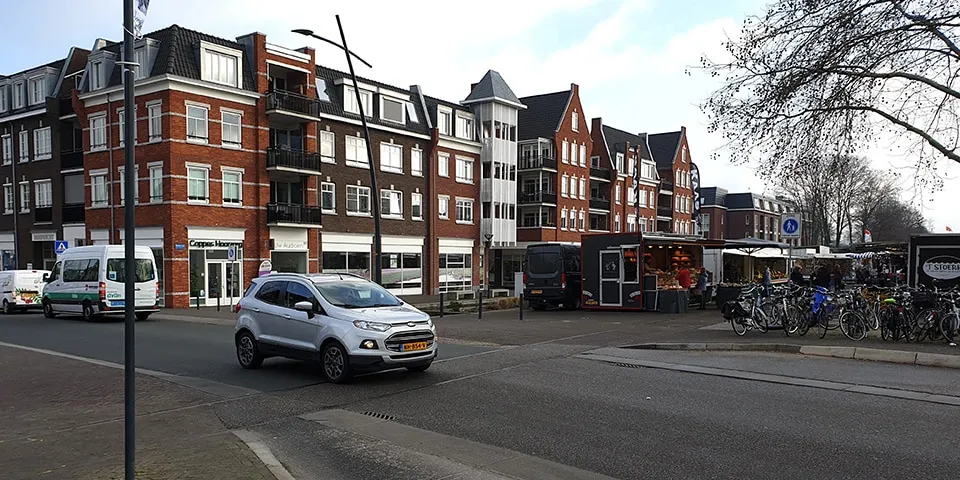
A car drives over the spot where the barriers used to go up and down. The rails are still visible in the asphalt.
By land, sea and air
Bakker points to another advantage: “Nijmegen is well on its way to becoming a major logistics hub. The Waalhaven is the largest inland port in the Netherlands. The A15 is being extended to the A12, and a rail terminal is planned on the Betuweroute. The only thing still missing is easy access to the nearest airports. For Nijmegen, these are Weeze and Düsseldorf airports. Both could be reached by train if the railway were brought back into service. I don’t think I need to explain how significant the economic benefits would be.” Plans to reopen the line are certainly not new and resurface on various agendas from time to time. According to Bakker, the VVD, PVDA, FNV, and the boards of Radboud University and HAN in Nijmegen have long been in favour. Why does it keep falling through? “The Gelderland Provincial Executive says reactivating the line is not worthwhile because the Municipality of Berg en Dal does not want it. The basis for this is their coalition agreement, which states: ‘Reactivating the Nijmegen-Kleve railway line is not on the agenda during this coalition period. Where other parties in the region discuss or wish to investigate this possibility, we will monitor developments without committing our own resources.’ That agreement runs until 2022 and does not rule out reactivation after that.”
But the province is drawing that conclusion anyway, according to you? Bakker: “The focus is mainly on what is impossible, and not all the information is included in the studies. That keeps you trapped in a vicious circle. In November 2018, North Rhine-Westphalia and State Secretary Knops signed a declaration expressing their desire for better cross-border connections. That is why now is the time to act. Practical problems need to be resolved. For example, funding from Germany is available only for a train service, even though we should be looking at light rail or a new, quiet concept as the solution for Groesbeek. There are still question marks until professional rail infrastructure companies have properly assessed it.”
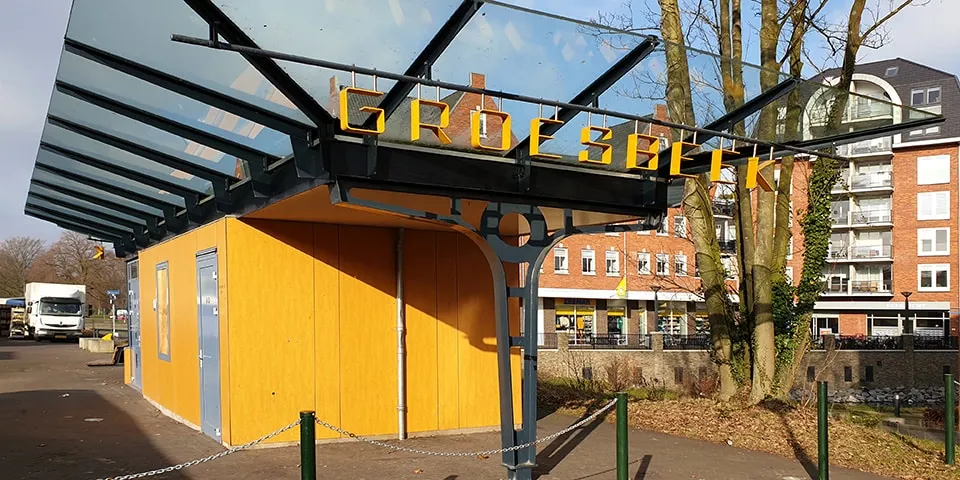
As a tourist attraction, Groesbeek has built a ‘draisine station’ next to the railway. Tourists can ride a pedal-powered rail trolley to the former Kranenburg station in Germany.
Seize the opportunity while the time is right
Bakker is a committed person and has roots in both Groesbeek and Nijmegen. “I was born in Nijmegen, grew up in Groesbeek and now live in Nijmegen again. I’m working to restore this rail link with Germany. It is important to Nijmegen for the university, HAN and the economy. At the same time, it would open up beautiful Groesbeek to tourists. More broadly, we would also make huge sustainability gains. This is low-hanging fruit. It would be a real shame to miss this opportunity for Nijmegen, Groesbeek and Germany. Rail infrastructure companies interested in contributing their ideas are very welcome to get in touch with me.”
Question about this story? Ask your question
Keep following this
Get an email when a new story is published. No account needed.
- SubjectRoad construction







