









Versatile geotechnical expertise a key pillar of the OFOR Zwolle project
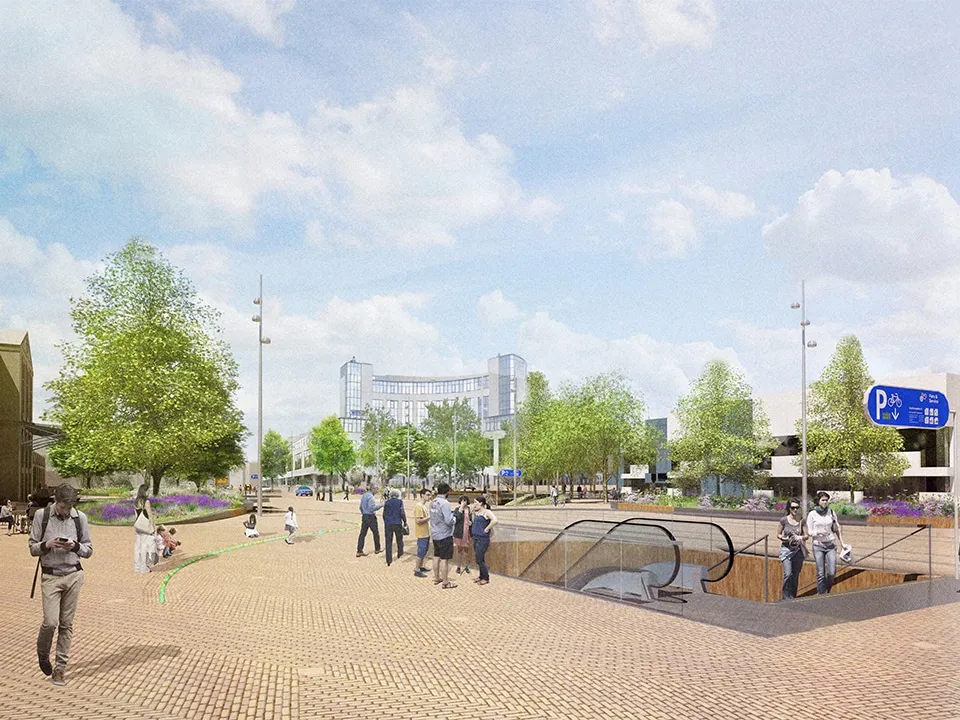
The Development Perspective for the Zwolle station area sets out the ambitions of the Municipality of Zwolle, the Province of Overijssel, NS and ProRail for this zone.
One of the sub-projects involves creating a new public space and an underground bicycle parking facility for around 5,500 bicycles. Commissioned by Boskalis Nederland, CRUX Engineering designed the excavation support system, carried out a risk analysis of the neighbouring buildings and prepared the monitoring protocol.
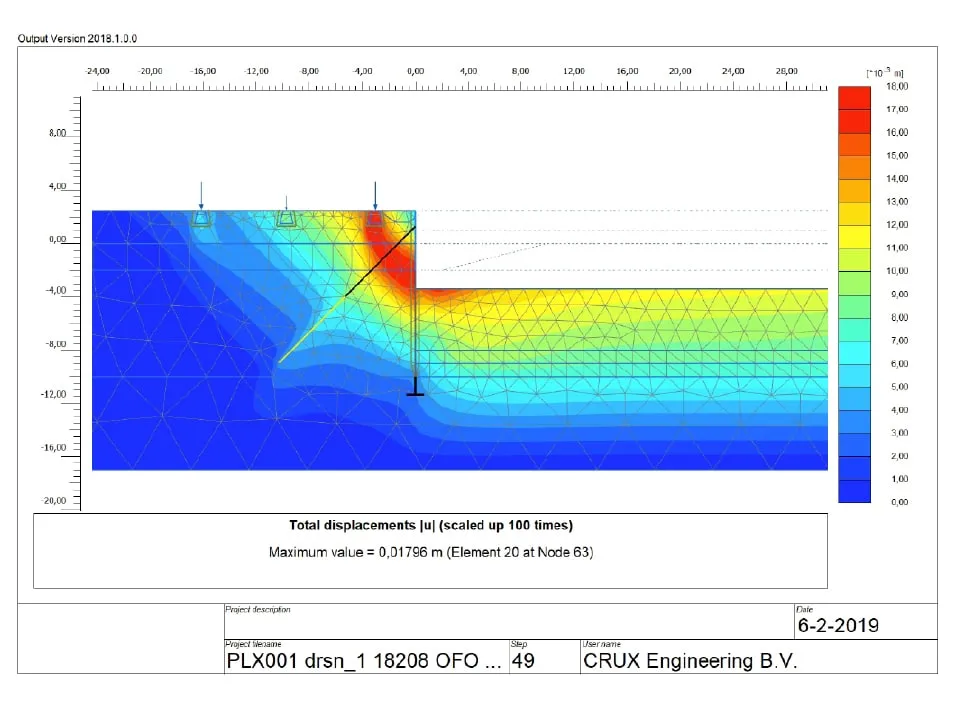
Senior geotechnical consultant Alwin Rutgers describes OFOR (Underground Bicycle Parking and Public Space) as an attractive but complex project, carried out in a built-up urban area right next to Zwolle’s listed station building. “PLAXIS 2D and 3D calculations in the building risk analysis showed that the effects of installation, deformation of the CSM wall during the various construction phases and the resulting deformations in the surrounding area could result in a risk of minor aesthetic and architectural damage. As this is considered an acceptable damage profile in current design practice, no mitigation measures were required in advance.”
Quality assurance
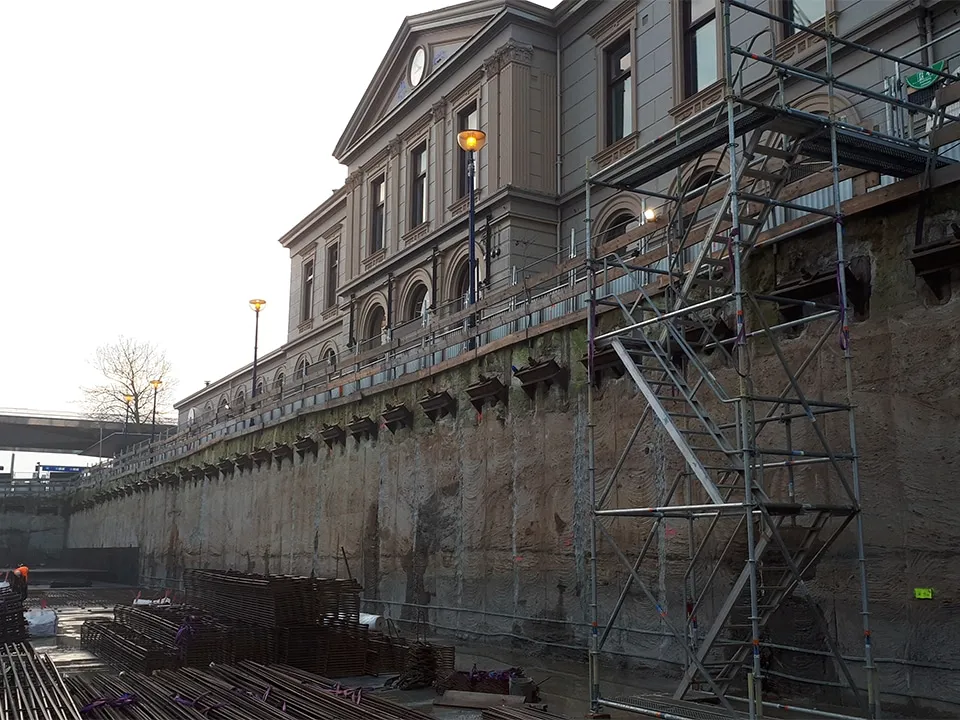
After completing the excavation support design and risk analysis, the Municipality of Zwolle also asked CRUX to check the quality assurance of the works during construction. “It was a great opportunity for us to see at close quarters how the design was translated into practice,” says Rutgers. “We intervened where necessary.” Oversight and assessment of the monitoring were important aspects of the project’s quality assurance. During construction, most attention was focused on the station building, which is founded on strip footings and stands less than 3 metres from the CSM wall. Rutgers: “To monitor the impact on the surrounding area closely, we installed inclinometer casings in the CSM wall before construction began, and placed measurement stickers and prisms on the station building façade.”
Deformations
During construction, the station building experienced greater deformations than anticipated in the risk analysis. A further analysis of the most likely geotechnical mechanisms involved led CRUX to identify a combination of causes. “One was the installation of self-drilling anchors beneath the station building,” Rutgers explains. “Although the design and risk analysis assumed that the anchors would displace the soil, a small volume loss may have occurred in the first few metres behind the CSM wall, and therefore beneath the front section of the station building, as the anchors were installed.” A second cause was related to the removal of the steel beams to install the injection hoses. “The resulting volume loss in the excavation pit affected the passive zone along the CSM wall,” says Rutgers. “This caused additional horizontal deformation of the wall, followed by additional settlement of the building.” Both mechanisms therefore played an important role during construction, but had not been fully anticipated in the design risk analysis. The need to identify such construction risks in good time underlines the importance of expert risk management through monitoring.
Reassessment
A detailed reassessment of the station building risk analysis during construction showed that the deformations exceeded the values indicated by the measurements, particularly the differential deformations that occurred, but this did not lead to a different risk and damage profile. “At most, the risk shifted towards the upper limit of what was acceptable,” says Rutgers. “The likelihood of structural damage was negligible, and there was no risk of stability problems around the station building either.” Working with the contractor carrying out the works, Boskalis Nederland, CRUX increased the monitoring frequency and adjusted the construction sequence and excavation. It also drew up a mitigation plan in case the newly established deformation intervention threshold was exceeded. “Monitoring showed that the settlement of the station building remained within the new intervention threshold set in the reassessment right through to the end of the works,” says a satisfied Rutgers. “The Municipality of Zwolle successfully opened the bicycle parking facility in early December 2020.”
Have a business enquiry for Boskalis Nederland? Get in touch
Who worked on it
OFOR Zwolle in Zwolle
- main contractorBoskalis Nederland
Keep following this
Get an email when a new story is published. No account needed.
- ProjectOFOR Zwolle
- SubjectRoad construction
- CompanyBoskalis Nederland







