









Using trenchless techniques to pass beneath the railway
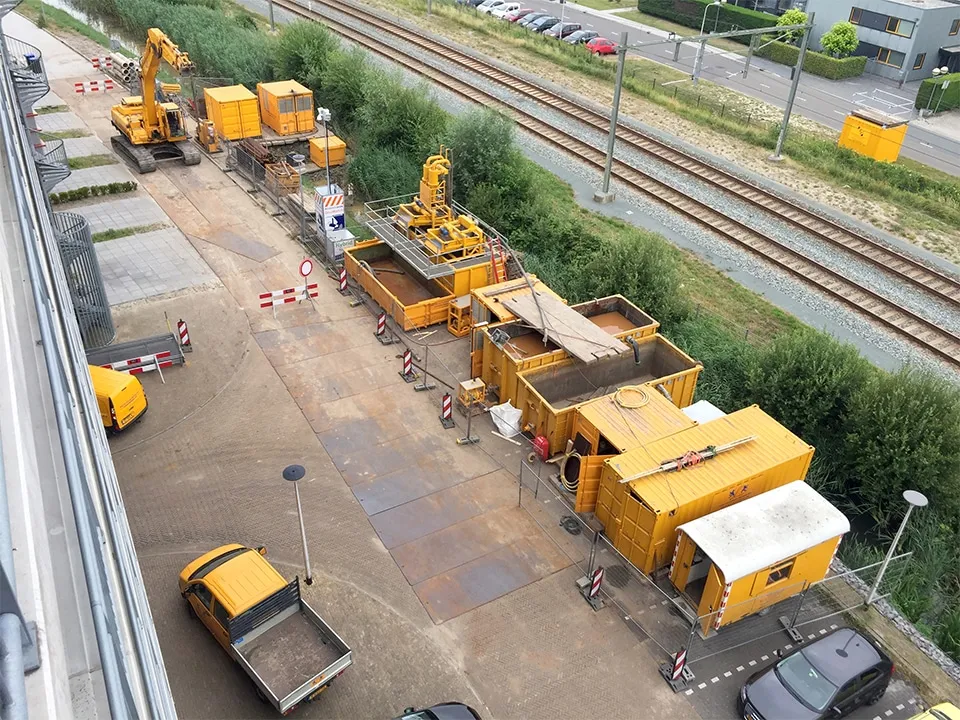
The underground is becoming increasingly congested, with growing numbers of cables and pipelines serving all kinds of purposes. It is only natural that railway lines regularly need to be crossed to get from A to B. Trenchless techniques are therefore used. Boring and pipe jacking allow cables and pipelines to pass beneath the railway without requiring a possession. André Dikkeschei, subsurface infrastructure systems specialist at ProRail, and Rosella Krot, director at Dutch Tunnel Engineering, a specialist in trenchless techniques, talk about the collaboration between the two companies.
Not just for ProRail’s own use
André begins: “ProRail has an extensive network of cables and pipelines for its own use. We also issue permits to third parties wishing to lay cables and pipelines alongside, beneath or across the railway. Dutch Tunnel Engineering prepares a design using the right trenchless techniques to pass beneath the railway safely and correctly. We assess the design and approve it, after which work can begin.” Rosella adds: “Trenchless techniques help ensure the railway remains available. Work in the rail sector involves demanding safety protocols. That is why, already at the design stage, we follow the successor to ProRail’s ‘white booklet’, Guideline 00427, part 2, which sets out the rules for safe working.”
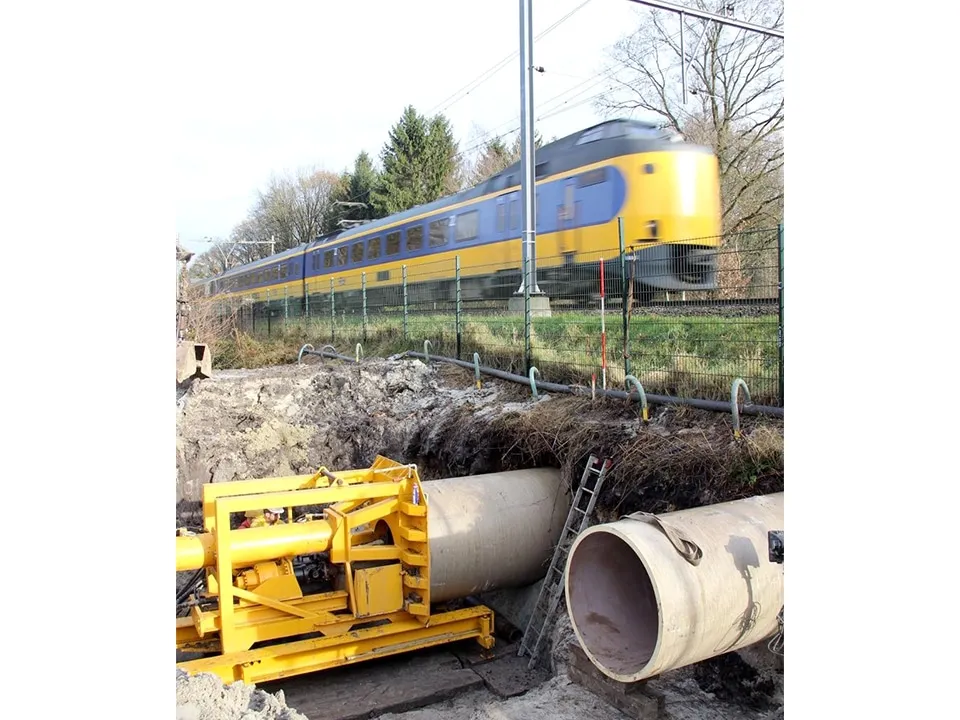
Beneath ProRail’s pipelines…
André refers to Guideline 427, part 1: “ProRail’s pipelines are laid at a shallower depth and at a smaller angle than other pipelines. Third parties must always pass beneath our pipelines. In the event of an incident on the railway, it is important that we encounter our own pipelines first. For that reason, it is not possible to ‘piggyback on ProRail’s pipelines’.”
Dutch Tunnel Engineering takes the type of ground the cables and pipelines have to pass through into account in its design. Rosella says: “It makes quite a difference, for example, whether the ground is clay or sand, as that determines the boring technique. If we are boring below the groundwater level, we use a closed-face technique. If the groundwater level is below the bore, we use an open-face technique.” André adds: “You also need to know what you will encounter in the ground layers, which is why cone penetration testing is important. In Limburg, for example, marl occurs at a depth of six metres. That is normally a typical boring depth. In such cases, you need to determine whether to bore above or below the marl layer.”
A great partnership
On the collaboration between Dutch Tunnel Engineering and ProRail, Rosella says: “The great thing is that ProRail always contributes ideas on the construction work and permits. We work well together and complement each other perfectly.” André agrees, saying: “Dutch Tunnel Engineering is a trusted partner for us. They put a great deal of effort into the preliminary stage and get involved early, which makes the process run smoothly and helps ensure the later stages of the process are carried out more effectively.”
Question about this story? Ask your question
Keep following this
Get an email when a new story is published. No account needed.
- SubjectRoad construction







