









‘Treasure hunting’ along the RijnlandRoute: where is the archaeology?
“We were commissioned by the Province of South Holland to contribute to the archaeological investigation along the RijnlandRoute,” begins Jeroen Loopik. Loopik is speaking on behalf of ADC Archeoprojecten in his role as Senior KNA archaeologist, and he and ADC have made some fine discoveries. “We investigated a 2-kilometre stretch along the RijnlandRoute, near the N206 ir. G. Tjalmaweg in Valkenburg.”
The investigation builds on earlier research in this part of Valkenburg. “This allows us to update the archaeological record,” Jeroen explains. “We investigated around 10% of the project area using machine-excavated trial trenches to establish whether any archaeological sites were present and, above all, to assess their significance.”
Jackpot! There’s more here than expected…
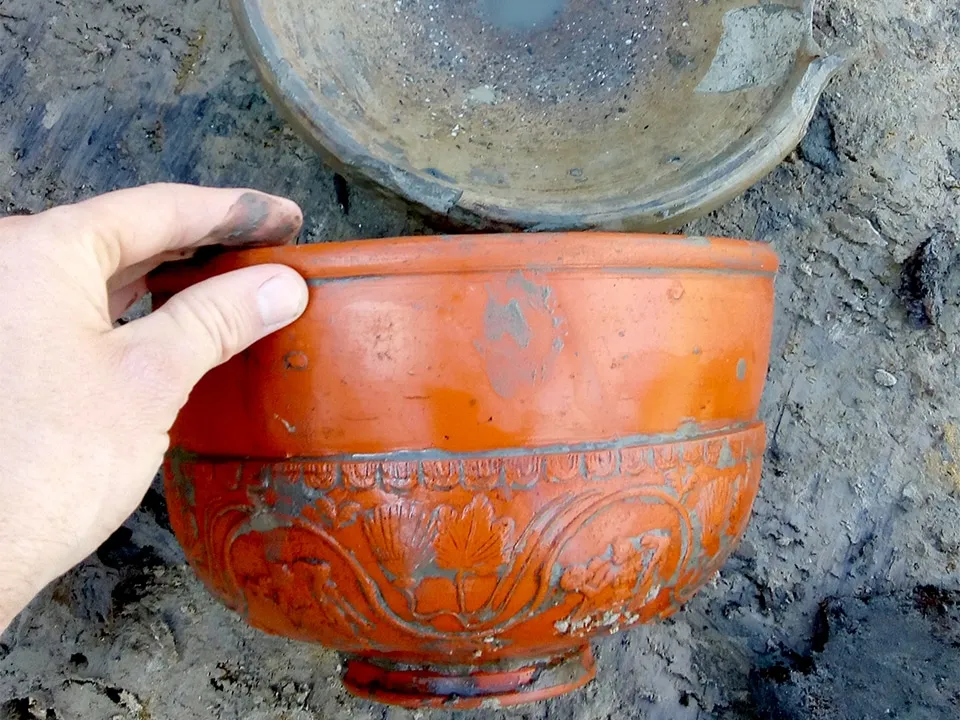
Near the Torenvlietbrug over the Oude Rijn, ADC found the remains of a Roman settlement. “Part of the settlement had already been excavated, but the municipality had extended the area with an additional plot of land, which it had purchased in stages,” Jeroen explains. “That earlier excavation is documented as ‘Het grote Marktveldonderzoek’, carried out in the 1980s ahead of the construction of the Tjalmaweg. We’d hit the jackpot: there was indeed much more underground. We found evidence of Roman occupation, post structures, pottery, animal bones and more. We needed to test the settlement boundary, after which we could advise what should be excavated. The province accepted our advice, and in the end around 16,000 m2 was fully investigated.”
Scientific and historical significance
According to Jeroen, the aim of the investigation is to document the archaeological traces, finds and structures. “Given the construction plans, most of the archaeological record could not be preserved in situ. We document it for the civil engineering contractor. The focus is purely on its scientific and historical significance. In principle, we take all the finds with us, including leather, wood, metal, bone and pottery. These will all be covered in the evaluation report, in which we will set out our recommendations for conservation and further specialist research.”
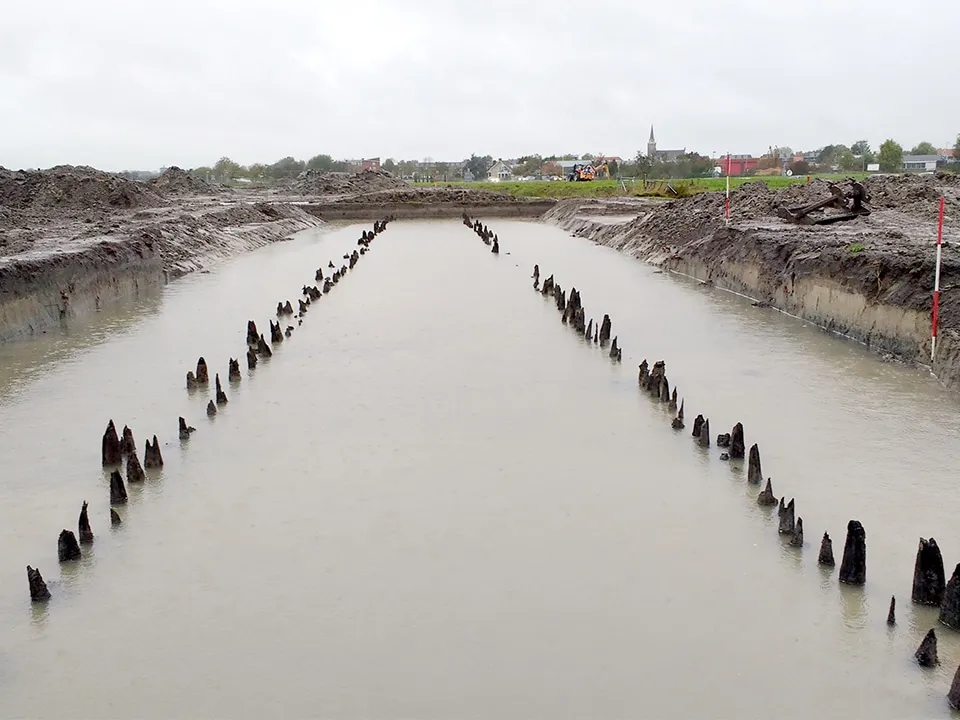
Part of a Roman road dating from the early 2nd century was also found, with around 1,000 posts bearing silent witness to its presence. “We recovered around 500 wooden posts, while part of the road could be left in place. We finished the fieldwork some time ago and are now in the analysis phase. We expect to complete the report within the next six months. We work with specialists, each of whom has studied the materials found in their own area of expertise. We are currently bringing all those individual reports together.”
Getting our boots muddy
“I like to get my own boots muddy,” says Jeroen. “Every find gives you a thrill. Each one adds another piece to the puzzle and makes the story more complete. You gain a deeper understanding, and a fascinating historical story gradually unfolds.”
Vraag over dit verhaal? Stel je vraag
Blijf dit volgen
Bij een nieuw verhaal krijg je een e-mail. Geen account nodig.
- OnderwerpRoad construction







