









Three linked intersections in 16 hours: BUKO impresses in Maasbree
Text Susan Peek Images Keijsers Foto & Video
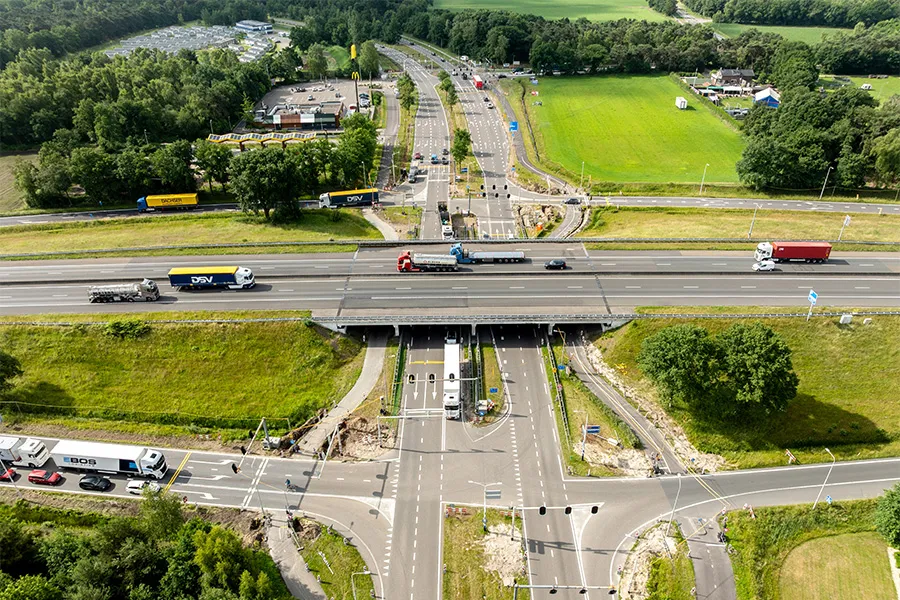
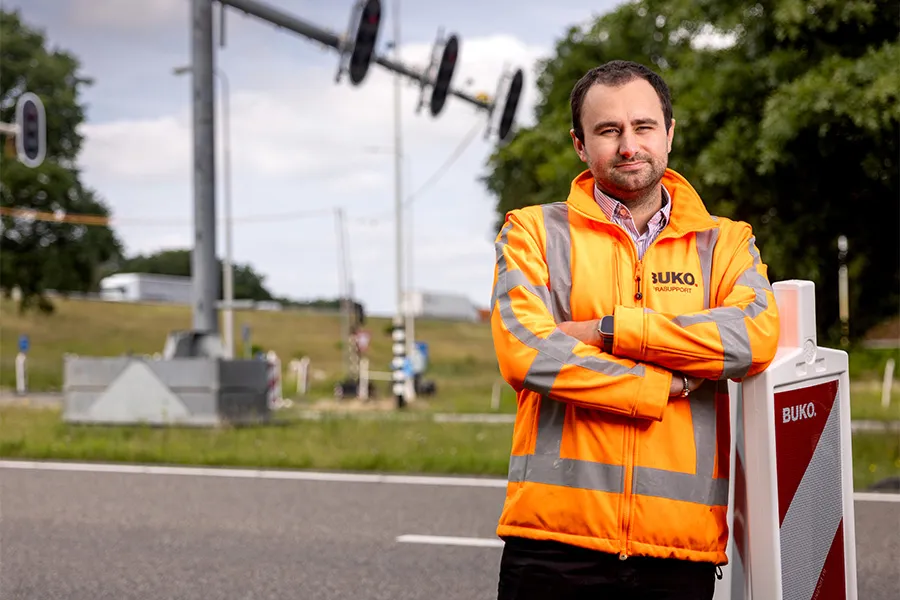
The permanent traffic signal system at a major road junction in Maasbree needed replacing. It was a challenging job, during a busy period and across three heavily trafficked intersections, including two slip roads to and from the A67. BUKO Infrasupport commissioned the temporary traffic signal systems in record time. “It was all about preparation, collaboration, speed and safety,” says Patrick Lamper, DVM traffic systems product specialist at BUKO.
Three critical intersections
Commissioned by Swarco and working with Provincie Limburg, BUKO provided the temporary traffic signal system so that the permanent lights could be replaced. “The existing installation was outdated,” says Lamper. “You want to replace it before it fails, and of course with as little disruption to traffic as possible.” That was easier said than done. “The main challenge was the location,” Lamper explains. “The work involved three intersections at a busy road junction, carrying traffic towards Maasbree, a nearby McDonald’s and theme park Toverland. On top of that, traffic was particularly heavy around Ascension Day, including traffic from Germany. You have to know exactly what you’re doing.”
Meticulous preparation
Nothing was left to chance in the run-up to the work. A temporary depot was set up in a strategic location between the intersections, where equipment was assembled and tested. Eight heavy-duty signal poles with outreach arms were assembled on site. “That saved a great deal of time, transport and lifting work, but above all reduced risks during installation. Everything was geared towards getting it right first time.”
Lamper describes completing the installation within 16 hours as a major achievement. “At peak times, twenty people were working on the project simultaneously, including traffic controllers. Despite the speed, safety was the priority. Our people were working alongside live traffic, so we chose to pre-fit all the cables and signal heads. That meant we could install the poles quickly during brief traffic stops.”
Smart integration with the permanent system
One notable feature was the use of the permanent system in the temporary installation. “The province was keen on this because it helps keep traffic flowing as smoothly as possible. We adapted the system and loaded it into our own controller, making changes for the temporary setup. These included different detection equipment, such as cameras and push buttons, as well as adjusted stop lines. The PTP connection between two installations also had to work perfectly. That requires close coordination, traffic engineering expertise and technical testing.”
Lamper is particularly proud of the overall result. “The collaboration was excellent. Every link in the process, from preparation to delivery, worked seamlessly with the others. And when you hear the province say during commissioning, ‘it looks good and is working properly’, you know you’ve delivered something worthwhile together.” Lamper expects this approach to be used more often. “The less disruption we cause, the better, for road users and for our people.”
A business enquiry for BUKO Infrasupport? Get in touch
Companies in this story

Keep following this
Get an email when a new story is published. No account needed.
- SubjectRoad construction
- CompanyBUKO Infrasupport







