









Specialists in passive vehicle restraint systems
Text DELTABLOC Nederland / Kris VandekerckhoveImage DELTABLOC Nederland
Concrete: a sustainable solution
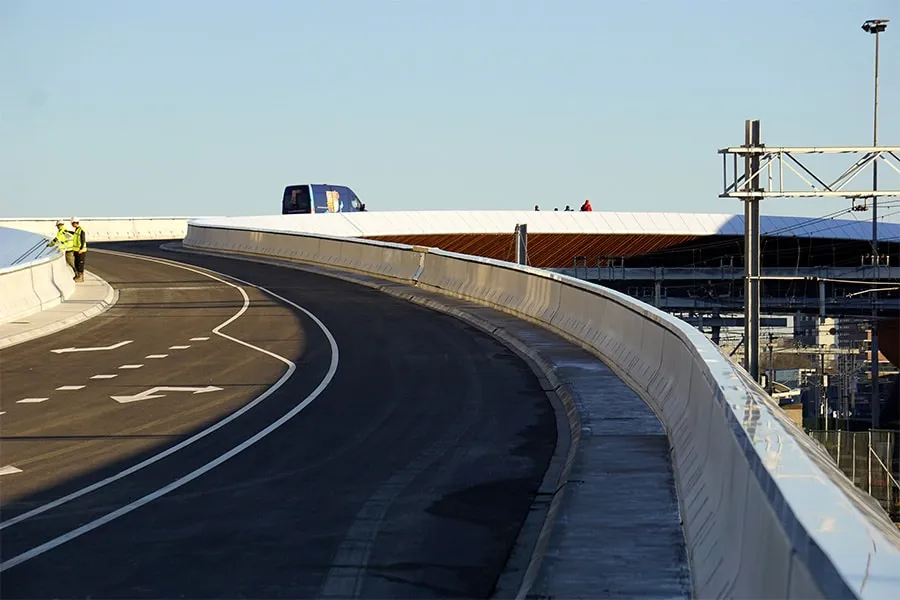
When DELTABLOC Nederland was founded in 2008, the standard was the Dutch steel safety barrier. Where this could not be used, a concrete or steel step barrier was installed. The use of the narrow DB 65S concrete barrier during roadworks on the A1 between Almelo and the German border (2009) marked the first significant step towards new passive road safety solutions in the Netherlands. More space and greater safety for traffic and road workers.
DELTABLOC Nederland has since made great strides, and its concrete products, with a service life of over 50 years, can now be seen throughout the Netherlands. The DB 65S series has also been superseded by the even narrower SB 50 and SB 70 systems. With their numerous reflectors, these barriers provide excellent guidance at night. After all, visibility means safety!
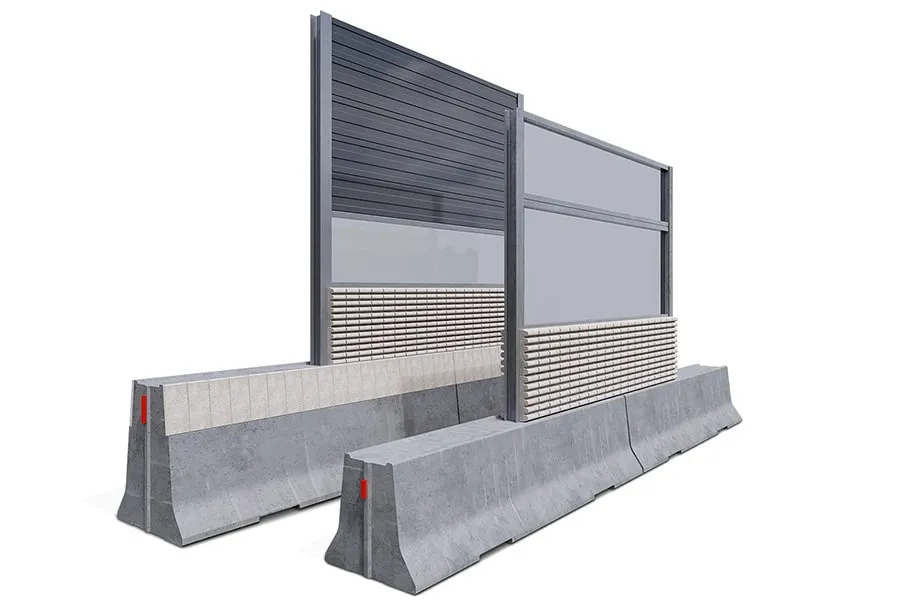
Multifunctional CE-certified barrier
The latest development, a CE-certified barrier with a noise screen, is already attracting attention. It has also been tested in practice on the A9, where a lorry collided with it. DELTABLOC has high hopes for this NBF series, which is an excellent solution for screening road noise where space at the site is limited, without the need for costly foundation structures. This 3-in-1 solution (vehicle restraint system, noise screen and design) is also available with an integrated lighting column.
Kees Hanegraaf, Managing Director of DELTABLOC Nederland: “I look back with satisfaction on this year’s most notable project: the A9 Badhoevedorp, Holendracht, where DELTABLOC has supplied no fewer than six CE-certified systems. We are proud to have made a significant contribution to many large and small road construction projects, helping keep traffic moving safely and protect road workers.”
The transition from steel to concrete
New ideas, new techniques. A concrete vehicle restraint system is not a universal solution, but it can provide greater safety than was thought possible in 2008. There is a good reason why concrete barriers are now used to protect many roadworks instead of steel ones.
“We contribute throughout the process, from design to delivery. What other requirements apply alongside those for the vehicle restraint system? On Design and Construct projects, visual quality requirements are often a major consideration. However, this must not come at the expense of safety or the quality of the vehicle restraint system selected. Our organisation’s expertise in more than 100 tested vehicle restraint systems across various performance classes is a key factor in complex projects of this kind,” concludes Kees Hanegraaf.
Question about this story? Ask your question
Keep following this
Get an email when a new story is published. No account needed.
- ThemeMaterials and techniques for infrastructure
- SubjectRoad construction







