









Smart and effective asset management
Text Roel van GilsImage VeenIX
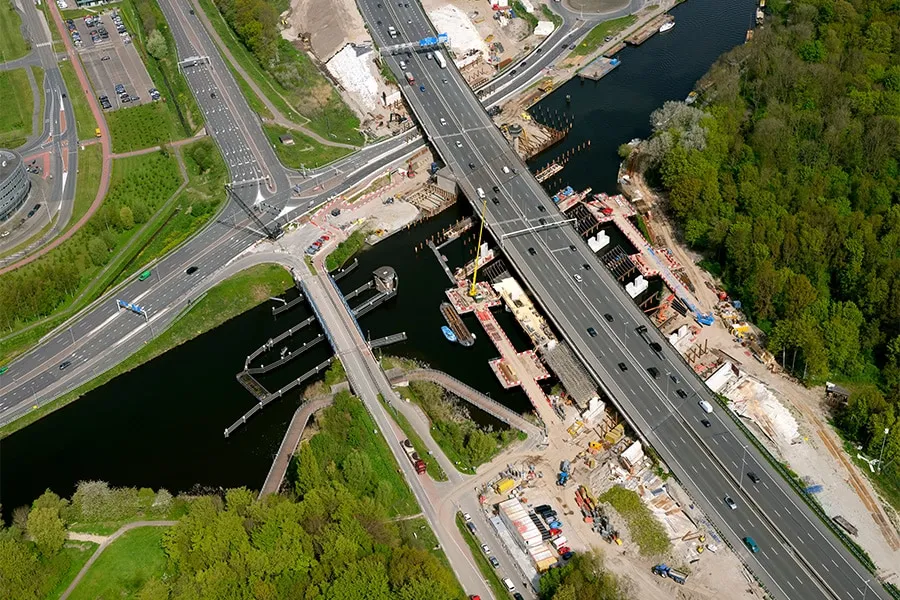
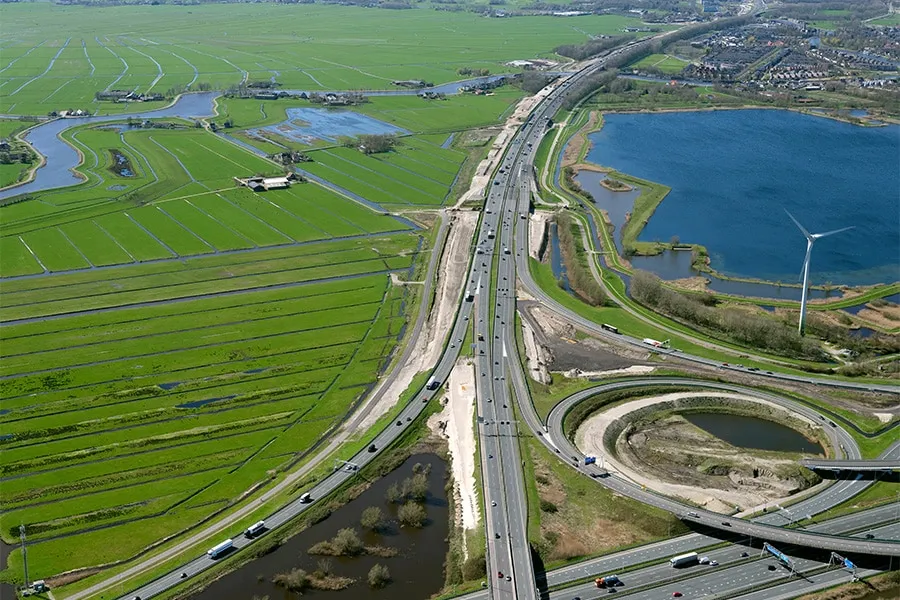
On behalf of construction consortium VeenIX, INNOCY has been responsible for asset management on the widening of the A9 between Badhoevedorp and Holendrecht since the tender stage. Now that the project is well under way, INNOCY is taking on various roles, the most important being overall asset management during the construction and operational phases. The innovative consultancy and engineering firm is doing so in its own distinctive way: for a fixed fee.
“From day one, VeenIX asked us to help write the tender plan that ultimately led to the successful bid,” says Jasper Staadegaard, business development manager at INNOCY. “After the contract was awarded, we immediately started setting up the asset management policy, RAMS, maintenance engineering, fault coordination and so on. In other words, we are the construction consortium’s first point of contact and act as its representative in dealings with Rijkswaterstaat, ensuring that the agreed commitments are met.”
A unique example
Staadegaard sees the A9 as a unique example of a fully integrated asset management approach. “Above all, because early in the tender process we said we wanted to take on asset management with greater responsibility than simply charging for hours. Instead, we do it for a fixed monthly fee. We are aware of the risks if we go beyond the scope or timeframe. With an integrated overview, we optimise current and future maintenance costs, thereby reducing indirect costs for routine maintenance. Our in-depth knowledge of the systems being built enables us to reduce total maintenance costs across the entire project through to 2040. Our integrated approach is essential to the responsibility we have taken on, shifting the focus from a low-cost design to cost-effective lifecycle costs. So far, this approach is working well.”
Integrated asset management
INNOCY is involved in the project at strategic, tactical and operational levels, and is responsible for Strategic Asset Management (SAM), Maintenance Management (MM) and all RAMS activities. “We have set up our own system for this, which could potentially meet the requirements for ISO 55000 certification, although the A9 project is not certified in this way,” says Arjan Haak, INNOCY’s asset manager on the project. “Through SAM, we keep the network operational as set out in the Strategic Asset Management Plan. Maintenance is scheduled to minimise disruption to road traffic and keep all the assets along the route in good working order. This is part of the project’s integrated asset management approach. Whenever a fault occurs, it is referred to our incident response team. The fault then has to be resolved within the specified timeframe to avoid penalty points. Our incident response team works hard to resolve all faults as quickly as possible.”
Open communication
Maintenance Management currently takes up by far the most time for INNOCY. “About 85% of our work is devoted to this discipline,” says Haak. “That is likely to remain the case for some time. It is a challenge that draws on all our expertise, given the shrinking number of hours available to us and the age of the network. We also continue to use RAMS to assess how future maintenance can be managed. We believe it is important to communicate openly and transparently about the problems we encounter. We always consider whether the proposed solution is right for long-term Maintenance Management, the project’s objectives and the construction consortium.”
The asset management triangle
Haak calls the relationship between SAM, RAMS and MM the ‘INNOCY way of asset management’. “The method is ideally suited to larger projects of this kind, ensuring that the road remains safe and available. We take an almost standardised system and tailor it to each project. That is our strength on VeenIX, and will continue to be so in the future.” Staadegaard concludes: “It is a successful formula that we are keen to replicate on future projects, drawing on our previous experience. We work as an integrated team towards the project objectives, optimal lifecycle costs and what is best for the construction consortium.”
Question about this story? Ask your question
Keep following this
Get an email when a new story is published. No account needed.
- SubjectRoad construction







